
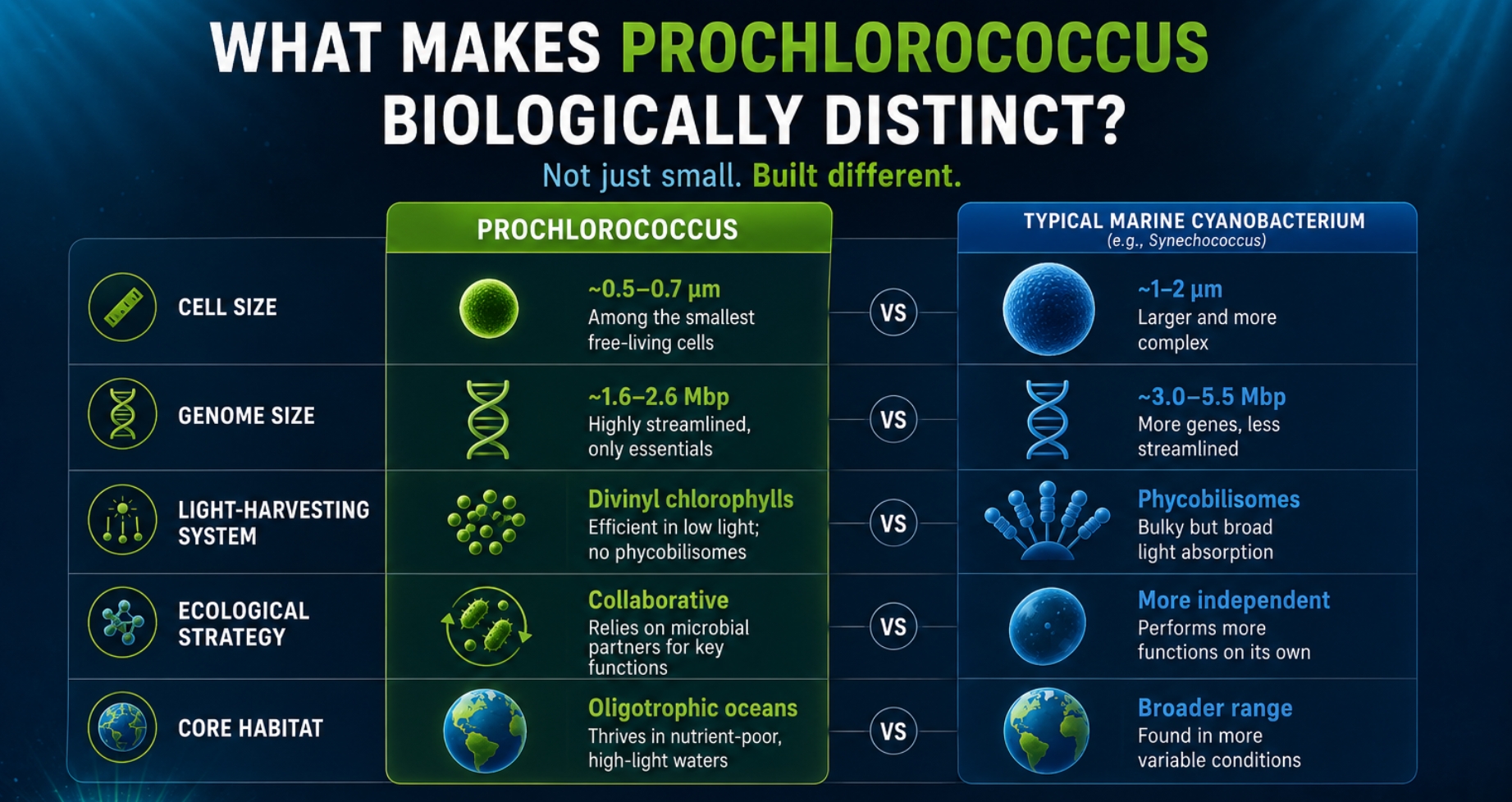
Prochlorococcus differs from most cyanobacteria through a combination of extreme miniaturization, biochemical specialization, and metabolic reduction. These traits are closely aligned with the stable, nutrient-poor conditions of the open ocean.
Ultra-small Cell Size
Prochlorococcus cells measure only ~0.5-0.7 µm in diameter, making them the smallest known photosynthetic organisms.
In comparison:
- Anabaena cells are typically around ~5-10 µm wide
- Oscillatoria can reach widths of ~10-50 µm and form long multicellular filaments
This means some cyanobacteria are more than 10 to 50 times wider than Prochlorococcus. Its tiny size gives it a very high surface-area-to-volume ratio, improving nutrient absorption in oligotrophic waters where nitrogen and phosphorus are scarce.
A Different Light-Harvesting System
Most cyanobacteria rely on large pigment complexes called phycobilisomes, which capture a broad range of light wavelengths. Prochlorococcus lacks these structures almost entirely.
Instead, it uses specialized divinyl chlorophyll a and b, pigments optimized for absorbing blue wavelengths that penetrate deepest into clear ocean water. This system is less versatile, but far more energy-efficient under stable marine conditions.
Biochemical Adaptations for Nutrient Scarcity
Many Prochlorococcus strains reduce phosphorus demand by modifying their membrane chemistry. Under phosphorus limitation, they can replace phosphorus-containing membrane lipids with sulfur- or nitrogen-based alternatives. This allows the cell to maintain membrane function while reducing dependence on one of the most limiting nutrients in the open ocean.
Streamlined Internal Organization
Compared to many cyanobacteria, Prochlorococcus possesses a highly reduced genome and fewer regulatory or stress-response systems. Rather than investing in broad environmental flexibility, it minimizes cellular costs and depends more heavily on stable conditions and surrounding microbial communities.
Specialization Instead of Versatility
Many cyanobacteria evolved to tolerate fluctuating freshwater, coastal, or bloom-forming environments. Prochlorococcus followed a different path. It became highly specialized for continuous survival in nutrient-poor open-ocean waters. Its biology demonstrates that in some environments, success comes from removing everything that is unnecessary.
Prochlorococcus is distinguished by its unique pigment system, modified membrane composition, and reduced cellular structure, all optimized for efficient function in low-light, nutrient-poor oceans.