In the open ocean, population control at the scale of Prochlorococcus is strongly influenced by viruses.
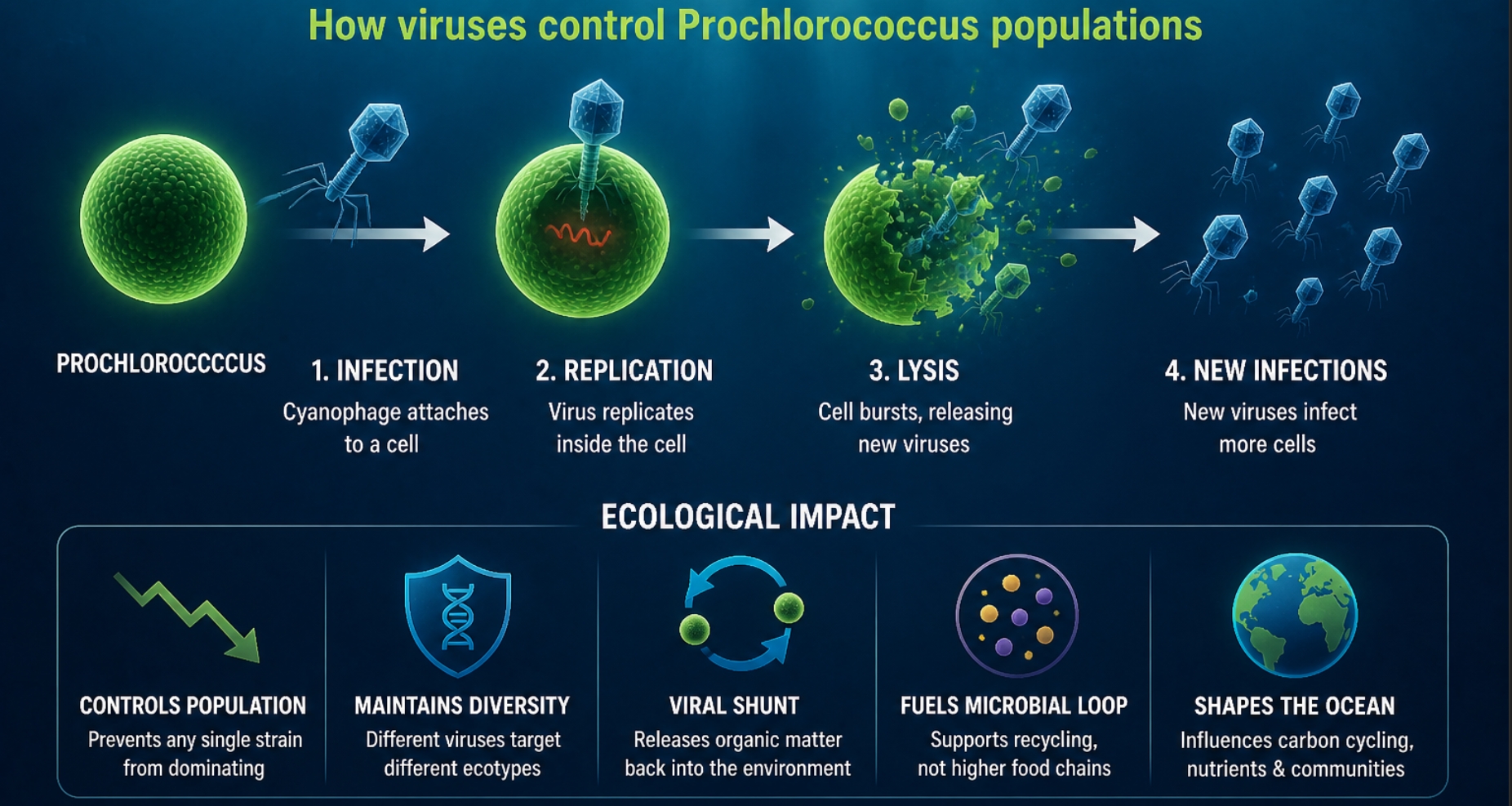
These viruses, known as cyanophages, infect Prochlorococcus cells by injecting their genetic material into the host. Once inside, they use the cell’s machinery to produce new viral particles. The infection eventually ends in cell lysis, where the cell ruptures and releases both viruses and cellular contents into the surrounding water.
This continuous cycle of infection and lysis helps regulate population size, preventing unchecked growth of individual strains. Because different cyanophages infect different Prochlorococcus ecotypes, viral pressure also contributes to maintaining diversity within populations.
The effects extend beyond population control.
When Prochlorococcus cells are lysed, their contents are released as dissolved organic material instead of being transferred upward through grazing. This process, known as the viral shunt, redirects carbon and nutrients into microbial recycling pathways within the surface ocean.
As a result, viral activity influences how energy and nutrients move through marine ecosystems. Some organic matter continues upward through the food web, while a significant fraction is recycled within microbial communities.
At large scales, these interactions affect carbon cycling, nutrient availability, and microbial community structure across vast ocean regions. Viral regulation therefore plays an important role in shaping both the abundance of Prochlorococcus and the pathways through which organic matter circulates in the ocean.
Because Prochlorococcus populations are so extensive, even microscopic viral interactions can influence broader ocean processes linked to productivity and biogeochemical cycling.
Viruses regulate Prochlorococcus by controlling its abundance and redirecting cellular material into microbial recycling through lysis.