Exploring the Invisible World of Microbes
Discover the fascinating microscopic organisms that shape our planet, our health, and our daily lives — from bacteria in your gut to viruses that change history.
What Are They?
Defining Microorganisms
Microbes (microorganisms) are microscopic organisms that cannot usually be seen with the naked eye. Despite their tiny size, they are the most abundant forms of life on Earth.
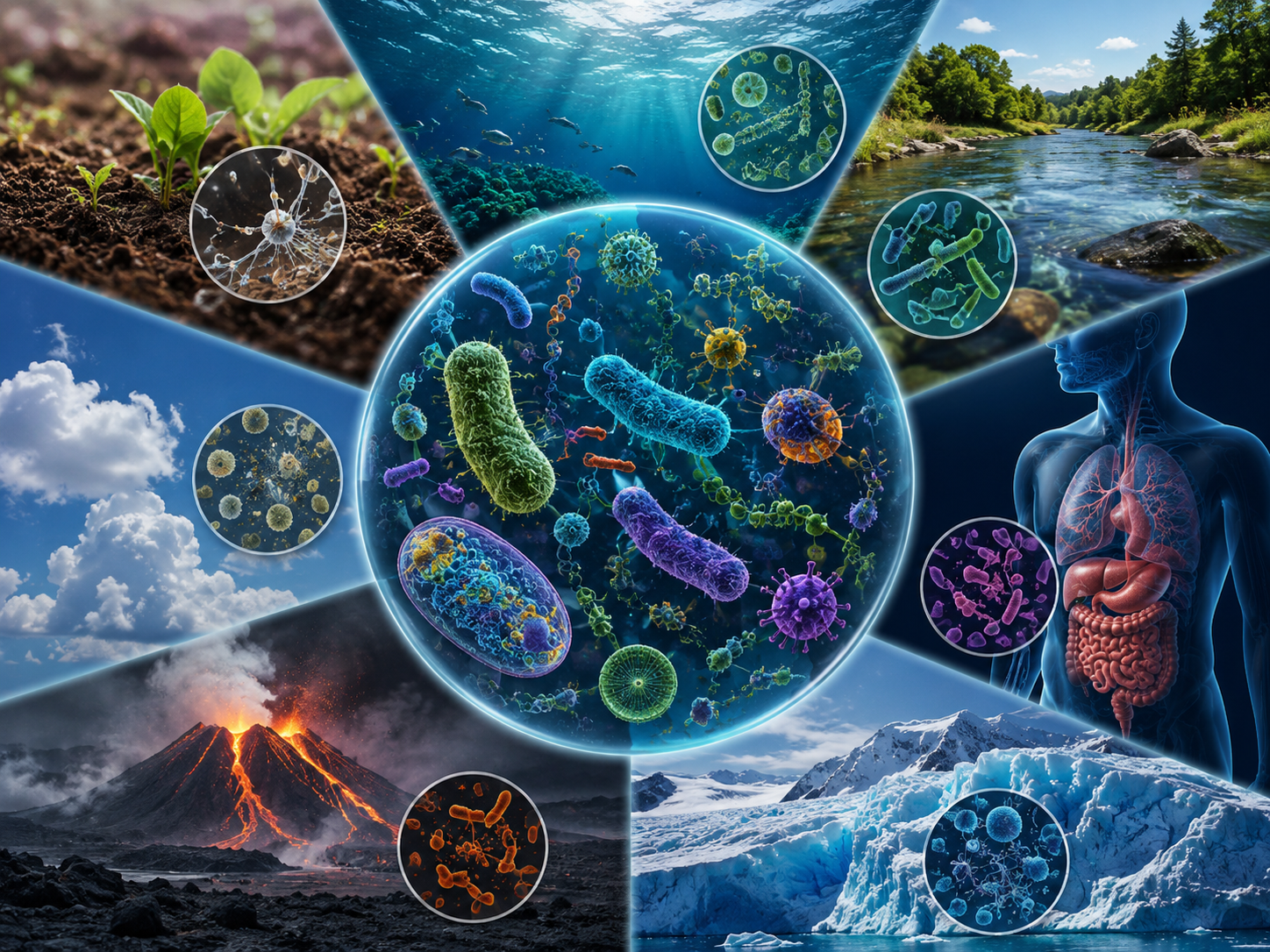
They are found in:
- Soil and sediment
- Water — oceans, rivers, groundwater
- Air and atmosphere
- Inside living organisms (including you)
- Extreme environments — volcanoes, deep sea, glaciers
Overview
Major Types of Microbes
Six major categories of microorganisms, each with unique structures, functions, and roles in ecosystems.
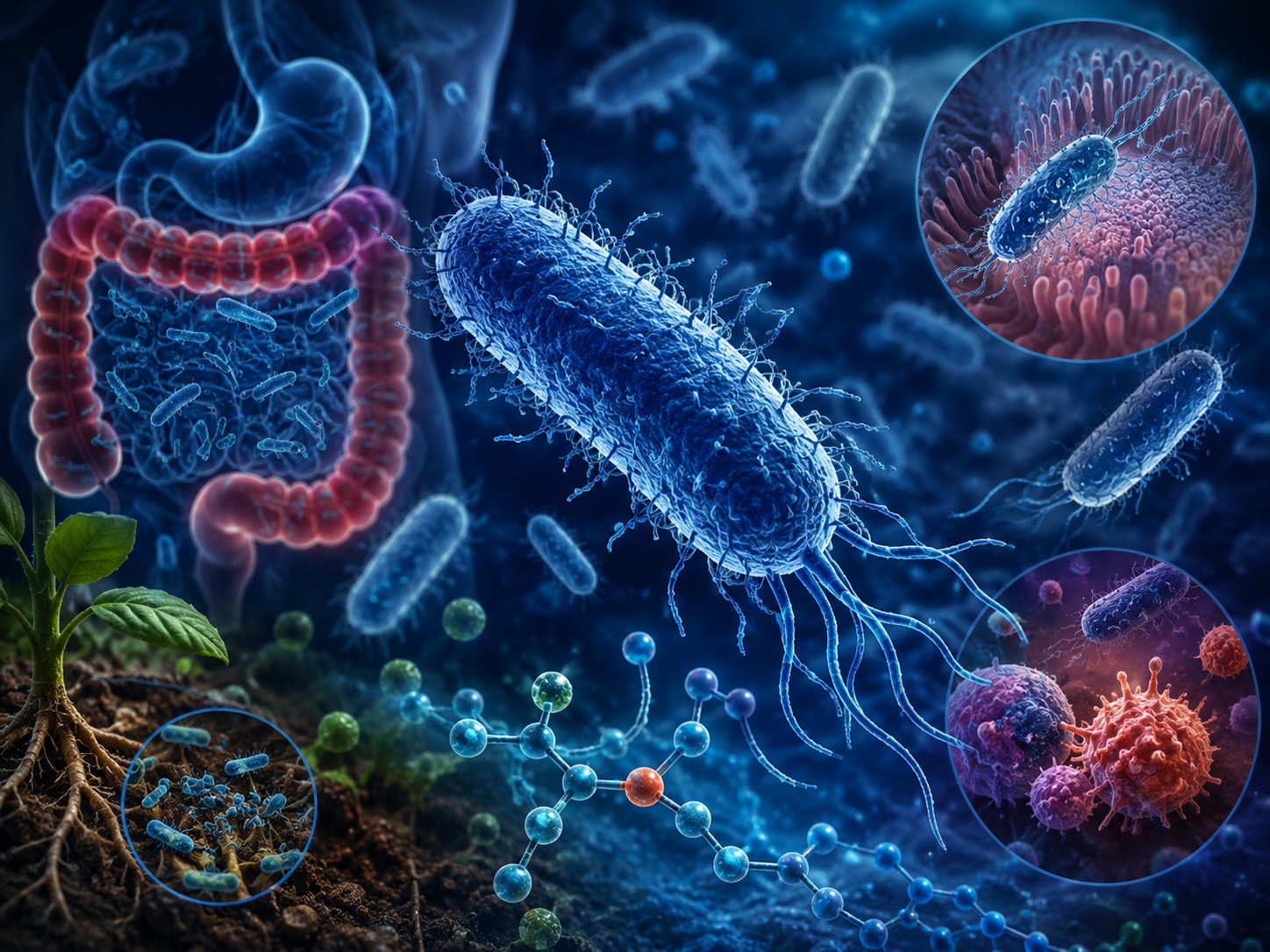
Bacteria
Example: E. coli
Digestion, disease, nitrogen fixation
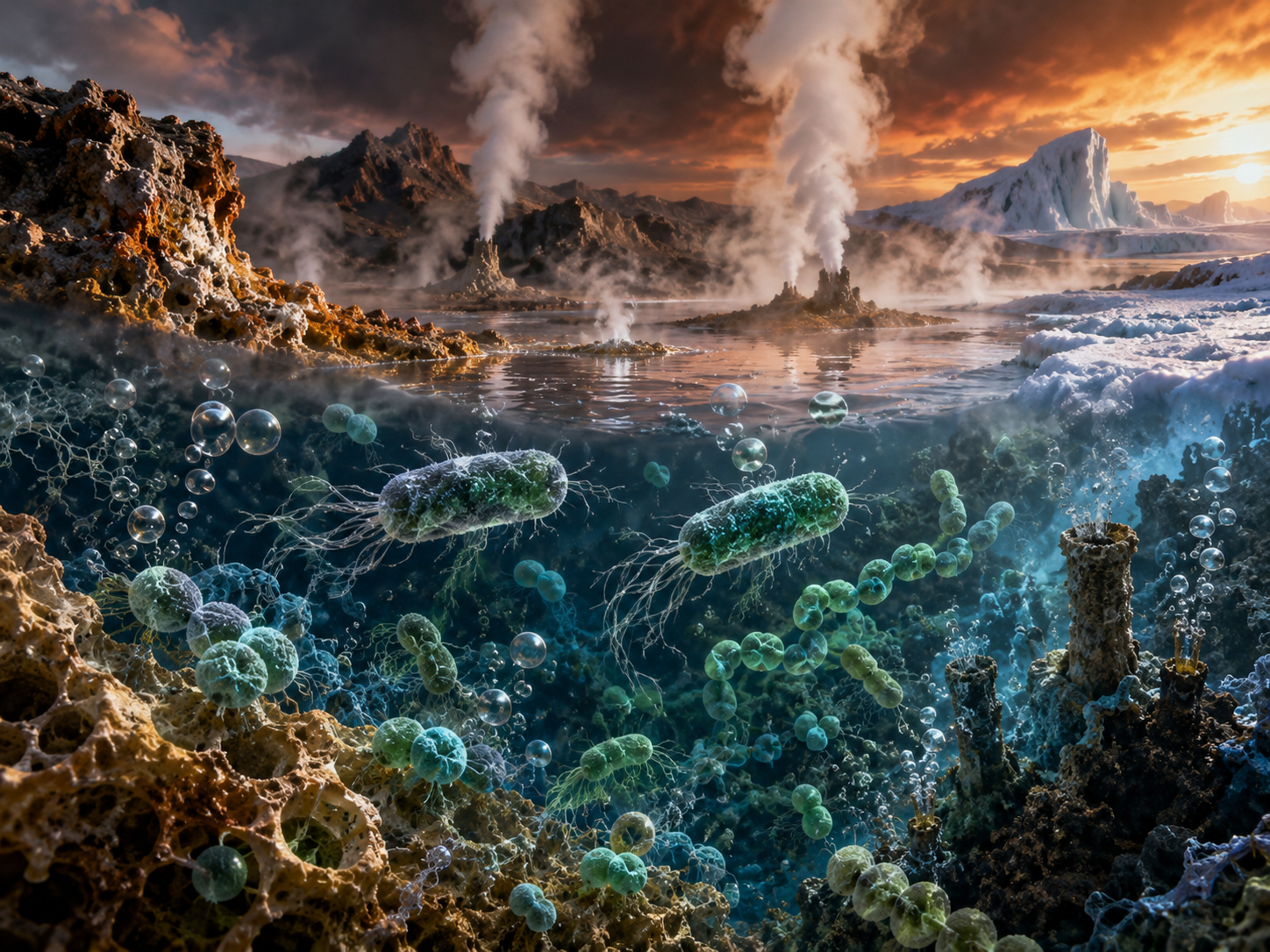
Archaea
Example: Methanogens
Survive extreme environments, biogeochemical cycles
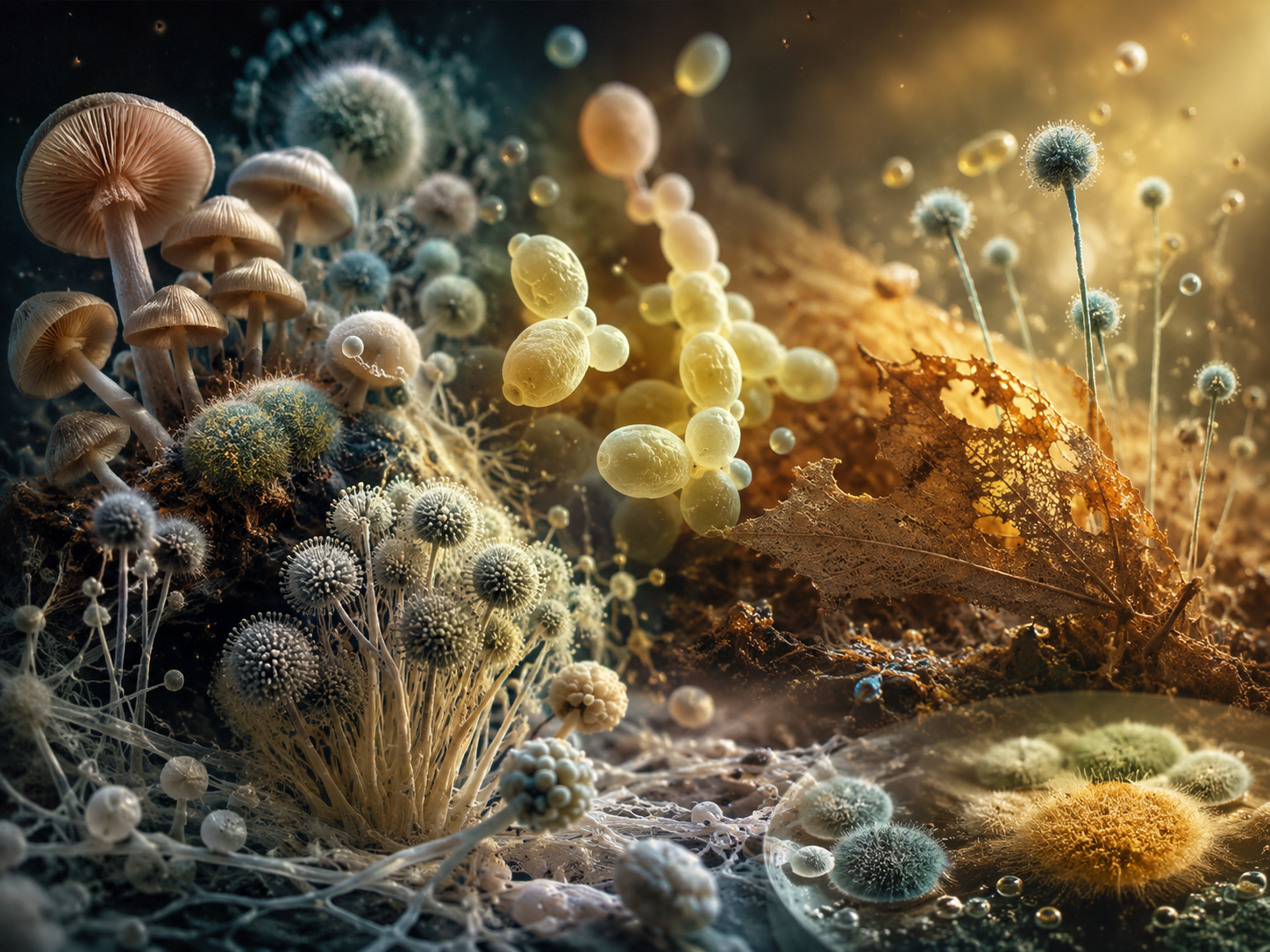
Fungi
Example: Yeast, Molds
Decomposition, fermentation, antibiotic production
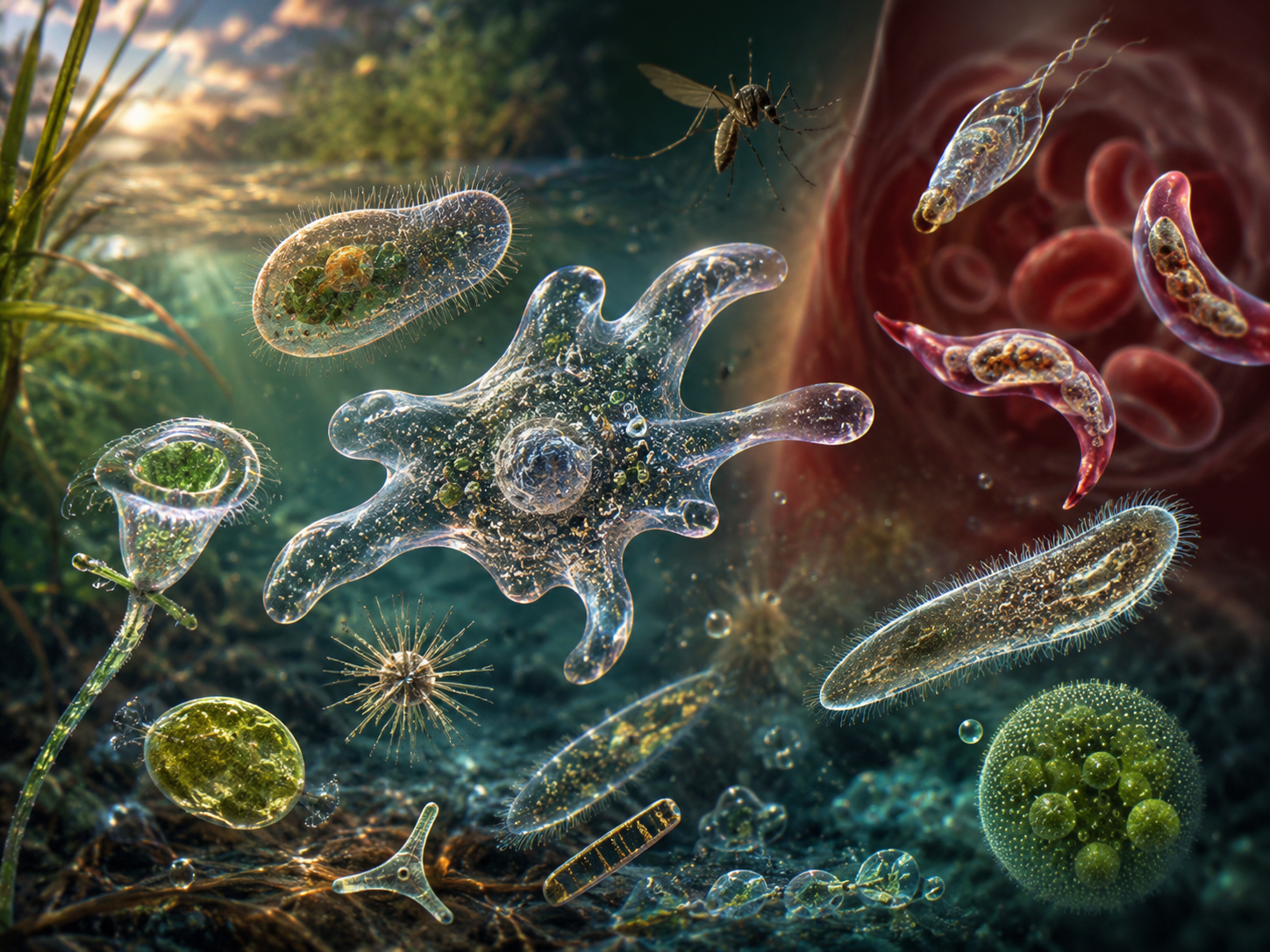
Protozoa
Example: Amoeba
Aquatic ecosystems, parasites causing malaria
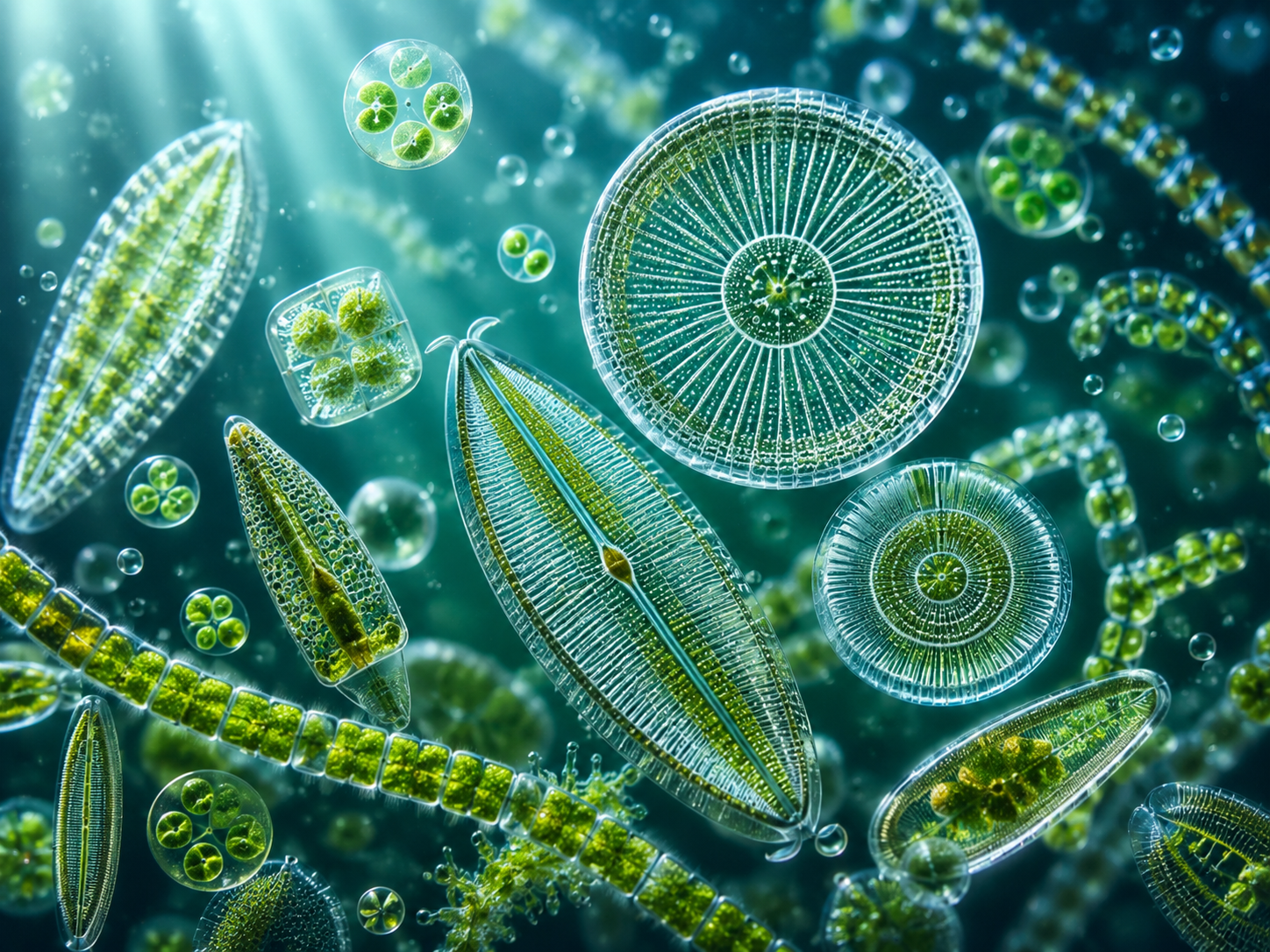
Microscopic Algae
Example: Diatoms
Oxygen production, base of aquatic food chains
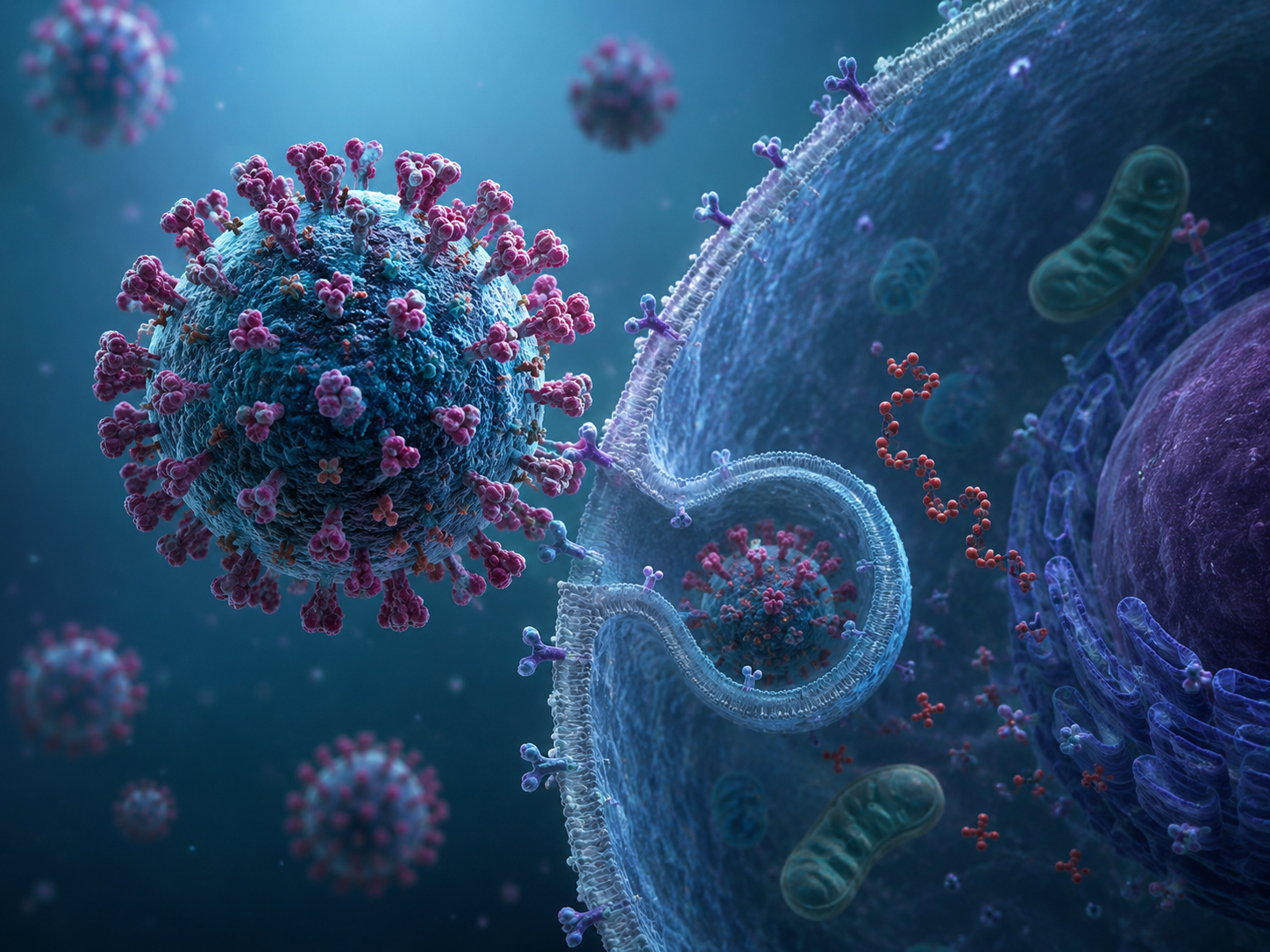
Viruses
Example: Influenza virus
Infect living cells, require host to reproduce
Type 1
Bacteria
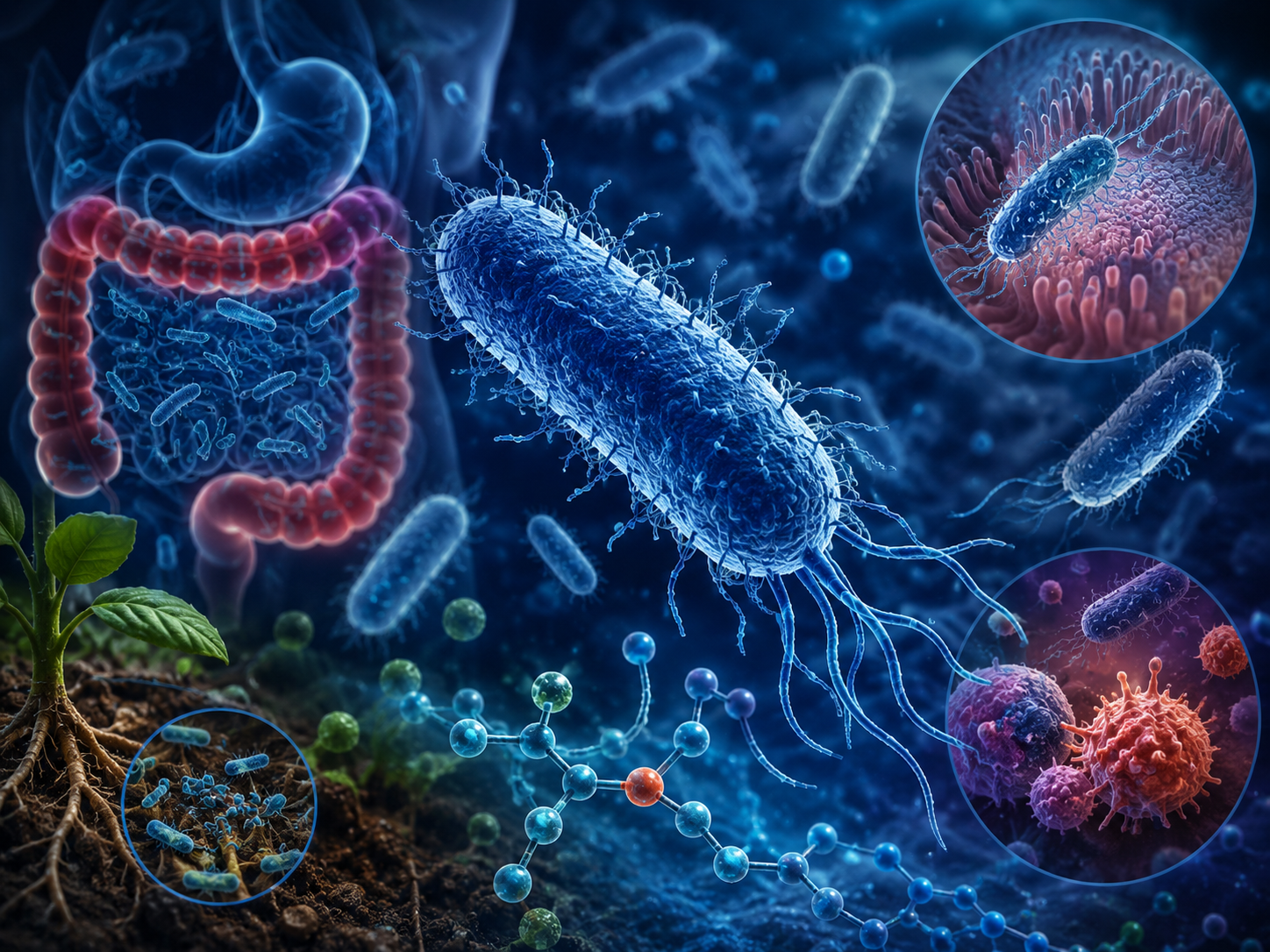
The most abundant and diverse group of microorganisms on Earth — single-celled prokaryotes found in virtually every habitat.
Characteristics
- Single-celled organisms
- No true nucleus (prokaryotic)
- DNA freely present in cytoplasm
- Reproduce by binary fission
Shapes
Cell Structure
Importance
Useful
- Gut bacteria aid digestion
- Nitrogen-fixing bacteria help plants
- Used in food production
Harmful
- Cholera
- Tuberculosis
- Pneumonia
Type 2
Archaea
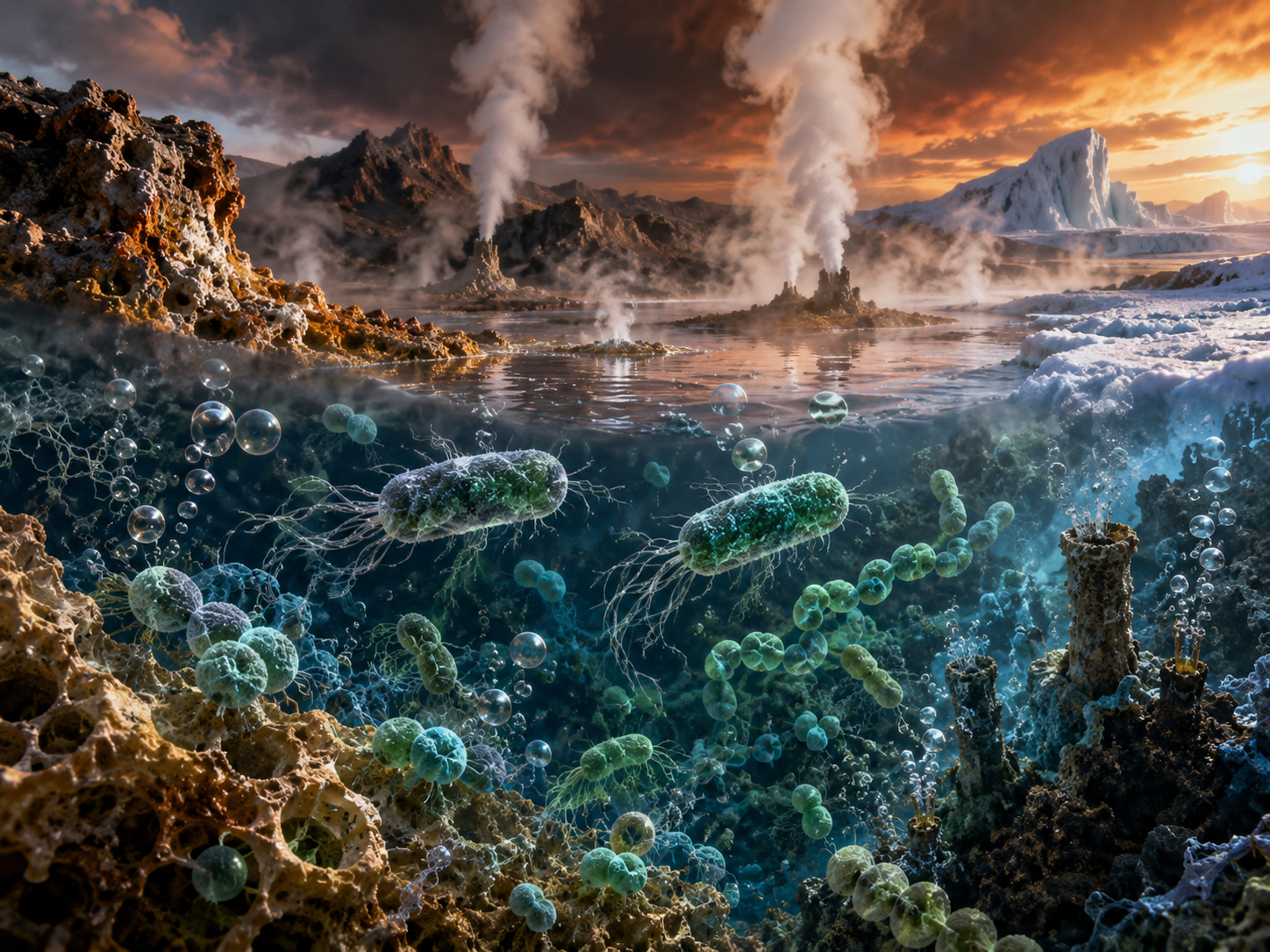
Ancient, hardy organisms that thrive where other life cannot. Genetically distinct from bacteria despite similar appearances.
Characteristics
- Prokaryotic (no nucleus)
- Genetically distinct from bacteria
- Often live in extreme environments
Types
Importance
- Drive key biogeochemical cycles
- Methane production (energy potential)
- Insights into origin of life on Earth
Type 3
Fungi
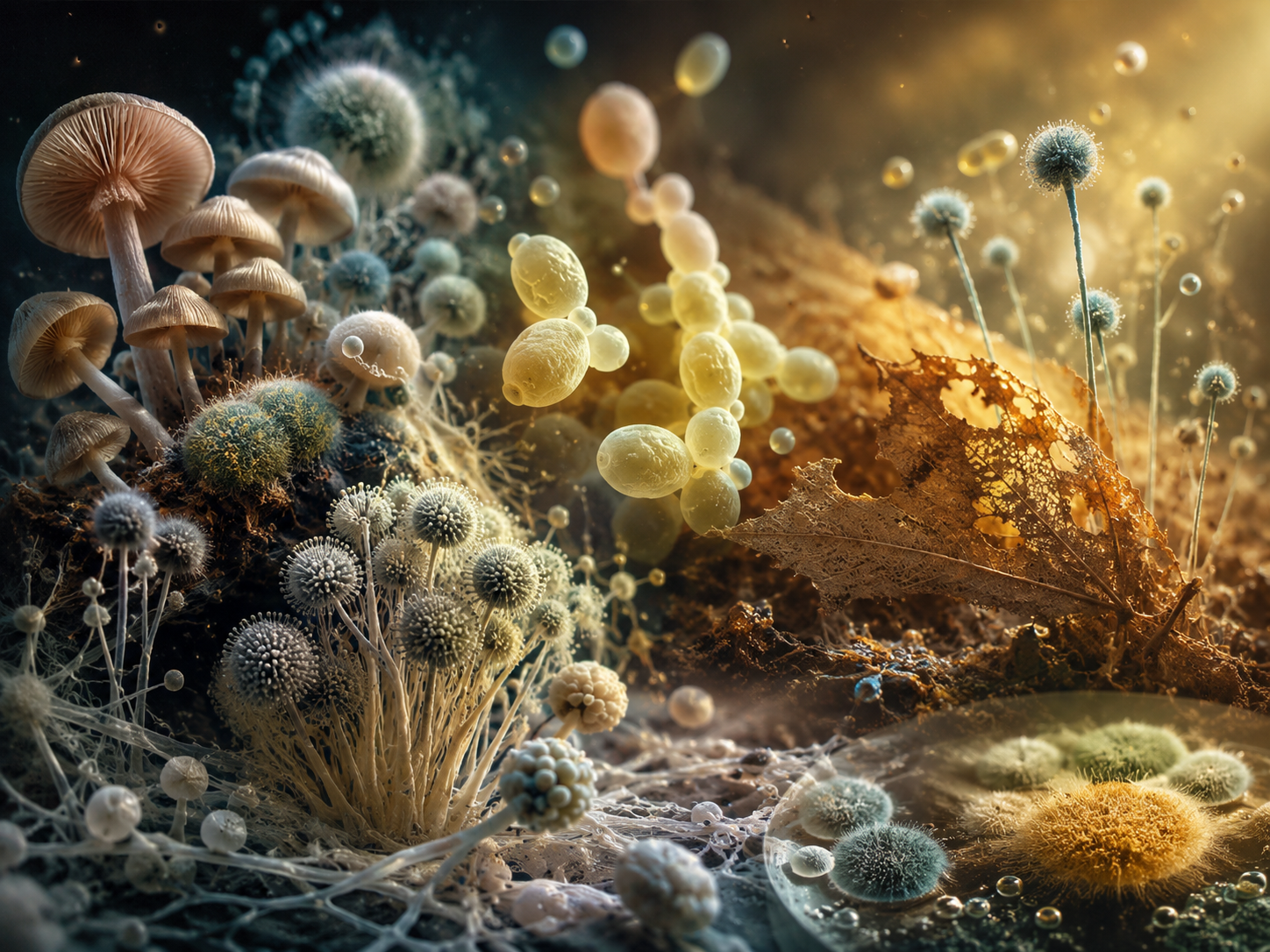
Eukaryotic organisms that absorb nutrients from their surroundings — from the yeast in bread to the molds that gave us penicillin.
Characteristics
- Eukaryotic (have a nucleus)
- Absorb nutrients from surroundings
- Reproduce by spores
Types
Importance
Useful
- Bread making
- Alcohol fermentation
- Antibiotic production (Penicillin)
Harmful
- Athlete's foot
- Crop diseases
- Ringworm
Type 4
Protozoa
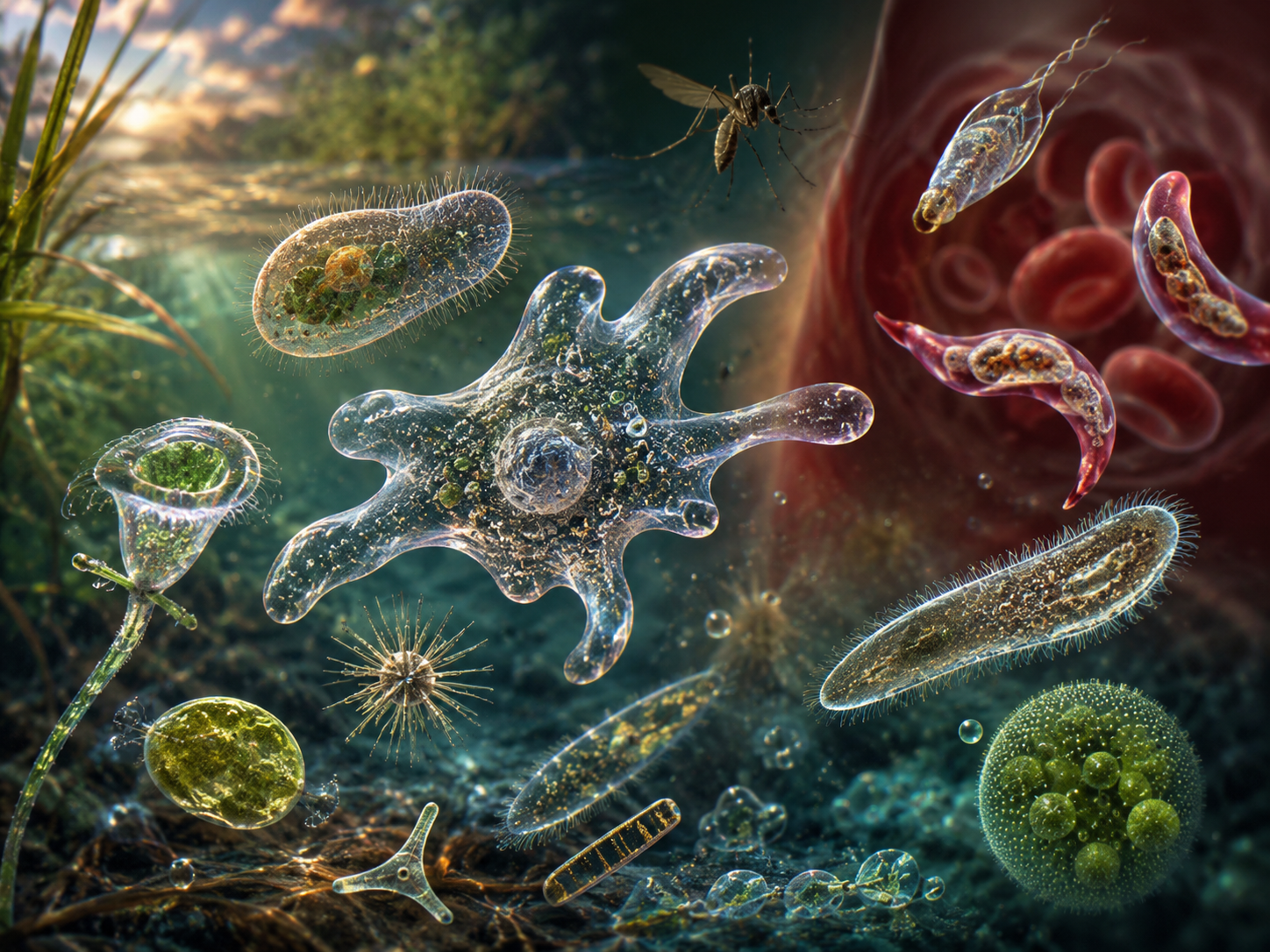
Single-celled eukaryotes that are mostly aquatic, often capable of independent movement using specialized structures.
Characteristics
- Single-celled eukaryotes
- Mostly aquatic
- Often motile (can move)
Movement Structures
Importance
Useful
- Key part of aquatic food chains
Harmful
- Malaria (Plasmodium)
- Amoebic dysentery
Type 5
Viruses
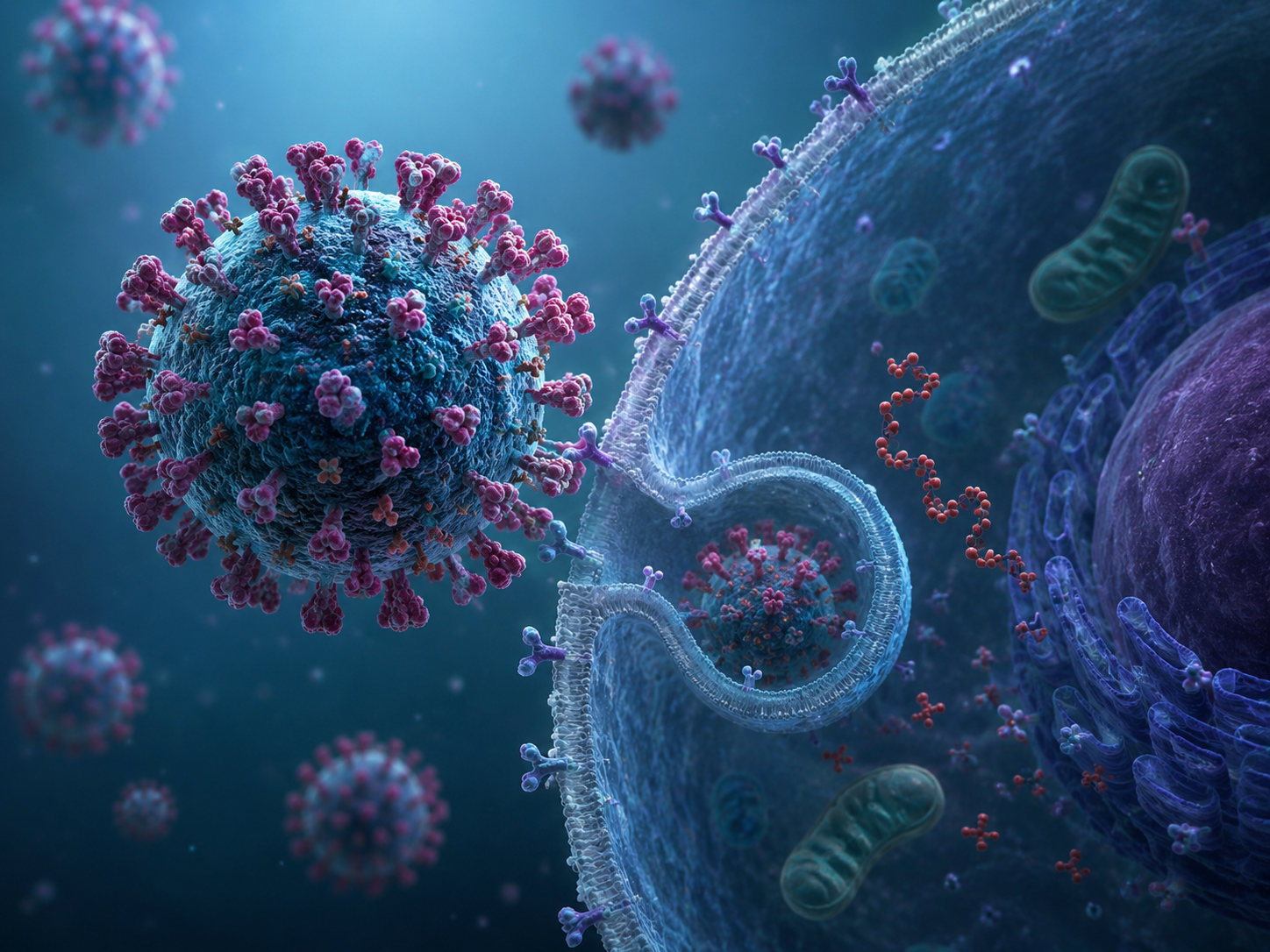
Non-cellular entities at the boundary of life — they contain genetic material but require a host cell to replicate.
Characteristics
- Non-cellular (not truly "alive" independently)
- Contain DNA or RNA
- Require host cells to reproduce
Structure
Viral Reproduction Cycle
Diseases Caused

Life at the Limits
Extremophiles
Microbes that survive — and even thrive — in conditions that would kill most other life forms. They expand our understanding of where life is possible.
Extreme Conditions
Extremophiles inspire astrobiology research — if life can survive here on Earth, it may exist in extreme environments across the universe.