Insulin is one of the most important medicines produced by microbes and is often considered one of the greatest successes of modern biotechnology. Millions of people with diabetes depend on insulin every day, and much of the world's supply is now produced by genetically engineered microorganisms rather than animals.
Before the 1980s, insulin was commonly obtained from the pancreases of pigs and cattle. Although effective, this approach was expensive, limited in supply, and sometimes caused immune reactions because animal insulin differs slightly from human insulin.
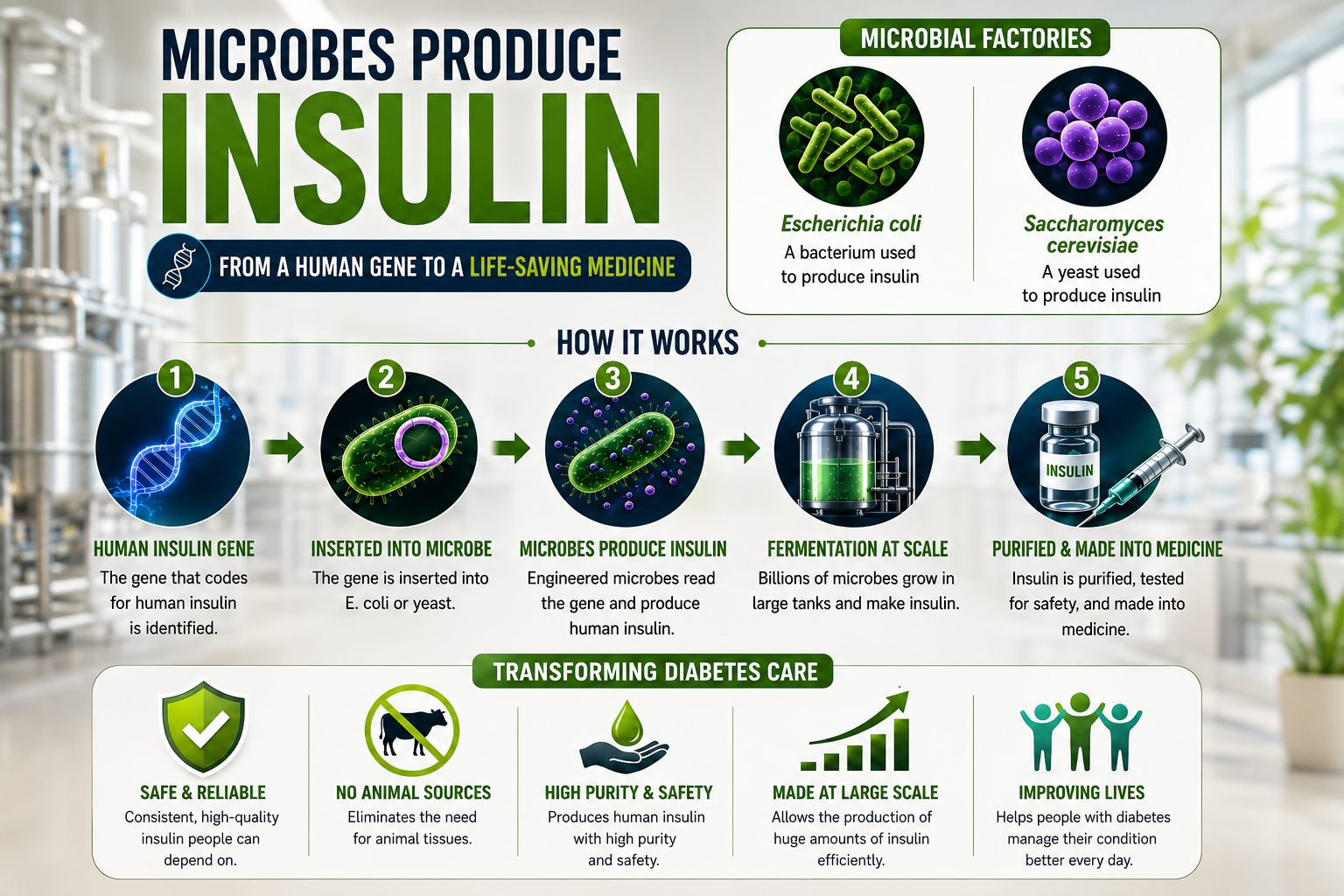
The breakthrough came when scientists learned how to insert the human insulin gene into microbes such as Escherichia coli (E. coli) and the yeast Saccharomyces cerevisiae. Once these microbes received the gene, they gained the ability to manufacture human insulin using their own cellular machinery.
These engineered microbes act like microscopic factories. As they grow inside large fermentation tanks, they read the inserted human gene and produce insulin molecules. The insulin is then purified, tested for quality and safety, and processed into medicines used by patients around the world.
A single fermentation facility can produce enormous quantities of insulin using billions of genetically engineered microbes. This approach allows manufacturers to generate highly pure human insulin at a scale that would be impossible using animal sources alone.
Today, recombinant insulin is used by hundreds of millions of people living with diabetes. The technology has improved the reliability of insulin supplies, reduced dependence on animal tissues, and enabled the development of advanced insulin formulations with different durations of action.
The success of insulin production also helped launch the modern biotechnology industry. The same genetic engineering principles are now used to produce many other medicines, including vaccines, hormones, enzymes, and therapeutic proteins.
Every vial of recombinant insulin represents a remarkable partnership between humans and microbes. By giving bacteria and yeast a human gene, scientists transformed simple microorganisms into lifesaving biological factories that help millions of people manage diabetes every day
By transferring a single human gene into microbes, scientists created a new way to manufacture medicine.