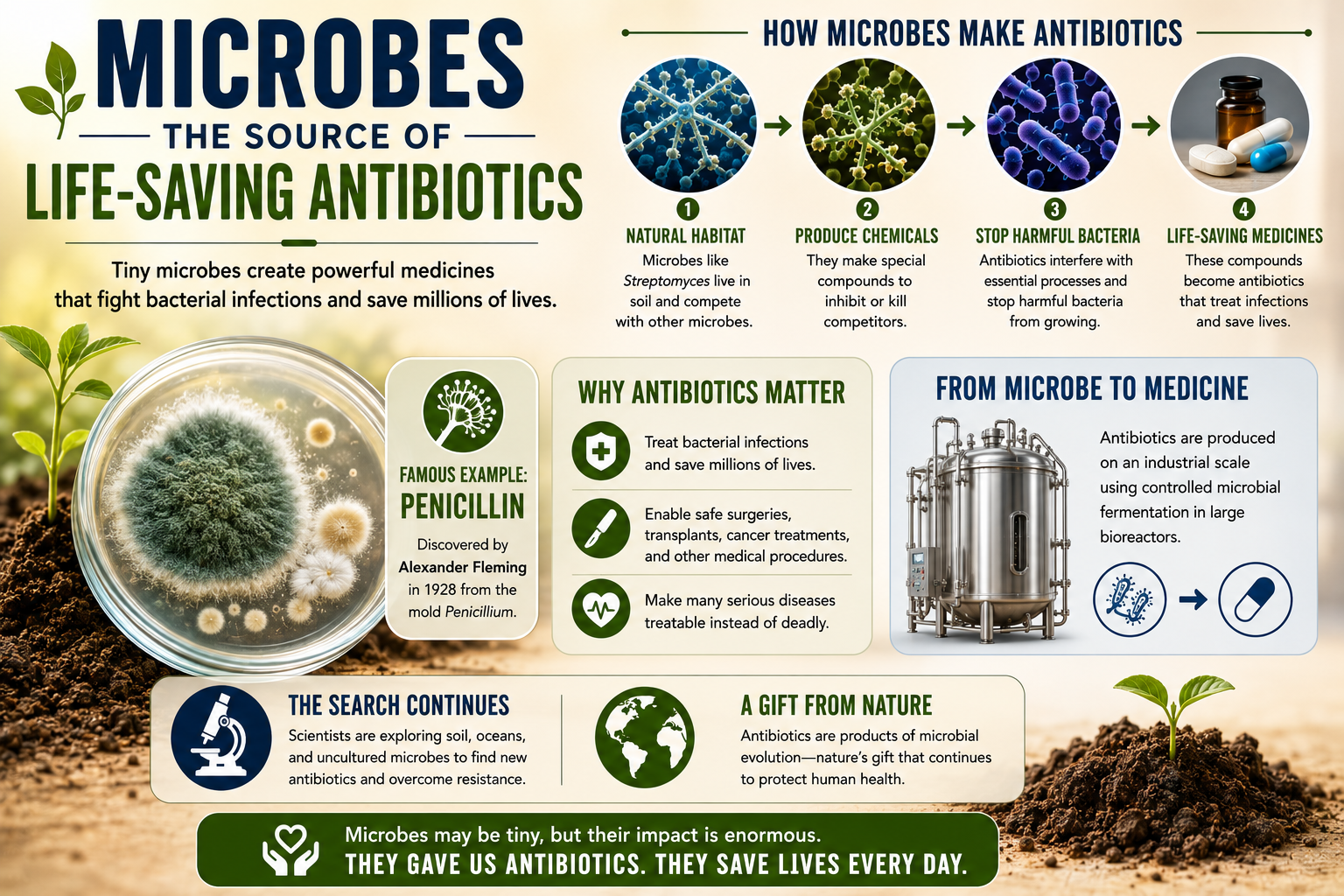
Antibiotics are among the most important medicines ever discovered, and many of them originated from microbes. Long before humans understood disease-causing bacteria, microorganisms were already competing with one another in soil, water, and other environments. In this microscopic battle for survival, some microbes evolved the ability to produce chemicals that inhibit or kill their competitors.
Many of the world's most important antibiotics come from bacteria belonging to the genus Streptomyces, which live naturally in soils. Other antibiotics are produced by fungi such as Penicillium, the mold that led to the discovery of penicillin. These microbes manufacture antibiotic compounds as part of their natural survival strategies.
Microbes act like tiny chemical factories. As they grow, they produce specialized molecules that can interfere with essential processes in other microorganisms, such as building cell walls, producing proteins, or replicating DNA. By disabling these vital functions, the antibiotics prevent competing microbes from growing or surviving.
The discovery of penicillin by Alexander Fleming in 1928 transformed medicine and opened the door to the antibiotic era. Scientists later discovered many additional antibiotics from microbes, including streptomycin, tetracycline, erythromycin, and numerous others that are still used today.
Without microbial products, modern medicine would look very different. Antibiotics have made it possible to safely perform surgeries, organ transplants, cancer treatments, and many other medical procedures that depend on controlling bacterial infections. Diseases that were once major causes of death can now often be treated effectively.
Today, antibiotics are manufactured on an industrial scale using carefully controlled microbial fermentation systems. Large bioreactors grow selected strains of bacteria or fungi, allowing pharmaceutical companies to produce lifesaving medicines for patients around the world.
Scientists continue searching for new antibiotic-producing microbes because antibiotic resistance is becoming an increasing global challenge. Soil microbes, marine microorganisms, and previously uncultured species remain important sources of potential new medicines.
Many of the antibiotics that have saved millions of lives are themselves products of microbial evolution. The same microscopic organisms that compete with one another in nature have provided humanity with some of the most powerful tools in modern medicine.
A single mold changed medicine forever and helped usher in one of the greatest public-health revolutions in history.