
Farmers have long relied on pesticides to protect crops from insects, diseases, and other pests. However, some chemical pesticides can affect non-target organisms and create environmental concerns. Biopesticides offer an alternative approach by using microbes or microbial products to help control agricultural pests.
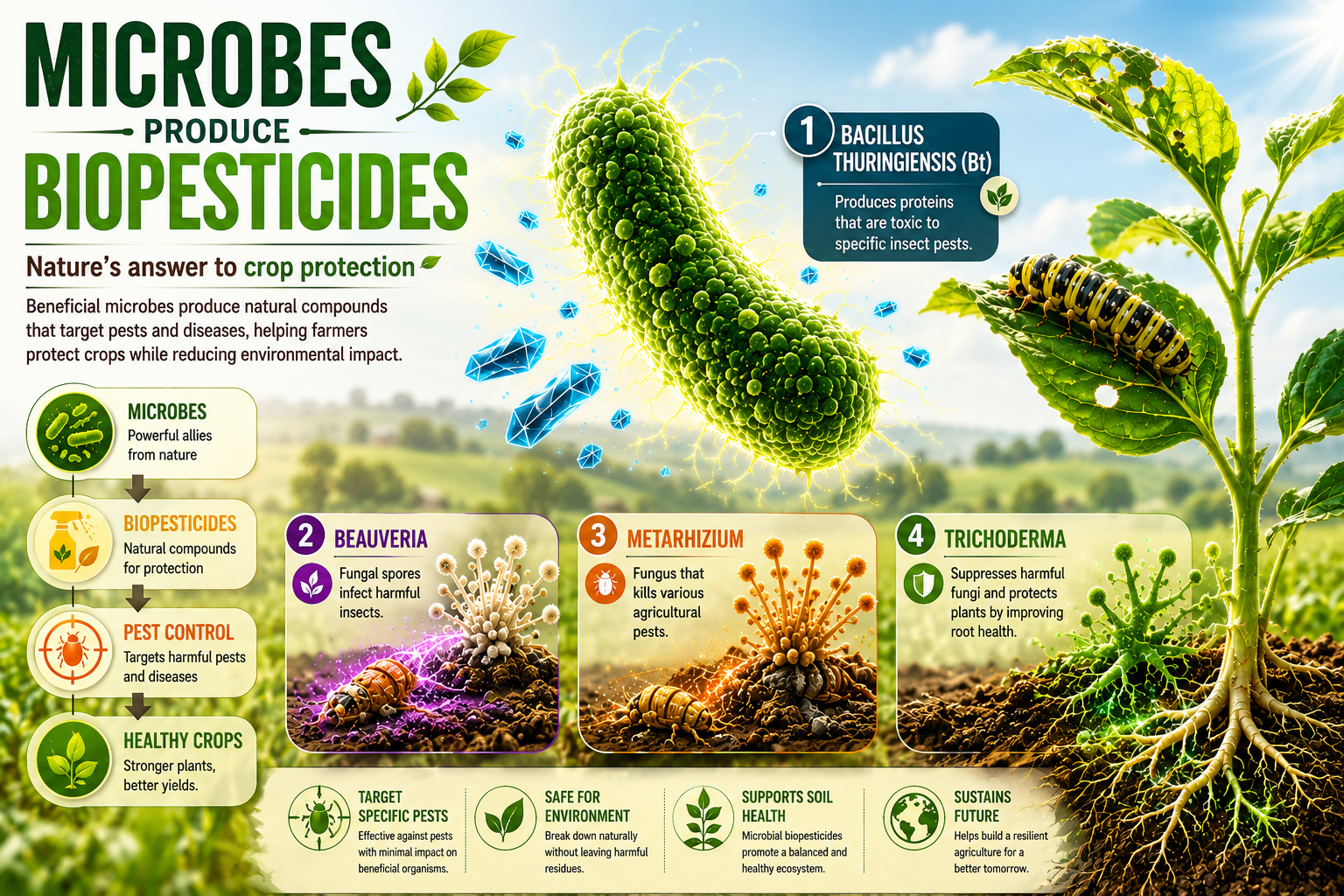
Some of the most widely used biopesticides are based on bacteria such as Bacillus thuringiensis (Bt). This bacterium naturally produces proteins that are toxic to certain insect pests. When susceptible insects feed on treated plants, these proteins disrupt their digestive systems, helping protect crops from damage.
Other microbial biopesticides use fungi such as Beauveria and Metarhizium. These fungi infect insects, grow within their bodies, and eventually kill them. Because they target specific groups of pests, they can often have less impact on many beneficial organisms than broad-spectrum chemical pesticides.
Microbes are also used to control plant diseases. Species of Trichoderma help suppress harmful fungi in the soil by competing for space and nutrients, producing antimicrobial compounds, and interacting directly with plant pathogens.
Unlike many conventional pesticides, microbial biopesticides often work through natural biological interactions that already occur in the environment. They use microbes to control pests rather than relying solely on synthetic chemicals.
Today, microbial biopesticides are used in agriculture, horticulture, forestry, and greenhouse production around the world. They are particularly valuable in integrated pest management programs, where farmers combine biological, cultural, and chemical methods to manage pests more sustainably.
Although biopesticides can reduce reliance on certain chemical products, they are not a universal replacement. Their effectiveness can vary depending on weather conditions, pest species, crop type, and application methods. In many farming systems, they are used alongside other pest-control strategies rather than as stand-alone solutions.
Every microbial biopesticide takes advantage of abilities that microbes evolved long before agriculture existed. By harnessing these natural interactions, farmers can help protect crops while reducing some of the environmental impacts associated with conventional pest control.
Some microbes are so effective at killing crop pests that they have become global agricultural technologies.