Bread is one of humanity's oldest and most important foods, and microbes are the reason it became a staple across cultures around the world. Without microbial fermentation, most bread would be dense, flat, and far less enjoyable to eat. For thousands of years, people have relied on microbes to transform simple grains into a soft, flavorful, and widely accessible food.
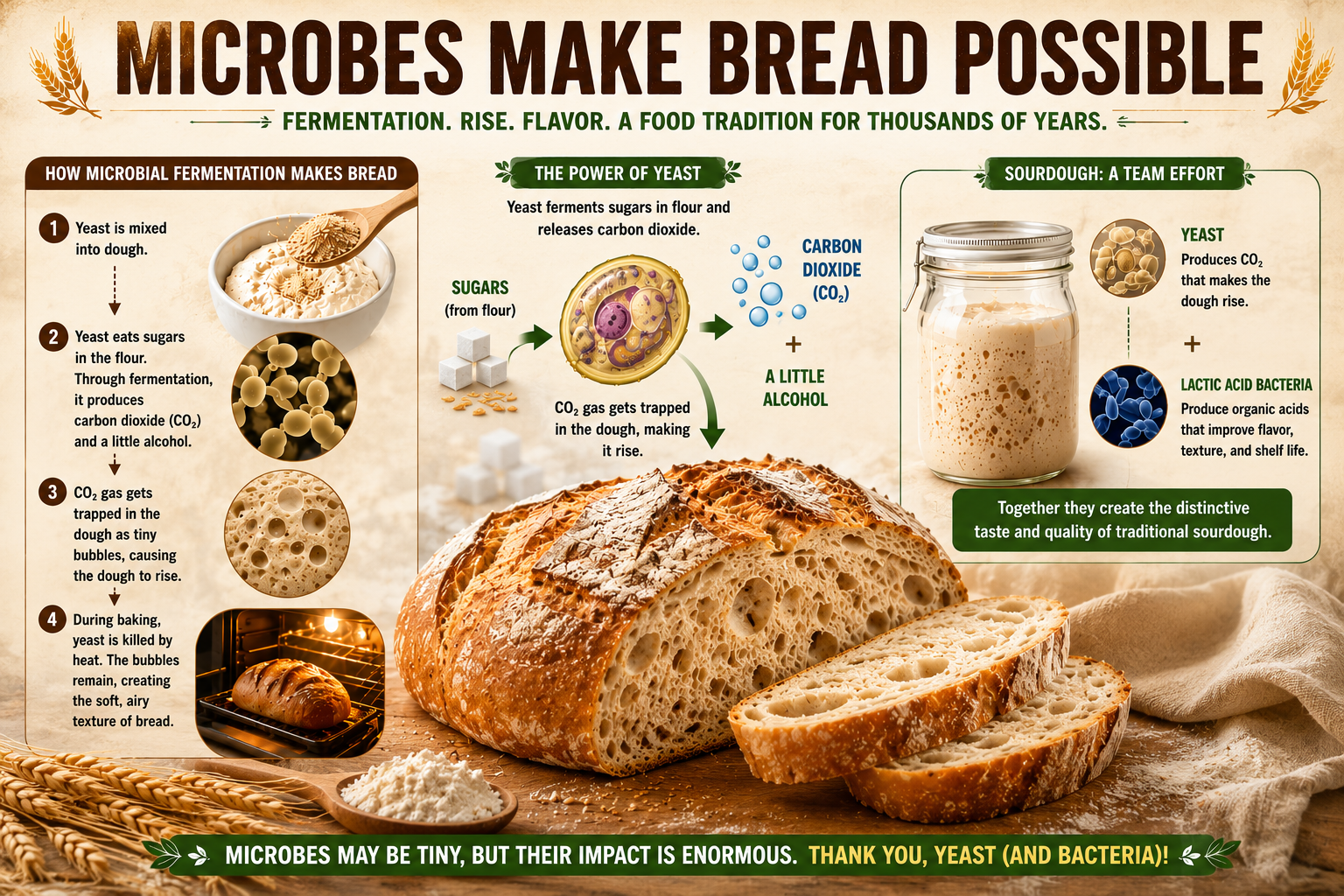
The main microbe responsible is yeast, particularly Saccharomyces cerevisiae, commonly known as baker's yeast. In traditional sourdough breads, yeasts work alongside beneficial bacteria such as Lactobacillus, creating more complex flavours and textures. Together, these microbes carry out the fermentation process that makes bread possible.
Yeast functions like a tiny biological factory within the dough. As it feeds on sugars released from the flour, it produces carbon dioxide gas and small amounts of alcohol. The gas becomes trapped inside the dough, forming thousands of tiny bubbles that cause the dough to rise and develop its light, airy structure.
The contribution of these microbes extends far beyond making bread rise. Fermentation helps improve flavour, aroma, texture, and even shelf life. In sourdough breads, bacteria produce organic acids that create the characteristic tangy taste while also helping to slow the growth of spoilage organisms.
Without microbial fermentation, bread would be little more than baked flour and water. The activity of yeast and bacteria transforms a simple mixture of ingredients into a food that is softer, tastier, and easier to consume. This transformation played a major role in making bread one of the world's most successful foods.
Bread has been produced for at least 5,000–7,000 years and became a dietary foundation in civilisations such as ancient Egypt, Mesopotamia, Greece, Rome, and many others. As agriculture expanded, fermented bread provided an efficient way to store, transport, and consume grain-based nutrition, helping support growing populations and urban societies.
Today, bread is consumed by billions of people every day and remains a major part of diets across Europe, Asia, Africa, the Middle East, and the Americas. The global baking industry supports farmers, flour mills, bakeries, food manufacturers, transportation networks, retailers, and millions of jobs worldwide.
Every loaf of risen bread is the result of microbial fermentation. For thousands of years, yeast and other microbes have helped convert grains into one of humanity's most important foods, demonstrating how microscopic organisms have shaped diets, economies, and civilizations across the world.
A single grain of yeast can ultimately help create a loaf that feeds an entire family.