Curd and yogurt are among humanity's oldest examples of microbial biotechnology. Every bowl of curd exists because billions of bacteria have transformed milk into a completely different food. What seems like a simple dairy product is actually the result of a remarkable partnership between humans and microbes, refined over thousands of years.
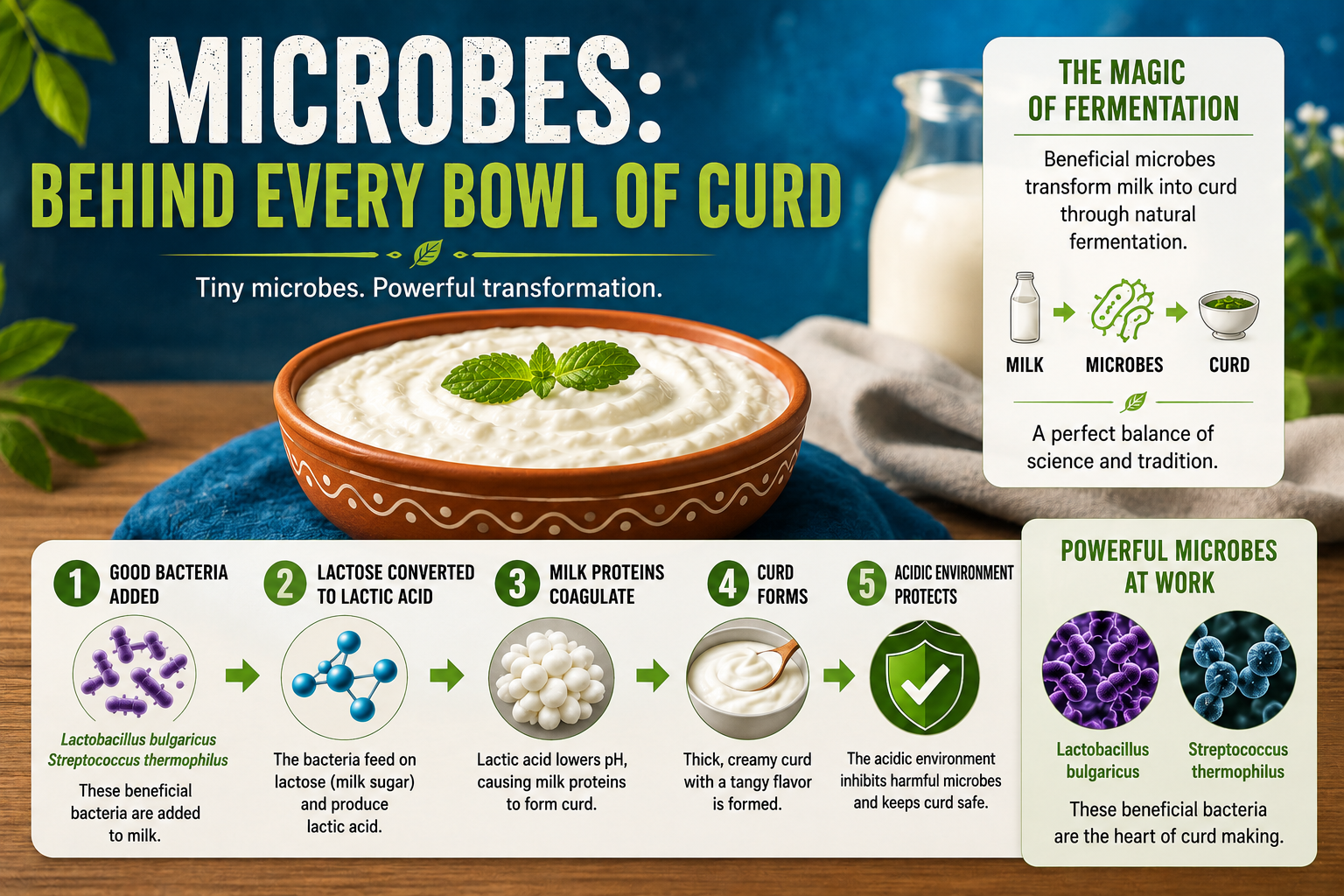
The process begins when beneficial bacteria are introduced into milk. The most important groups include Lactobacillus and Streptococcus, while traditional curd often contains additional microbes such as Lactococcus and Leuconostoc. These microorganisms feed on lactose, the natural sugar present in milk, and gradually alter the milk's chemistry through fermentation.
In many ways, these beneficial bacteria function like tiny food processors within the milk. As they consume lactose, they produce lactic acid, slowly transforming the milk from a liquid into the thick, creamy curd familiar to millions of people. This acid not only gives curd its characteristic tangy taste but also helps prevent many unwanted microbes from growing.
At the same time, the microbes perform several important jobs. They thicken the milk, create flavor compounds, improve texture, and make the product easier to digest. They also help extend shelf life by creating conditions that discourage the growth of many spoilage organisms and harmful bacteria.
Yogurt is produced through a very similar process but typically relies on specific bacterial cultures such as Lactobacillus bulgaricus and Streptococcus thermophilus. Different microbial combinations, fermentation temperatures, and production methods give rise to the wide variety of yogurts found around the world, from drinkable yogurts to thick Greek-style products.
Without microbial fermentation, neither curd nor yogurt would exist. These foods are not simply preserved milk; they are entirely new products created through microbial activity. The microbes transform the texture, flavor, aroma, digestibility, and nutritional characteristics of the original milk.
Today, fermented dairy products are consumed by billions of people worldwide. India is one of the largest consumers of curd, while yogurt is enjoyed across Europe, the Middle East, Asia, Africa, and the Americas. The global yogurt and fermented dairy industry is worth well over $100 billion annually and supports dairy farmers, milk collection networks, processing facilities, packaging industries, transportation systems, retailers, and millions of jobs.
Scientists continue to study these bacteria because some strains may contribute to gut health and interact with the human microbiome. Although research is still ongoing, fermented dairy products remain one of the most widely consumed examples of beneficial microbes in everyday life.
Every spoonful of curd or yogurt is the result of microbial fermentation. For thousands of years, humans have relied on beneficial bacteria to transform fresh milk into a safer, longer-lasting, more flavorful, and more nutritious food that continues to feed billions of people around the world.
Every spoonful of curd contains billions of microbes performing a process that humans have relied on for thousands of years.