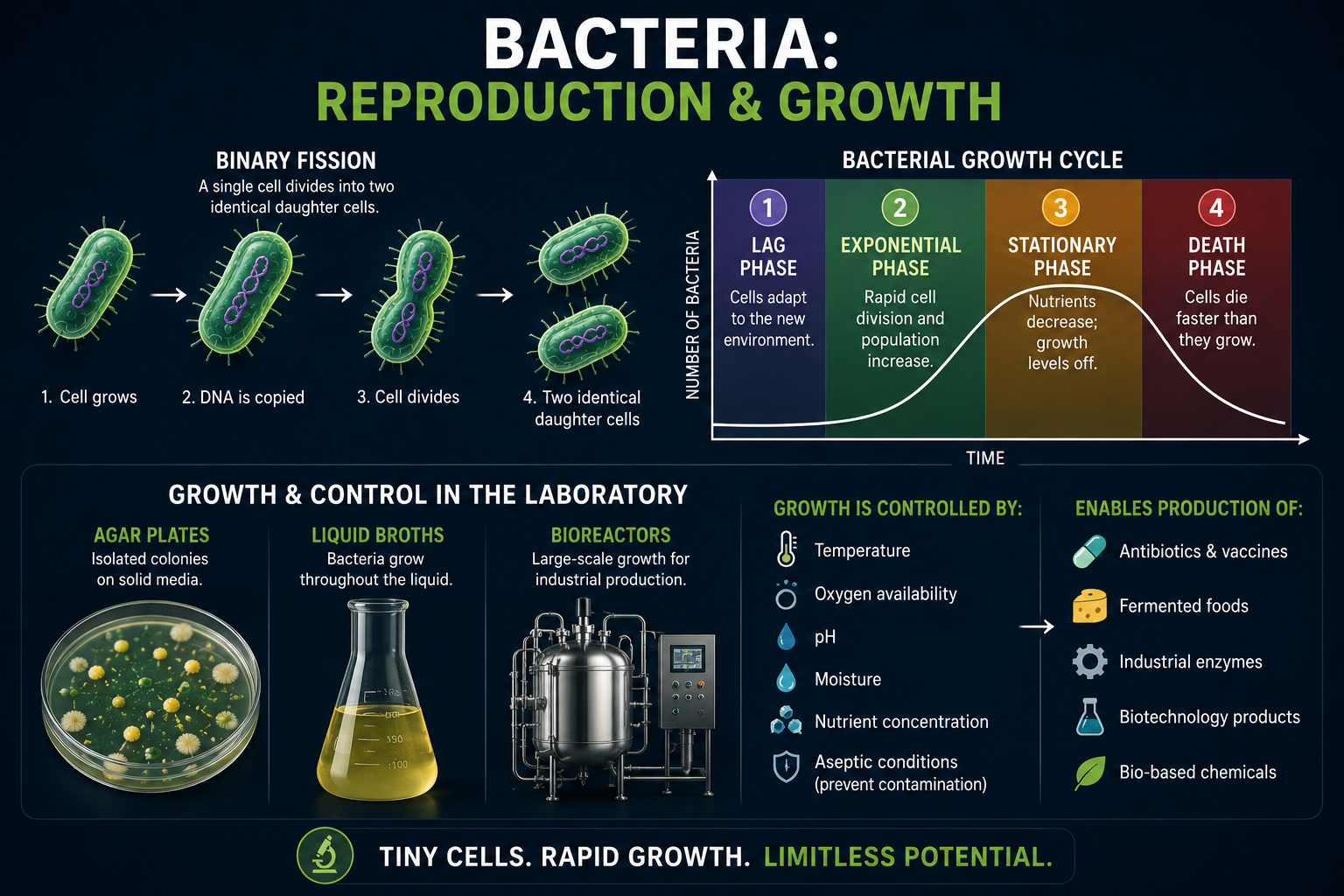
Bacteria reproduce primarily through binary fission, a rapid form of asexual reproduction in which a single cell grows, copies its DNA, and divides into two genetically identical daughter cells. Under ideal conditions, some bacterial populations can double in less than 20 minutes, allowing millions of cells to emerge from a single organism within hours.
Bacterial growth usually follows a predictable cycle. After entering a new environment, cells first undergo a lag phase, where they adjust to surrounding conditions and prepare for growth. This is followed by the exponential phase, during which rapid cell division occurs. As nutrients become limited and waste products accumulate, growth slows into the stationary phase. Eventually, if conditions continue deteriorating, the population enters a death phase, where cells begin dying faster than they reproduce.
In laboratories, scientists replicate bacterial growth using sterile nutrient-rich media containing sugars, amino acids, minerals, and other essential compounds. Bacteria may be cultured on agar plates, inside liquid broths, or within large bioreactors used in industrial microbiology.
Growth is carefully controlled by adjusting environmental factors such as temperature, oxygen availability, pH, moisture, salinity, and nutrient concentration. Scientists also use aseptic techniques to prevent contamination from unwanted microbes.
The ability to grow bacteria under controlled conditions has become fundamental to modern science and industry, supporting the production of antibiotics, vaccines, enzymes, fermented foods, industrial chemicals, and biotechnology products.
Under ideal conditions, a single bacterial cell can multiply into millions within hours, demonstrating the extraordinary speed and adaptability of microbial life.