Some of the most valuable microbes on Earth are those that can make dangerous toxins disappear. Rather than simply containing pollutants, these organisms can chemically break them down into less harmful substances.
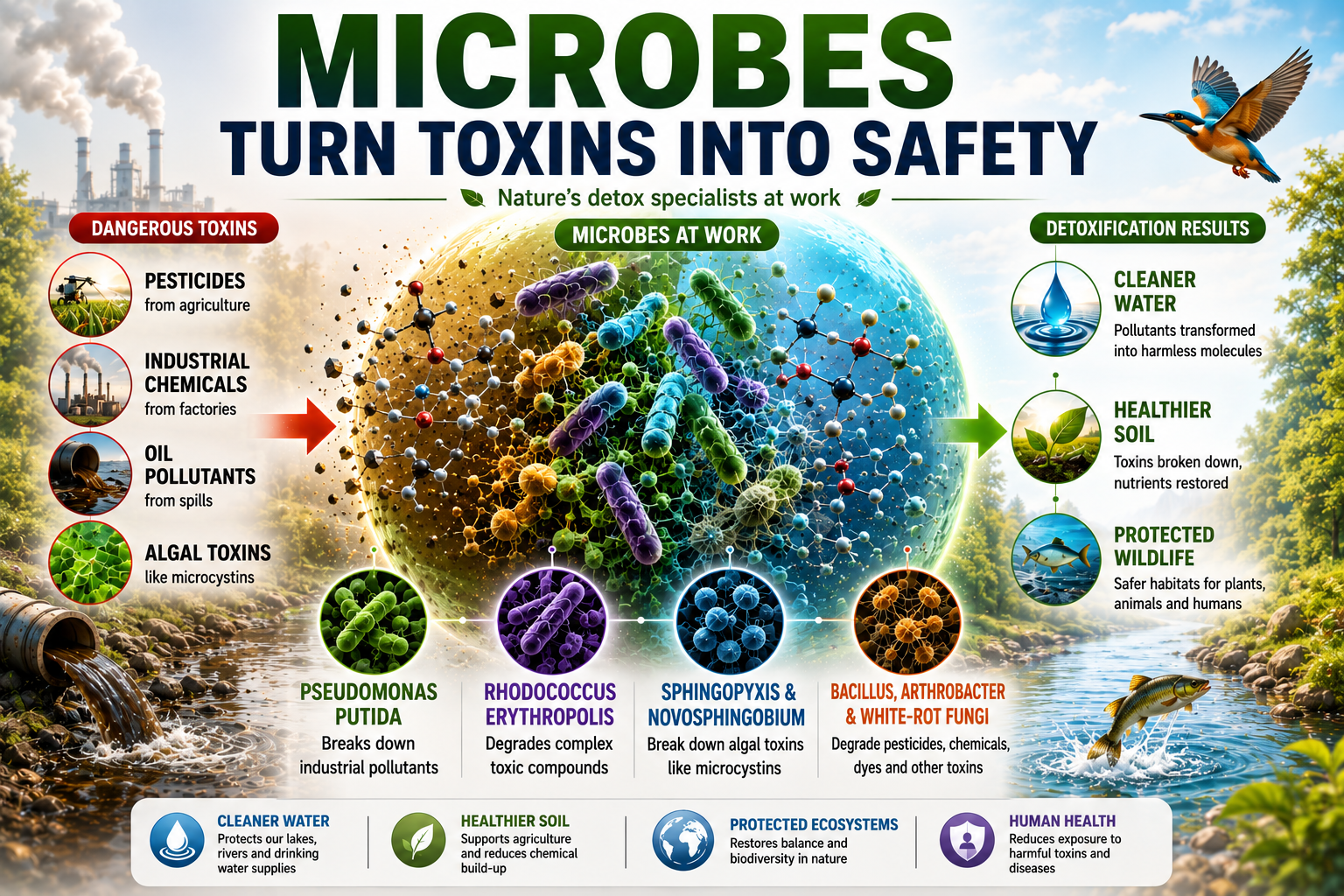
Many bacteria use toxins as a source of carbon or energy. Microbes such as Pseudomonas putida, Rhodococcus erythropolis, and Sphingomonas species produce enzymes that attack complex toxic compounds and gradually convert them into simpler molecules.
This ability is particularly useful for cleaning environments contaminated by pesticides, industrial chemicals, petroleum products, and other hazardous pollutants. Instead of physically removing the contamination, the microbes perform a form of biological detoxification.
Certain microbes can also degrade naturally occurring toxins. For example, bacteria such as Sphingopyxis and Novosphingobium have been shown to break down microcystins, toxins produced during harmful algal blooms that can contaminate lakes and drinking water supplies.
In agricultural soils, microbes help degrade residual pesticides before they accumulate to harmful levels. Species of Pseudomonas, Bacillus, and Arthrobacter are particularly well known for their ability to metabolize a variety of agricultural chemicals.
Some fungi are equally impressive. White-rot fungi such as Phanerochaete chrysosporium produce powerful enzymes that can break down dyes, phenols, and other persistent toxic compounds that are often difficult to remove using conventional treatment methods.
In essence, toxin degradation turns microbes into nature's detoxification specialists. By transforming hazardous compounds into safer products, they help protect ecosystems, water supplies, wildlife, and human health.
What humans call pollution, some microbes call food.