Microbes are among the primary systems that keep ecosystems functioning. In soils, rivers, oceans, forests, and wetlands, they continuously recycle nutrients, regulate chemical cycles, decompose organic matter, and support the growth of larger organisms.
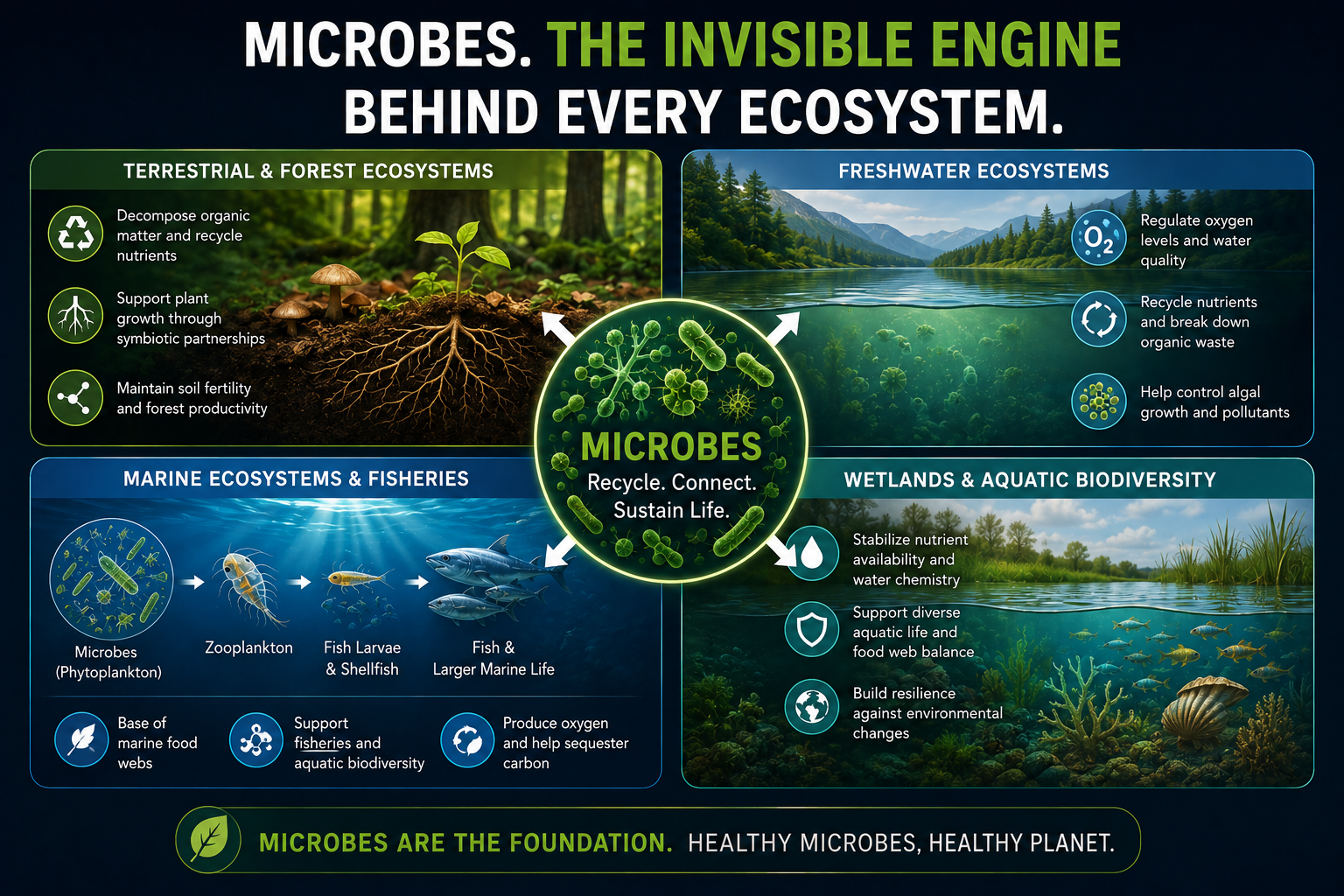
In terrestrial and forest ecosystems, bacteria and fungi break down dead plants, fallen leaves, wood, and animal remains, releasing nutrients such as nitrogen, phosphorus, and carbon back into the soil. Without microbial decomposition, ecosystems would rapidly accumulate undecomposed organic material and lose long-term fertility.
Many soil microbes also form close symbiotic relationships with plants. Nitrogen-fixing bacteria supply biologically usable nitrogen to roots, while mycorrhizal fungi expand nutrient and water absorption networks underground. These microbial partnerships strongly influence forest productivity, crop growth, and ecosystem resilience.
Freshwater ecosystems depend heavily on microbial communities for nutrient cycling and water quality regulation. In lakes, rivers, and wetlands, microbes decompose organic waste, regulate oxygen dynamics, recycle dissolved nutrients, and help control algal growth and pollutant accumulation.
Marine ecosystems are even more deeply tied to microbial activity. Photosynthetic microbes such as diatoms, cyanobacteria, and other phytoplankton form the base of most ocean food webs. They convert sunlight and carbon dioxide into organic matter that ultimately supports:
-
zooplankton
-
fish larvae
-
shellfish
-
larger marine animals
-
commercial fisheries
Some marine microbes additionally regulate climate by influencing carbon sequestration and oxygen production. Others recycle nutrients within deep ocean systems where sunlight cannot penetrate.
Aquatic biodiversity is strongly linked to microbial balance. Healthy microbial communities help stabilize nutrient availability, maintain water chemistry, and support food web productivity. Disruptions to microbial ecosystems caused by pollution, warming, acidification, or oxygen depletion can ripple through entire fisheries and marine ecosystems.
Although usually invisible, microbes act as the biochemical foundation beneath nearly every major ecosystem on Earth.
Beneath forests, within rivers, and across the oceans, microbial life continuously powers the hidden biochemical systems that sustain Earth’s ecosystems.