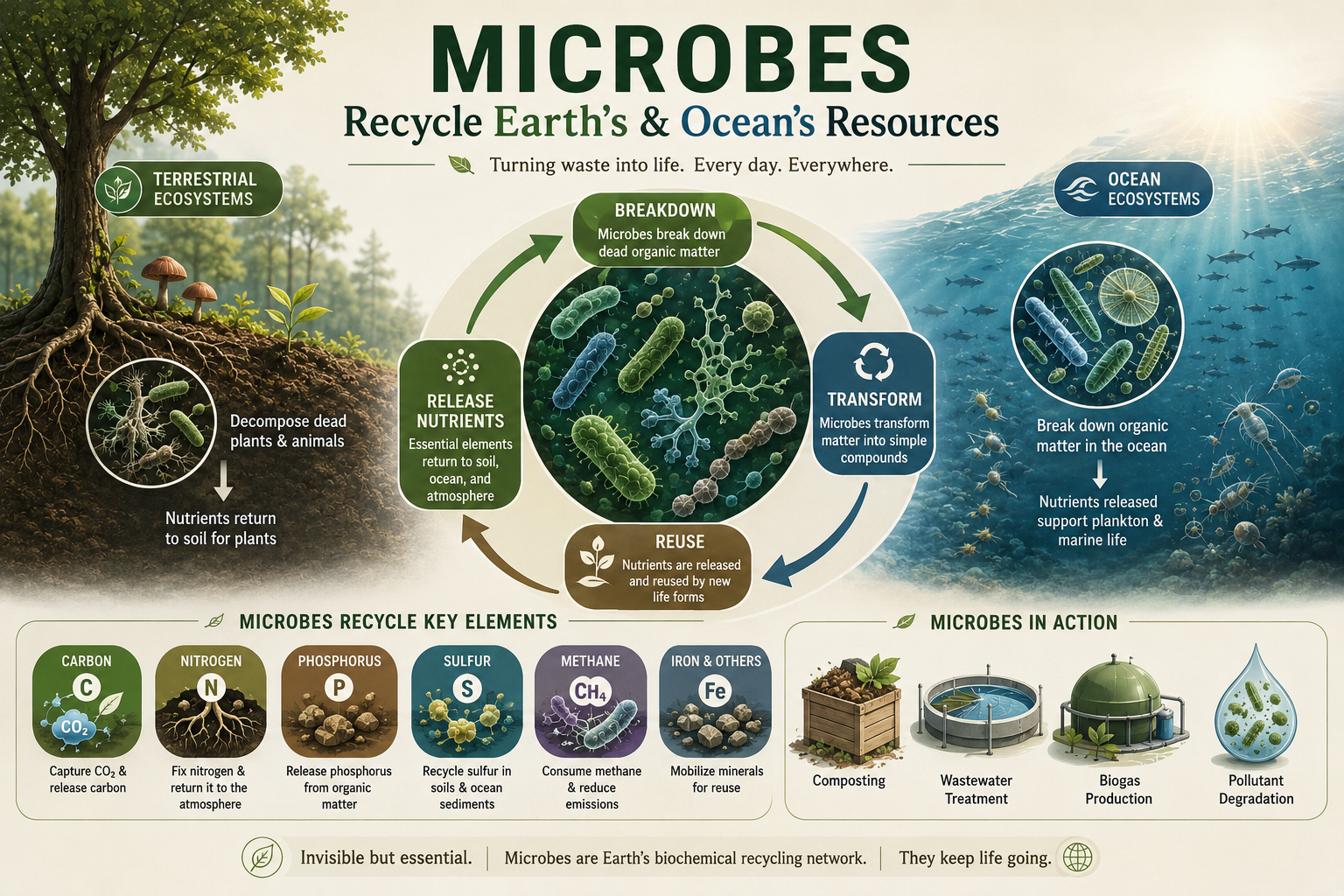
Microbes recycle Earth’s resources by continuously breaking down, transforming, and redistributing chemical elements through the environment. Nearly all major nutrient cycles on the planet depend on microbial metabolism.
When plants, animals, algae, and other organisms die, microbes begin decomposing the organic material and converting it into simpler compounds. During this process, nutrients such as carbon, nitrogen, phosphorus, sulfur, and iron are released back into soils, sediments, oceans, and the atmosphere where they can be reused by other organisms.
In terrestrial ecosystems, soil bacteria and fungi recycle dead leaves, roots, wood, and animal remains into nutrients that plants can absorb again. Without microbial recycling, nutrients would remain locked inside dead material and ecosystems would gradually lose fertility.
In oceans, marine microbes recycle enormous amounts of dissolved organic matter produced by plankton, algae, fish, and marine animals. Some microbes break down sinking organic particles and release nutrients back into seawater, where they support new generations of phytoplankton and marine life.
Certain microbes perform highly specialized recycling roles. Nitrogen-fixing bacteria convert atmospheric nitrogen into biologically usable forms, while other microbes return nitrogen back to the atmosphere through denitrification. Methane-consuming microbes reduce methane accumulation, and sulfur-metabolizing microbes recycle sulfur compounds through marine sediments and hydrothermal systems.
Photosynthetic microbes also contribute to recycling by capturing carbon dioxide and converting it into organic biomass that enters food webs. When that biomass is later decomposed, the carbon is redistributed through ecosystems again.
Even human waste recycling systems rely heavily on microbes. Composting, wastewater treatment, biogas production, and pollutant degradation all depend on microbial communities transforming waste into reusable nutrients, gases, or less harmful compounds.
Microbes therefore function as Earth’s biochemical recycling network, continuously moving matter between living organisms, soils, oceans, sediments, and the atmosphere.
Earth’s ecosystems remain biologically sustainable largely because microbes continuously recycle the planet’s chemical building blocks back into life.