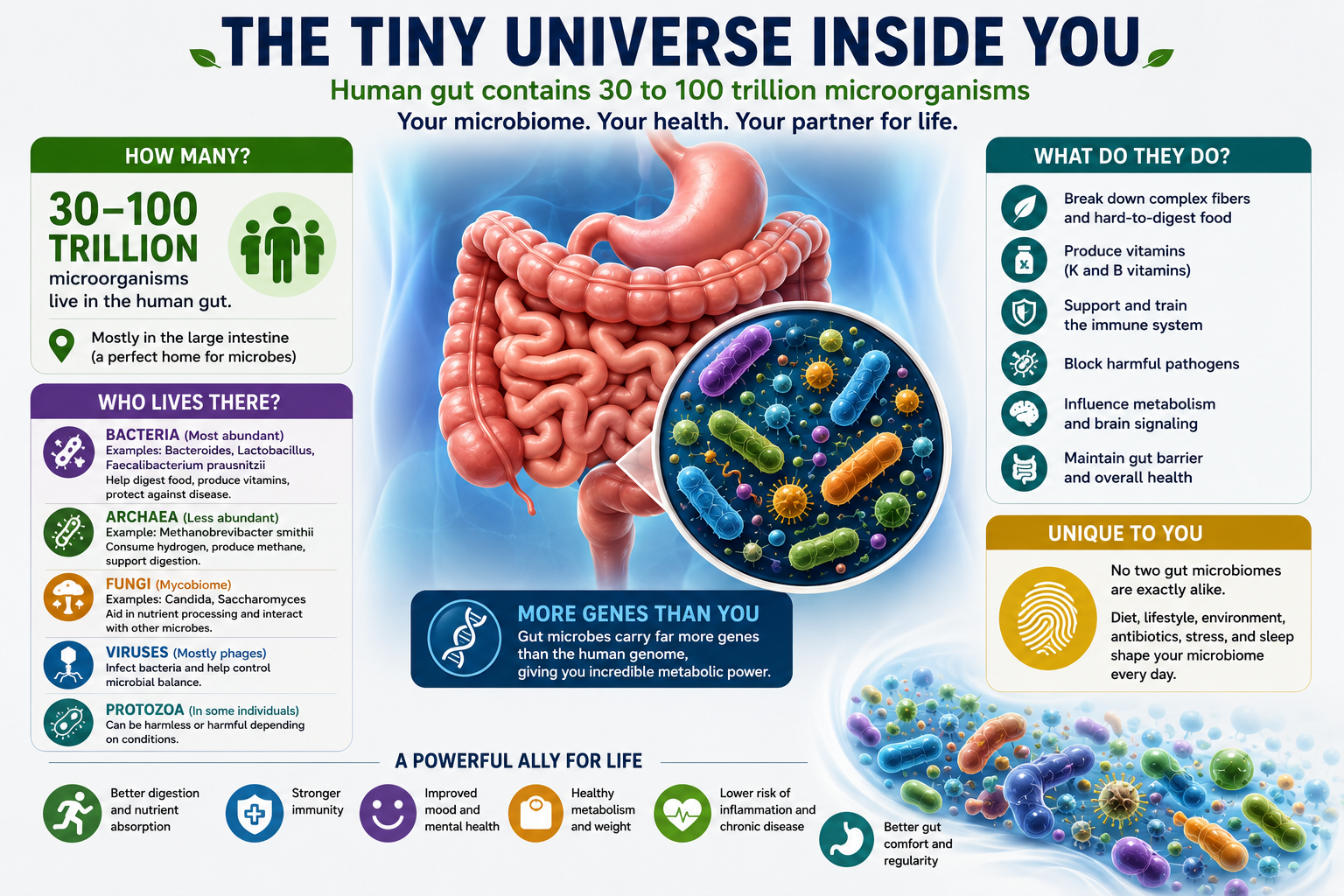
The human gut contains an astonishingly large microbial population, estimated at roughly 30 to 100 trillion microorganisms depending on the individual, diet, age, health condition, and measurement methods used. Most of these microbes live in the large intestine, which provides a nutrient-rich and relatively stable environment for microbial growth.
This community, known as the gut microbiome, includes several major microbial groups.
Bacteria dominate overwhelmingly. Species such as Bacteroides help digest complex carbohydrates and fats, Lactobacillus assists in maintaining gut acidity and microbial balance, while Faecalibacterium prausnitzii produces anti-inflammatory compounds that support intestinal health.
Archaea are less abundant but still important. Methanogens such as Methanobrevibacter smithii consume hydrogen produced during digestion and generate methane, helping regulate microbial fermentation processes inside the gut.
Fungi, collectively called the gut mycobiome, include organisms such as Candida and Saccharomyces. In balanced amounts, they participate in nutrient processing and microbial interactions, although excessive fungal growth can contribute to disease.
Viruses in the gut are mainly bacteriophages, viruses that infect bacteria. These phages help regulate bacterial populations and influence overall microbial ecosystem balance.
Protozoa are also present in some individuals. Certain protozoa may exist harmlessly within the gut ecosystem, while others can become pathogenic under specific conditions.
Together, these microbes perform functions humans cannot efficiently carry out on their own. They help digest dietary fibers, produce vitamins such as vitamin K and certain B vitamins, regulate immune activity, suppress harmful pathogens, influence metabolism, and generate signaling molecules linked to the nervous system.
The total genetic material within the gut microbiome is immense. Collectively, gut microbes contain far more genes than the human genome itself, giving the microbiome enormous metabolic flexibility.
Importantly, no two human gut microbiomes are exactly identical. Diet, antibiotics, geography, stress, sleep, lifestyle, and early childhood exposure continuously shape microbial composition throughout life.
Scientists increasingly view the gut microbiome not as a passive collection of organisms, but as a dynamic internal ecosystem deeply integrated with human biology and long-term health.
The human gut contains tens of trillions of microbes forming a vast internal ecosystem that profoundly influences digestion, immunity, metabolism, and overall health.