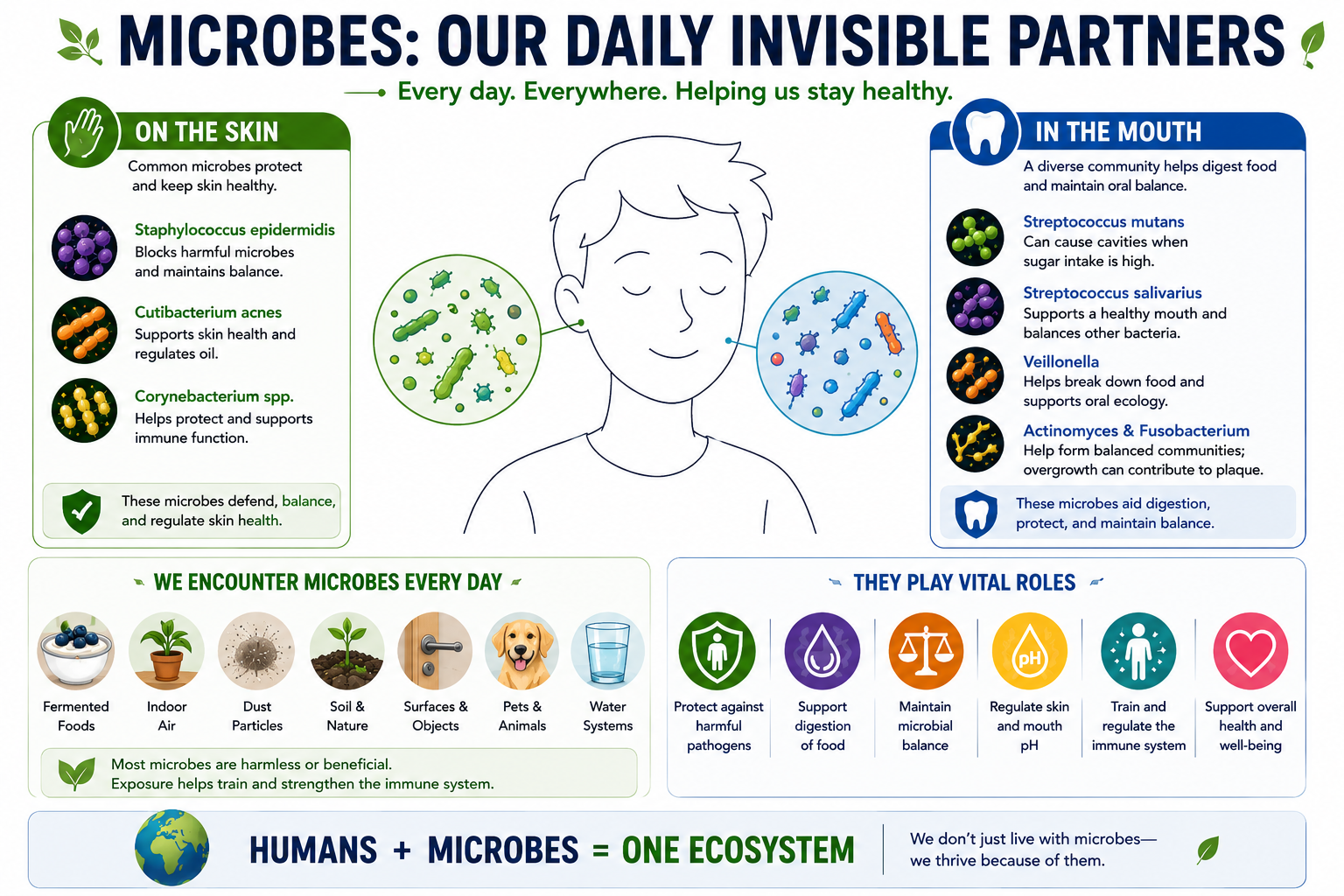
Humans constantly interact with enormous microbial populations through the air, food, water, surfaces, soil, and their own bodies. The skin and mouth alone host highly complex microbial ecosystems that begin forming shortly after birth.
On the skin, some of the most common microbes include Staphylococcus epidermidis, Cutibacterium acnes, and Corynebacterium species. These organisms help occupy physical space and consume nutrients that might otherwise support harmful pathogens. Certain skin microbes also produce antimicrobial compounds and help regulate skin pH and immune responses.
In the mouth, microbial diversity is even greater. Species such as Streptococcus mutans, Streptococcus salivarius, Veillonella, Actinomyces, and Fusobacterium are commonly present on teeth, gums, and the tongue.
Some oral microbes help begin the digestion of food and maintain microbial balance, while others contribute to plaque formation and tooth decay when conditions favor excessive growth. The mouth is one of the most biologically active microbial environments in the human body because of its constant moisture, nutrients, and surface complexity.
Beyond the body, humans encounter microbes continuously through:
-
fermented foods, indoor air, dust particles, soil, household surfaces, pets and water systems
Most of these microbes are harmless or beneficial. In fact, constant microbial exposure plays an important role in training and regulating the immune system.
Rather than existing separately from microbes, humans function more like interconnected ecosystems where microbial communities contribute to digestion, immunity, skin health, oral biology, and overall physiological balance every day.
Humans are constantly surrounded and inhabited by enormous microbial ecosystems that quietly help protect, regulate, and support the body every day.