For many years, scientists believed the brain was completely free of microbes. Today, the answer is less clear than once thought.
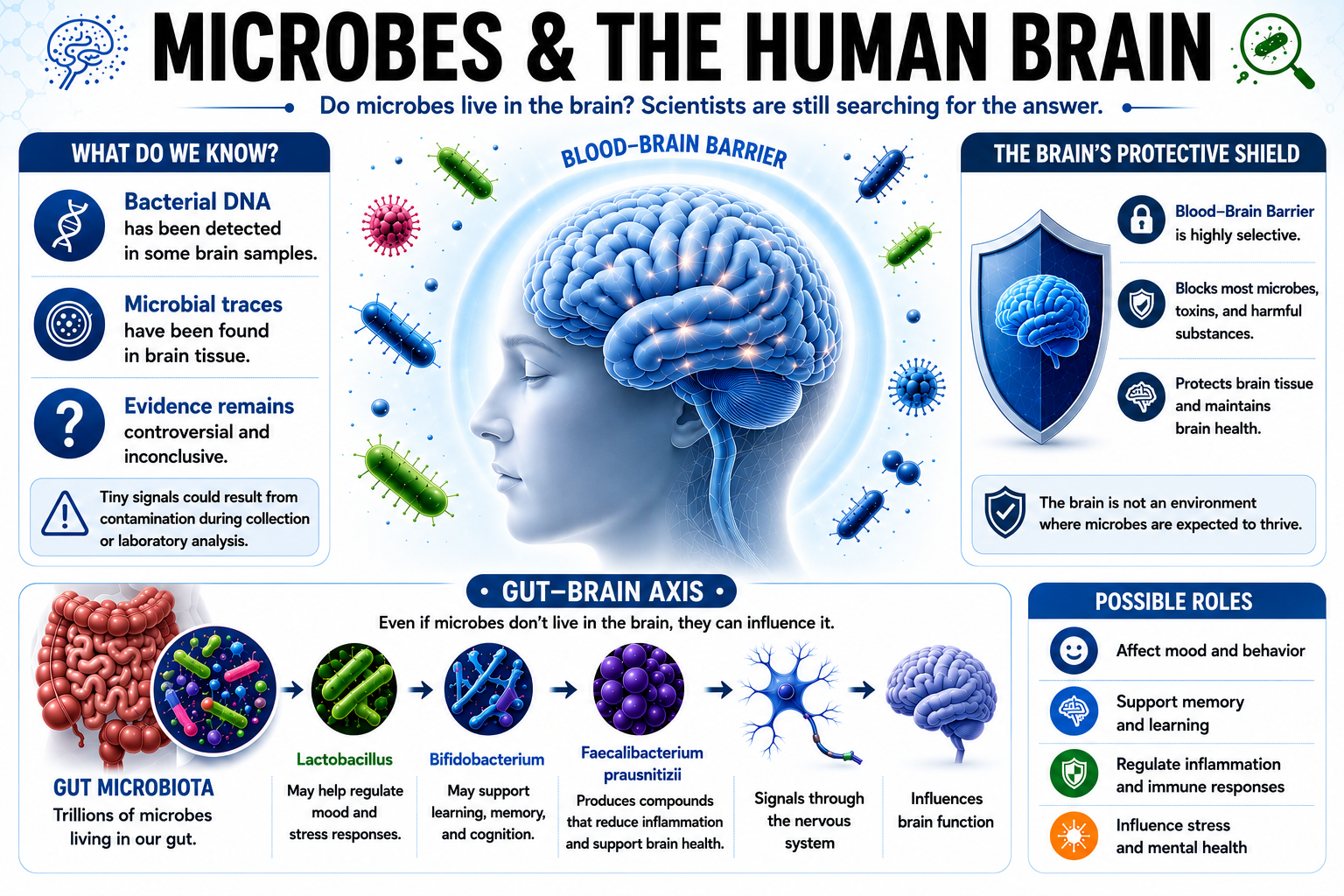
Some studies have detected bacterial DNA and other microbial traces in brain tissue, raising the possibility that the brain may contain its own microbial community. However, these findings remain controversial because such tiny signals can sometimes result from contamination during sample collection or analysis.
One reason for the uncertainty is the blood-brain barrier, a highly selective protective shield that prevents most microbes, toxins, and harmful substances from reaching the brain. Unlike the gut or skin, the brain is not considered an environment where microbes are expected to thrive.
Even if microbes do not normally live in the brain itself, they can still influence brain function. Gut bacteria such as Lactobacillus and Bifidobacterium produce signaling molecules that communicate with the nervous system through the gut-brain axis and may affect mood, memory, learning, and stress responses.
Other gut microbes, including Faecalibacterium prausnitzii, produce compounds that help regulate inflammation, which can indirectly influence brain health. Researchers are increasingly exploring how changes in the gut microbiome may be linked to neurological and mental health conditions.
Whether healthy brains contain resident microbes remains an open scientific question. What is already clear, however, is that microbes have a much stronger connection to brain health and function than scientists once imagined.
Microbes may never cross the brain's defenses, yet they could still help shape the way we think, feel, and respond to the world.