
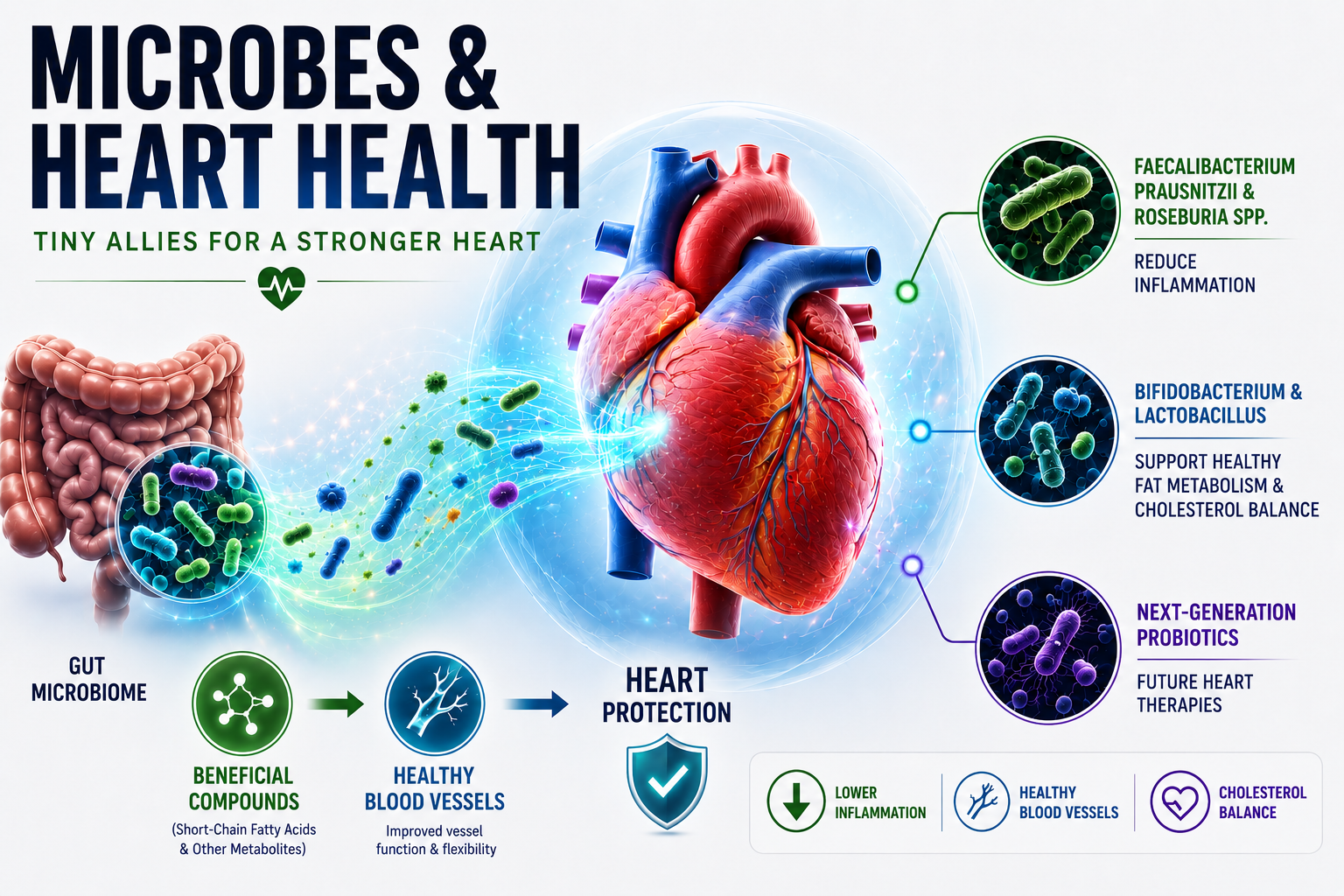
The idea that microbes could influence heart health might sound surprising, but growing research has revealed strong connections between the gut microbiome and the cardiovascular system.
Some beneficial gut bacteria, including Faecalibacterium prausnitzii and Roseburia species, produce short-chain fatty acids that help reduce inflammation and support the health of blood vessels. Since chronic inflammation is a major contributor to heart disease, these microbes may play a protective role.
Other microbes, such as Bifidobacterium and Lactobacillus species, can influence how the body processes fats and cholesterol. By affecting these metabolic pathways, they may help support healthier cholesterol levels and reduce the risk of atherosclerosis, the buildup of fatty deposits inside arteries.
Researchers are also developing next-generation probiotics designed to improve the balance of the gut microbiome. These specialized microbes may one day become part of strategies to support cardiovascular health and reduce disease risk.
Although this field is still evolving, evidence increasingly suggests that the microbes living in our gut can influence heart health in ways scientists are only beginning to understand. The future of cardiovascular medicine may involve not only treating the heart itself, but also the microbial communities that help shape its health.
The connection between the gut and the heart is revealing that cardiovascular health extends far beyond the heart itself.