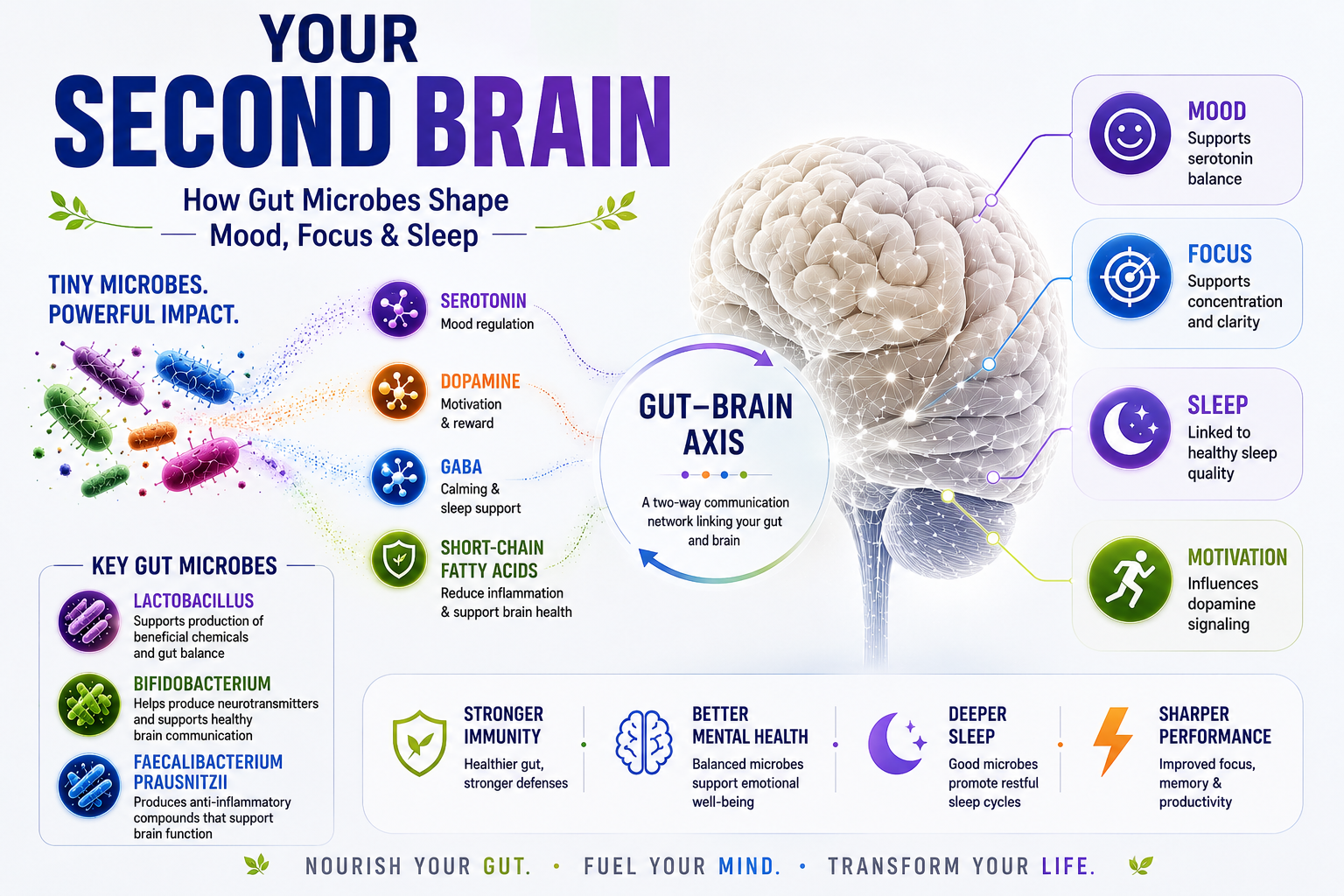
The microbes living in your gut do far more than help digest food. Scientists now know that they communicate with the brain through a network known as the gut-brain axis, influencing mood, mental performance, and sleep.
Some gut bacteria, including Lactobacillus and Bifidobacterium species, help produce or regulate chemicals such as serotonin, dopamine, and GABA. These signaling molecules play important roles in emotions, motivation, and overall mental well-being.
Other microbes, such as Faecalibacterium prausnitzii, produce compounds that help reduce inflammation. Since inflammation can affect brain function, these microbes may indirectly support focus, concentration, and cognitive performance.
Sleep is also closely linked to the microbiome. Research suggests that healthy populations of microbes such as Bifidobacterium and Lactobacillus are associated with better sleep quality, while disruptions in the gut microbiome may contribute to sleep disturbances and irregular sleep patterns.
Scientists have also observed links between changes in the gut microbiome and conditions such as anxiety, depression, and chronic stress. Although microbes do not directly control our thoughts or behavior, they can influence many of the biological processes that shape how we feel and function each day.
The idea that tiny organisms in the gut can affect the brain may seem surprising, but it is becoming one of the most fascinating discoveries in modern microbiology and neuroscience.
What we call the mind may be influenced by a biological partnership between human cells and trillions of microbes.