For most of human history, microbes were invisible forces. Today, they are recognized as some of the most influential organisms on Earth, affecting everything from human health to agriculture and the environment.
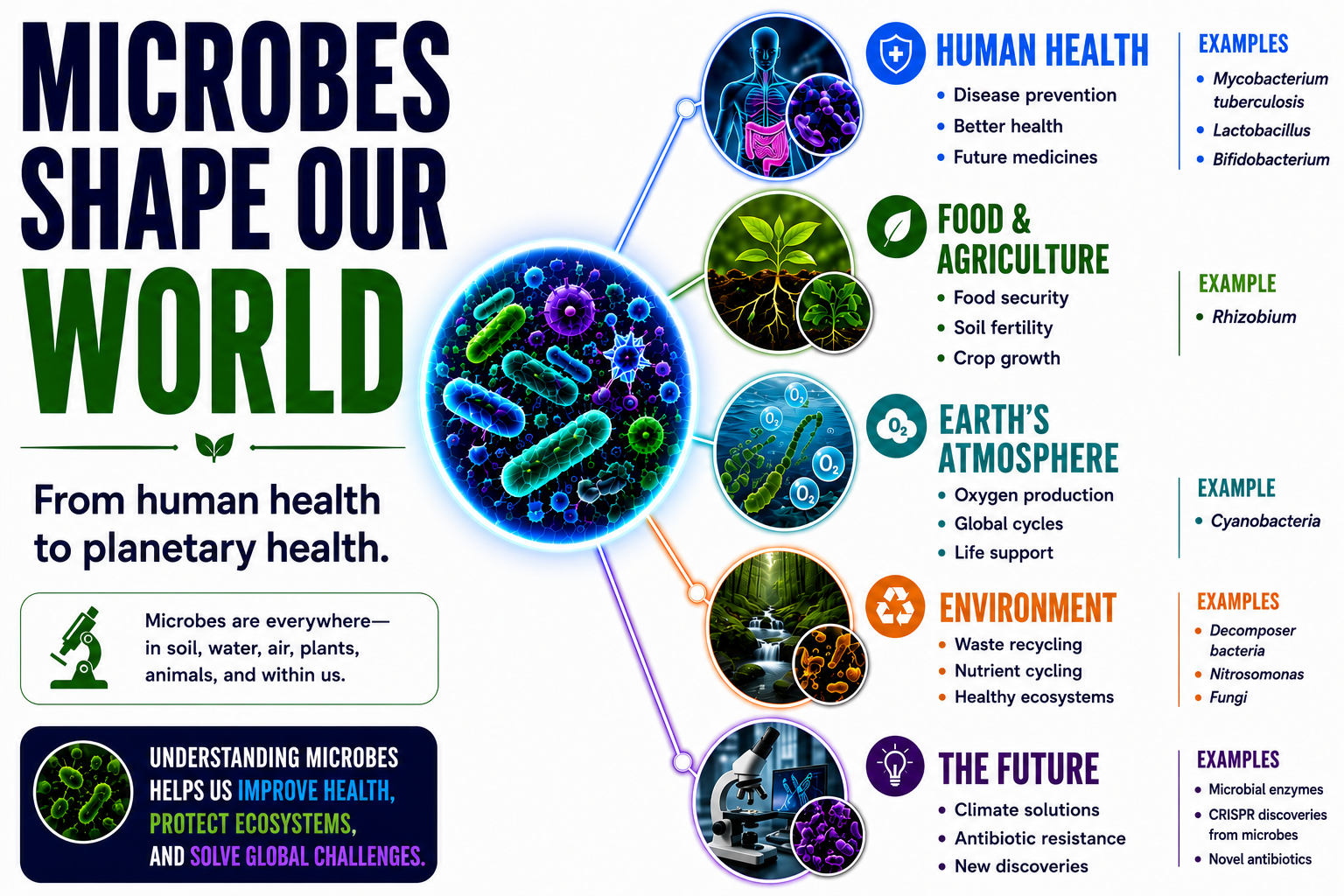
Understanding microbes has helped scientists identify disease-causing organisms such as Mycobacterium tuberculosis and Vibrio cholerae, leading to major advances in medicine, sanitation, and public health. At the same time, research has revealed that beneficial microbes such as Lactobacillus and Bifidobacterium help support digestion, immunity, and overall well-being.
Beyond the human body, microbes drive many natural processes that make life possible. Rhizobium bacteria help plants obtain nitrogen, while photosynthetic cyanobacteria produce a significant share of the oxygen in Earth's atmosphere. Without microbial activity, ecosystems would function very differently.
As challenges such as antibiotic resistance, emerging diseases, food security, and climate change continue to grow, understanding microbes is becoming increasingly important. These microscopic organisms often shape problems that affect billions of people, but they can also provide some of the solutions.
The more we learn about microbes, the more we discover that they are not simply germs to be controlled. They are fundamental partners in the systems that sustain human life and the planet itself.
Many of the forces that shape our future are too small to see but too important to ignore.