Some of the most influential advances in biotechnology have come from genetically modified microbes. By altering their genes, scientists have transformed ordinary microorganisms into producers of medicines, industrial chemicals, and research tools that affect millions of people.
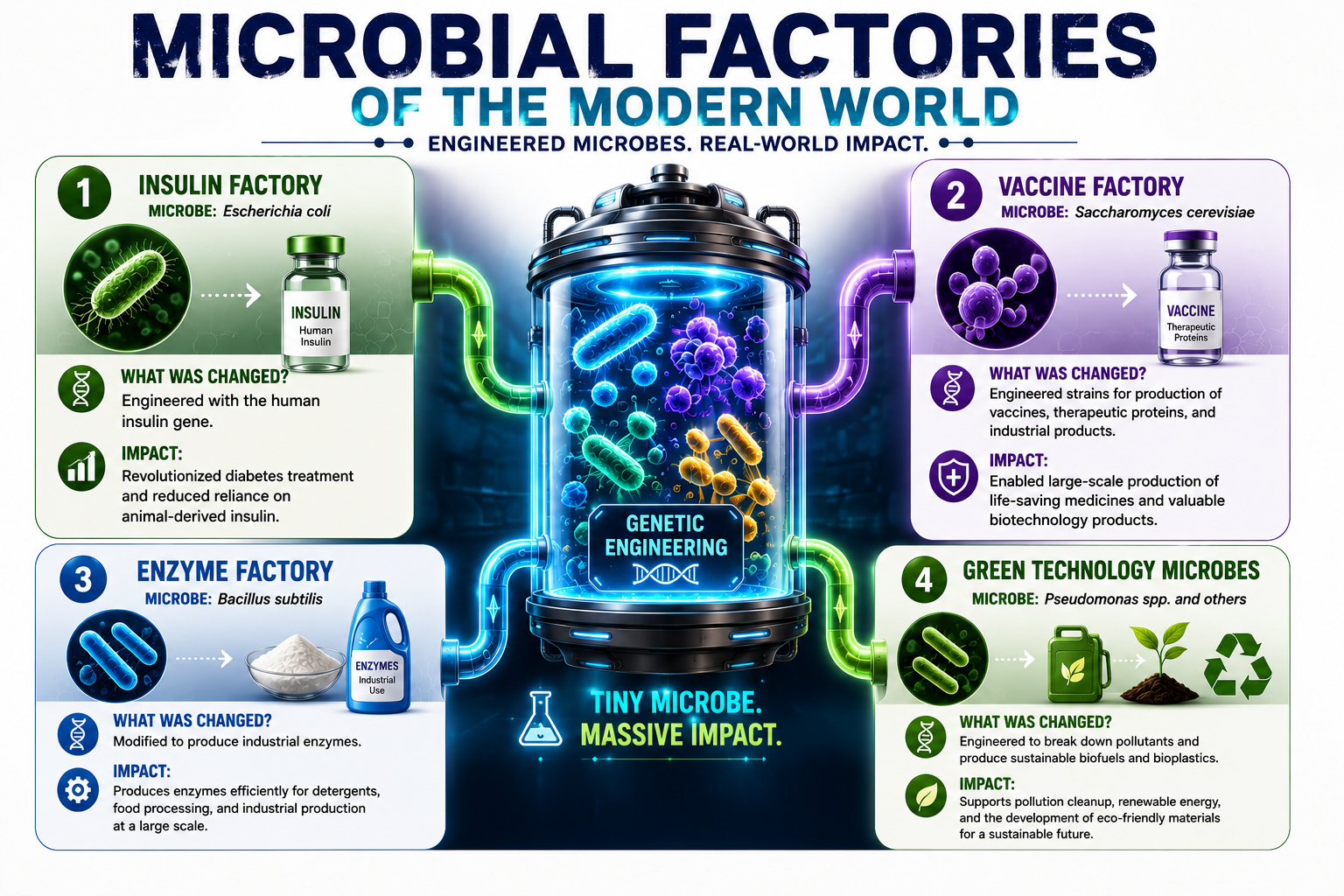
One of the best-known examples is Escherichia coli. After being genetically engineered with the human insulin gene, E. coli became capable of producing insulin on an industrial scale, revolutionizing diabetes treatment and reducing reliance on animal-derived insulin.
Yeast, particularly Saccharomyces cerevisiae, has also been extensively modified for biotechnology. Engineered strains are used to produce vaccines, therapeutic proteins, and a variety of valuable industrial products.
Another important example involves Bacillus subtilis, a bacterium modified to manufacture enzymes used in detergents, food processing, and industrial production. These enzymes are produced efficiently and at large scale using microbial fermentation.
Genetic modification has also improved environmental and agricultural applications. Engineered strains of Pseudomonas and other bacteria have been developed to help break down pollutants, while modified microbes are being explored for sustainable production of biofuels and bioplastics.
These examples show how genetic modification can turn microbes into biological factories. Organisms once studied primarily for their natural behavior are now helping produce medicines, industrial products, and technologies that support modern society.
Genetically modified microbes show how a single cell can become a factory, a medicine producer, and a technological platform all at once.