
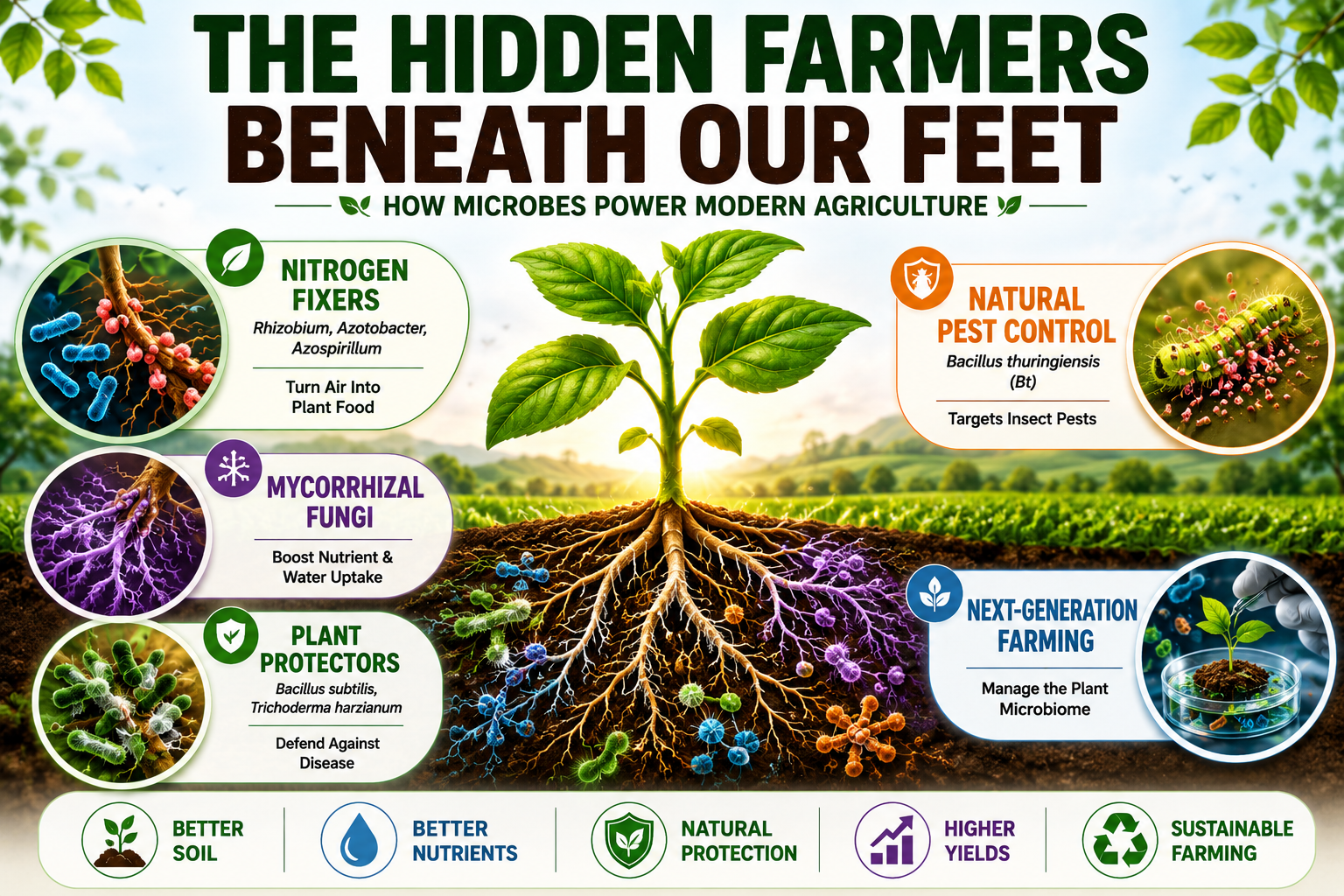
Some of the most important agricultural discoveries have revealed that microbes are not just inhabitants of soil but active partners in plant growth, nutrition, and protection. Modern agriculture relies on several microbial processes that help improve crop productivity while reducing dependence on chemical inputs.
One of the most significant discoveries was biological nitrogen fixation. Bacteria such as Rhizobium form partnerships with legumes and convert atmospheric nitrogen into forms plants can use. Similar nitrogen-fixing microbes, including Azotobacter and Azospirillum, are widely used as biofertilizers to improve soil fertility.
Another major breakthrough was the discovery of mycorrhizal fungi. These fungi form networks around plant roots, increasing the uptake of water, phosphorus, and other nutrients. Many crops grow more efficiently when supported by these fungal partners.
Microbes also help protect plants from disease. Species such as Bacillus subtilis and Trichoderma harzianum can suppress harmful pathogens in the soil and are widely used as biological control agents in sustainable farming systems.
Agriculture has also benefited from microbial insect control. Bacillus thuringiensis (Bt) produces proteins that are toxic to specific insect pests but largely harmless to humans and most other organisms. Bt-based products have become one of the most widely used biological pest-control tools in the world.
More recently, researchers have begun managing entire plant microbiomes to improve crop resilience, nutrient use, and stress tolerance. What started with the discovery of a few beneficial soil microbes has evolved into a growing effort to harness microbial communities as an essential part of modern agriculture.
The future of sustainable agriculture may depend as much on cultivating microbes as cultivating crops.