Spoilage is often viewed as a microbial problem, but certain microbes can also be part of the solution. Instead of relying solely on chemical preservatives, researchers and food producers are increasingly using beneficial microorganisms as natural biological control agents.
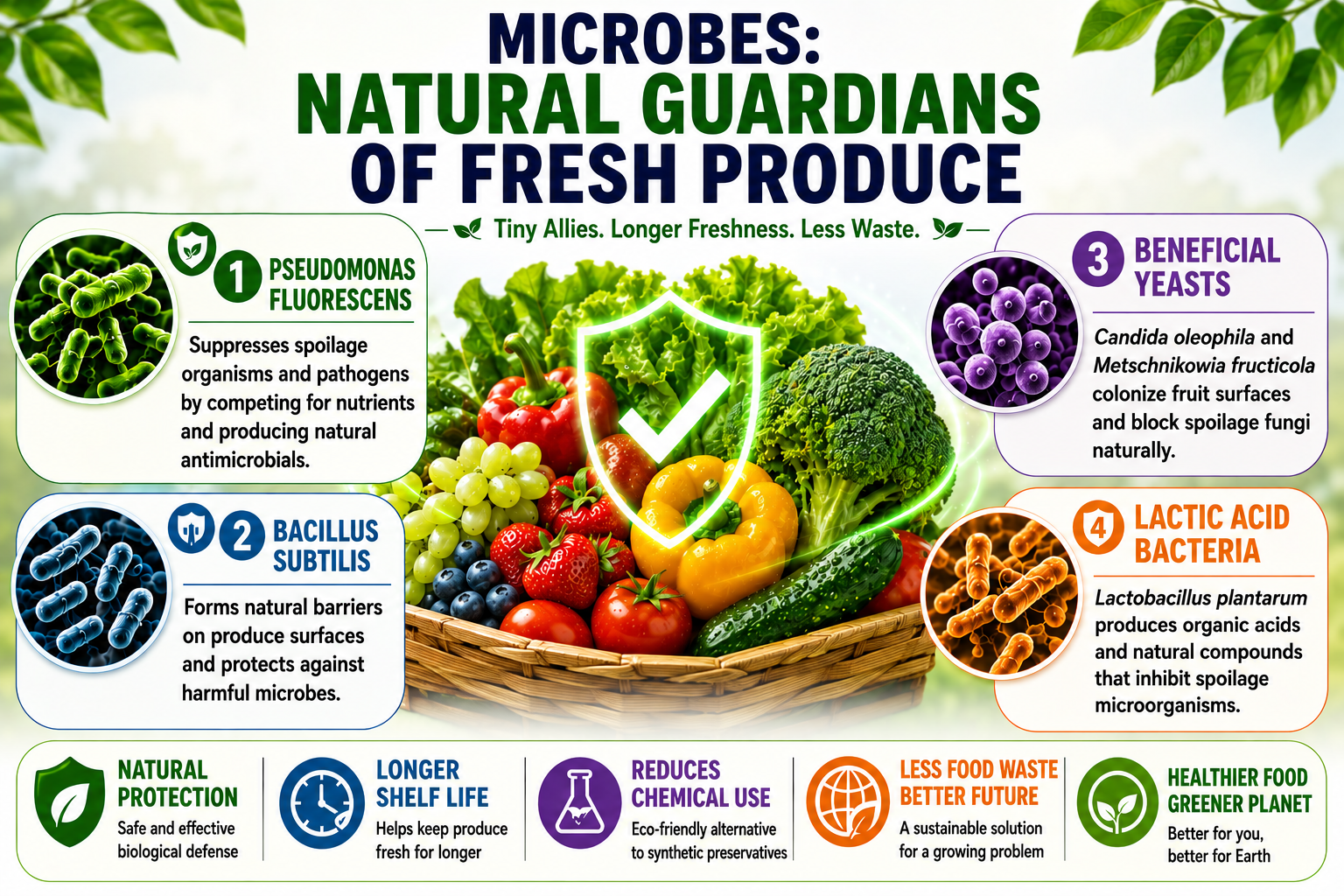
One widely studied example is Pseudomonas fluorescens, a bacterium that can suppress spoilage organisms and plant pathogens by competing for nutrients and producing antimicrobial compounds. Similar protective effects have been observed with certain strains of Bacillus subtilis, which can form natural barriers against harmful microbes on fruit and vegetable surfaces.
Beneficial yeasts are also used to extend shelf life. Species such as Candida oleophila and Metschnikowia fructicola can colonize the surface of fruits and prevent spoilage fungi from establishing themselves. These yeasts are being explored as environmentally friendly alternatives to chemical fungicides in post-harvest storage.
Lactic acid bacteria, including Lactobacillus plantarum, produce organic acids and antimicrobial substances that inhibit the growth of many spoilage microorganisms. Their natural preservative properties are being investigated for use in fresh produce and minimally processed foods.
Rather than eliminating all microbes, these approaches work by encouraging beneficial species that outcompete harmful ones. As food waste becomes an increasing global concern, microbial biocontrol is emerging as a promising strategy for keeping fruits and vegetables fresh for longer.
The key to keeping food fresh may not be eliminating microbial life, but putting the right microbes in charge.