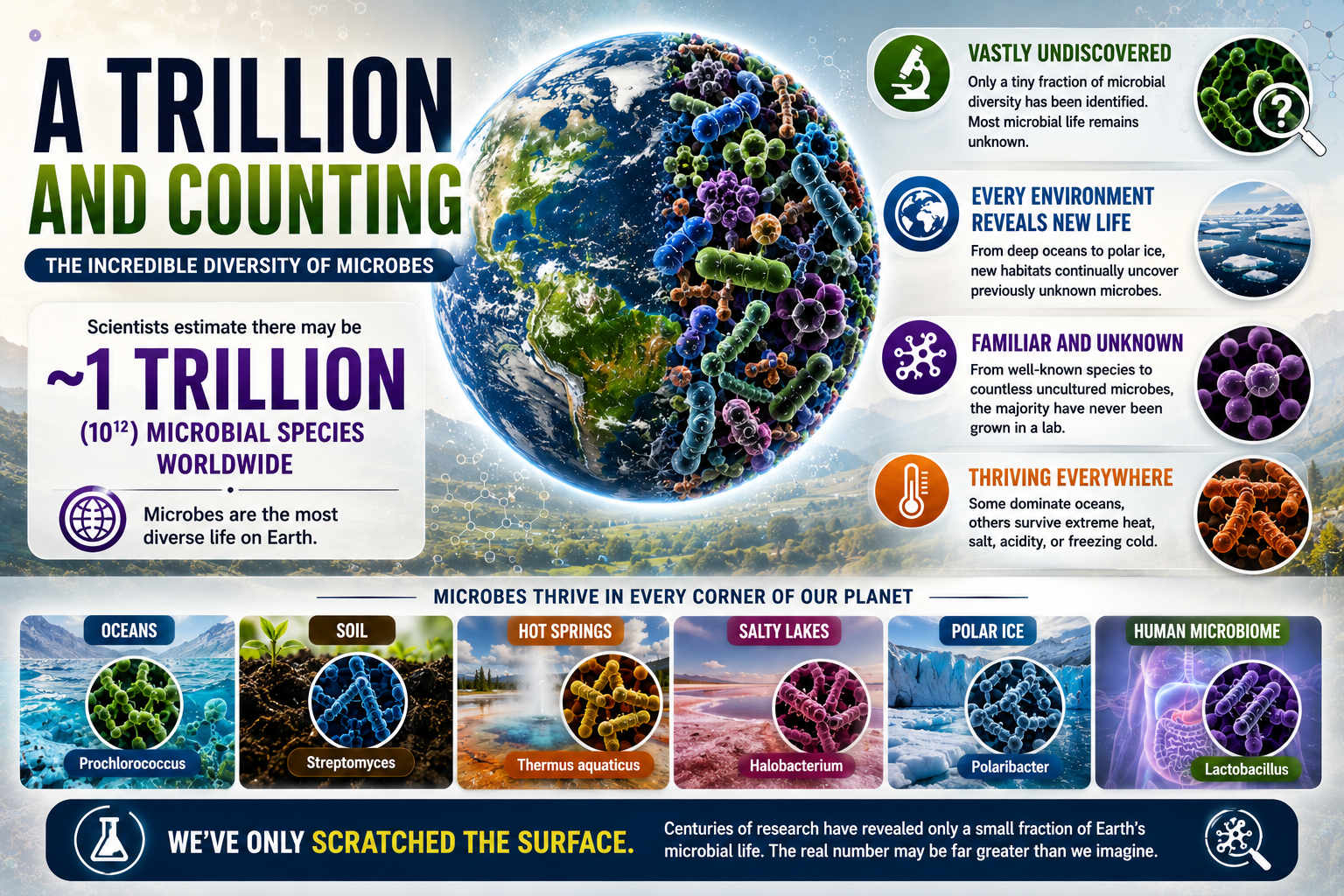
No one knows the exact number of microbial species on Earth, but current estimates suggest there may be around 1 trillion (10¹²) microbial species worldwide. If correct, this would make microbes by far the most diverse group of organisms on the planet.
Only a tiny fraction of this diversity has been identified. Scientists have formally described tens of thousands of bacterial and archaeal species, yet genetic studies indicate that most microbial life remains undiscovered. Every new environment explored, from deep oceans and tropical soils to hot springs and polar ice, continues to reveal previously unknown microbes.
This vast diversity includes familiar organisms such as Escherichia coli, Lactobacillus, and Saccharomyces cerevisiae, as well as countless uncultured microbes that have never been grown in a laboratory. Some, such as Prochlorococcus, dominate the oceans, while others thrive in extreme environments inhabited by organisms like Thermus aquaticus and Halobacterium.
The estimate of roughly one trillion microbial species highlights how little of the microbial world has been explored. Despite centuries of microbiological research, scientists have likely discovered only a small fraction of the microorganisms that inhabit Earth.
We are surrounded by an unseen civilization of life so vast that science has identified only a fraction of its members .