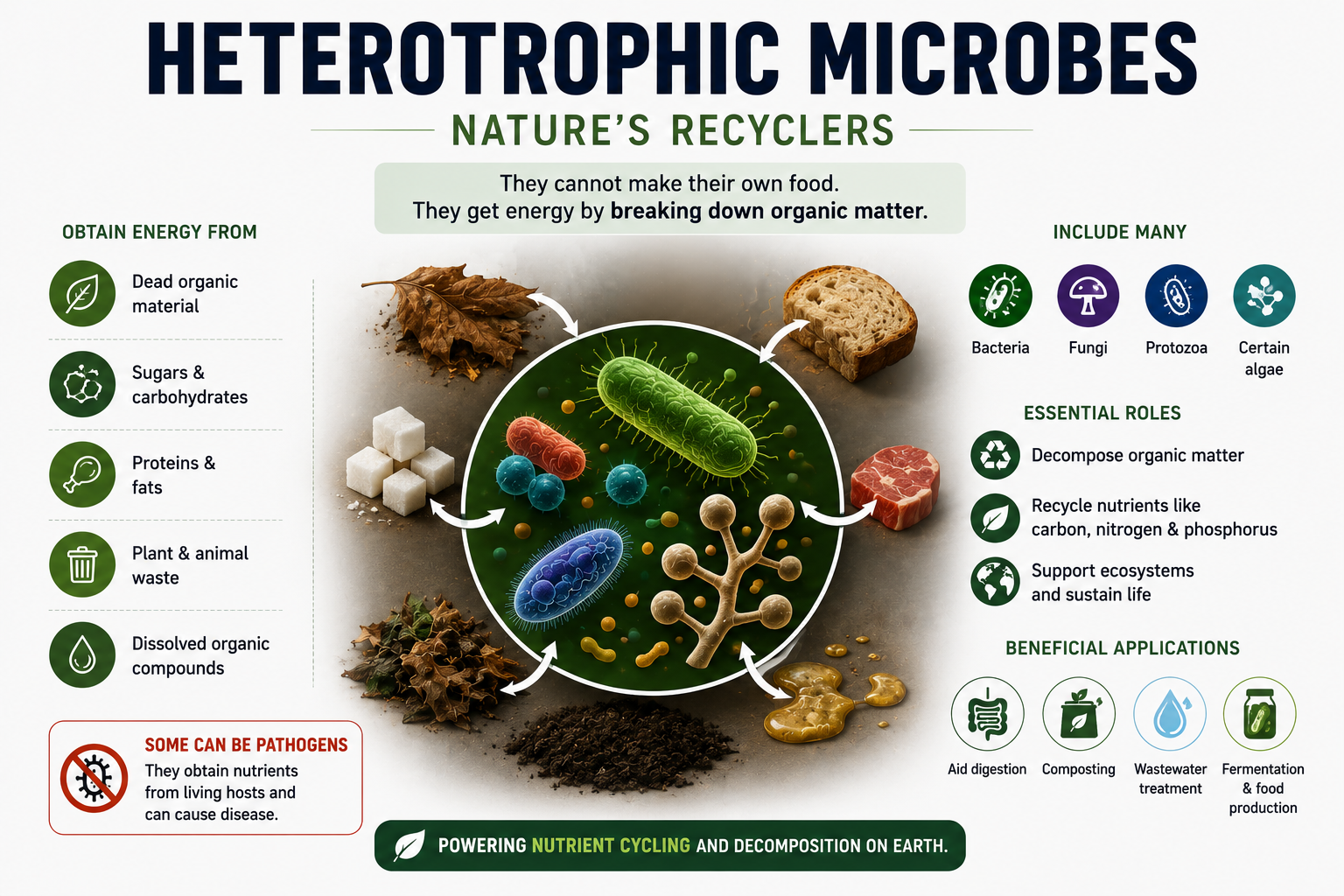
Heterotrophic microbes are microorganisms that cannot produce their own food and must obtain energy and nutrients by consuming organic matter produced by other organisms. Unlike photosynthetic microbes, they do not use sunlight to manufacture energy-rich compounds.
These microbes obtain energy by breaking down substances such as:
-
dead organic material
-
sugars and carbohydrates
-
proteins and fats
-
plant and animal waste
-
dissolved organic compounds
Many heterotrophic microbes release enzymes that digest complex materials externally before absorbing simpler nutrients into the cell.
Heterotrophic microbes include many:
-
bacteria
-
fungi
-
protozoa
-
certain algae
They play critical roles in ecosystems by decomposing organic matter and recycling nutrients such as carbon, nitrogen, and phosphorus back into the environment.
Some heterotrophic microbes are beneficial and support:
-
digestion in animals and humans
-
composting
-
wastewater treatment
-
fermentation and food production
Others can act as pathogens and obtain nutrients from living hosts.
Because they efficiently break down biological material, heterotrophic microbes are among the most important drivers of nutrient cycling and decomposition on Earth.
From composting to digestion, heterotrophic microbes help transform complex organic matter into reusable nutrients.