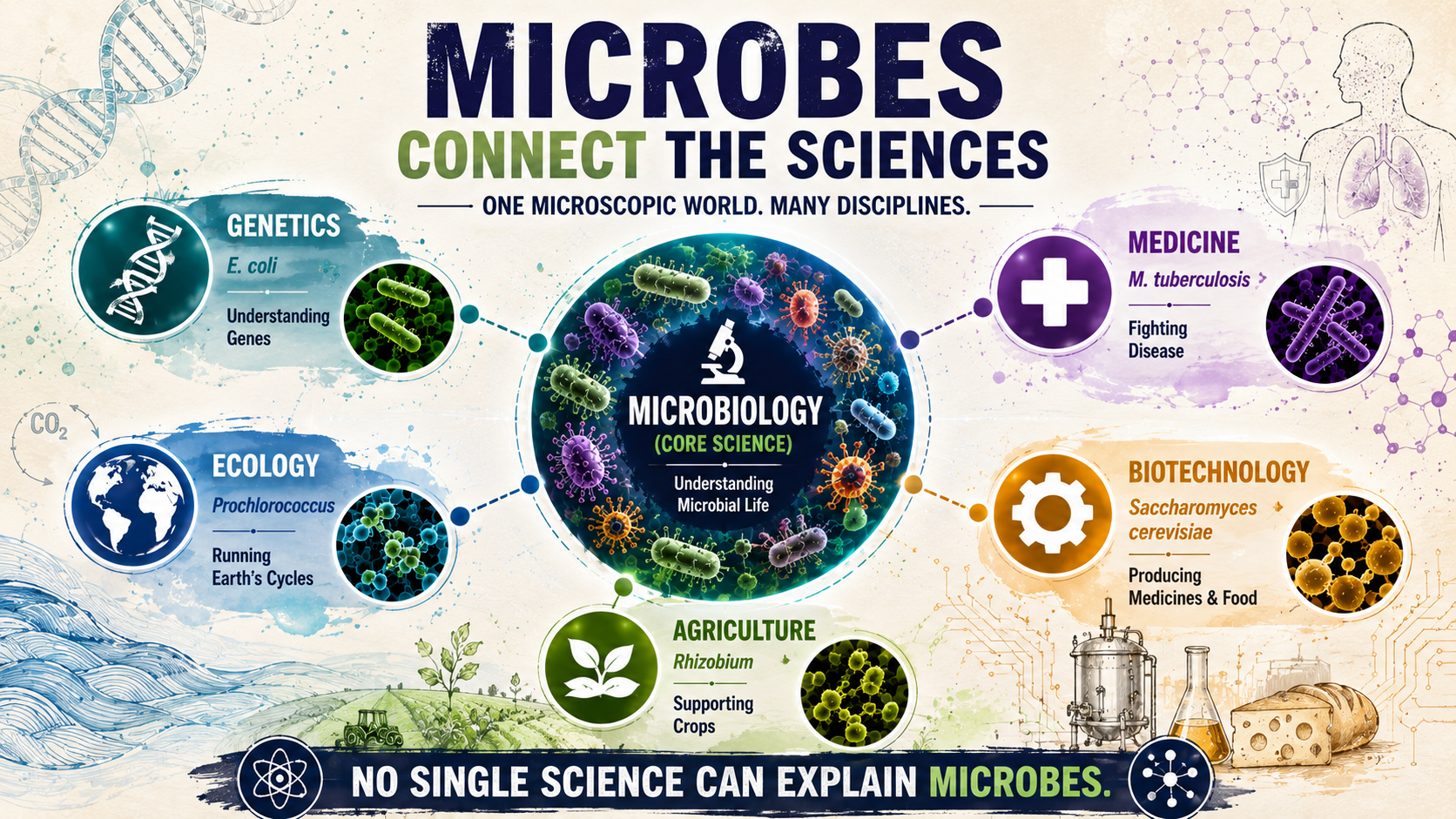
Microbes are so diverse and influential that no single scientific field can fully explain them. Their study brings together researchers from disciplines ranging from medicine and genetics to ecology and engineering.
At the center is microbiology, which focuses on organisms such as Escherichia coli, Lactobacillus, Saccharomyces cerevisiae, viruses, fungi, and archaea. Microbiologists investigate how these organisms grow, evolve, and interact with their environments.
Many other fields contribute as well. Genetics and molecular biology explore how microbial genes function, while genomics uses DNA sequencing to uncover previously unknown microbes and reconstruct entire microbial communities. These approaches have revealed the enormous diversity of organisms such as Prochlorococcus in the oceans and uncultured microbes that cannot be grown in laboratories.
Medicine and immunology study disease-causing microbes such as Mycobacterium tuberculosis and Staphylococcus aureus, as well as beneficial microbes that influence digestion, immunity, and human health. Ecology examines how microbes drive nutrient cycling, decomposition, and environmental processes across ecosystems.
Microbes are also studied by biotechnologists, agricultural scientists, and environmental engineers. These researchers use organisms such as Rhizobium, Bacillus subtilis, and Saccharomyces cerevisiae to improve crop production, manufacture medicines, produce food, and clean polluted environments.
The study of microbes has become one of the most interdisciplinary areas of science. Understanding these microscopic organisms requires expertise from many fields because their influence extends from the human body to the global environment.
From genes and diseases to ecosystems and climate, microbes connect some of science's most important questions.