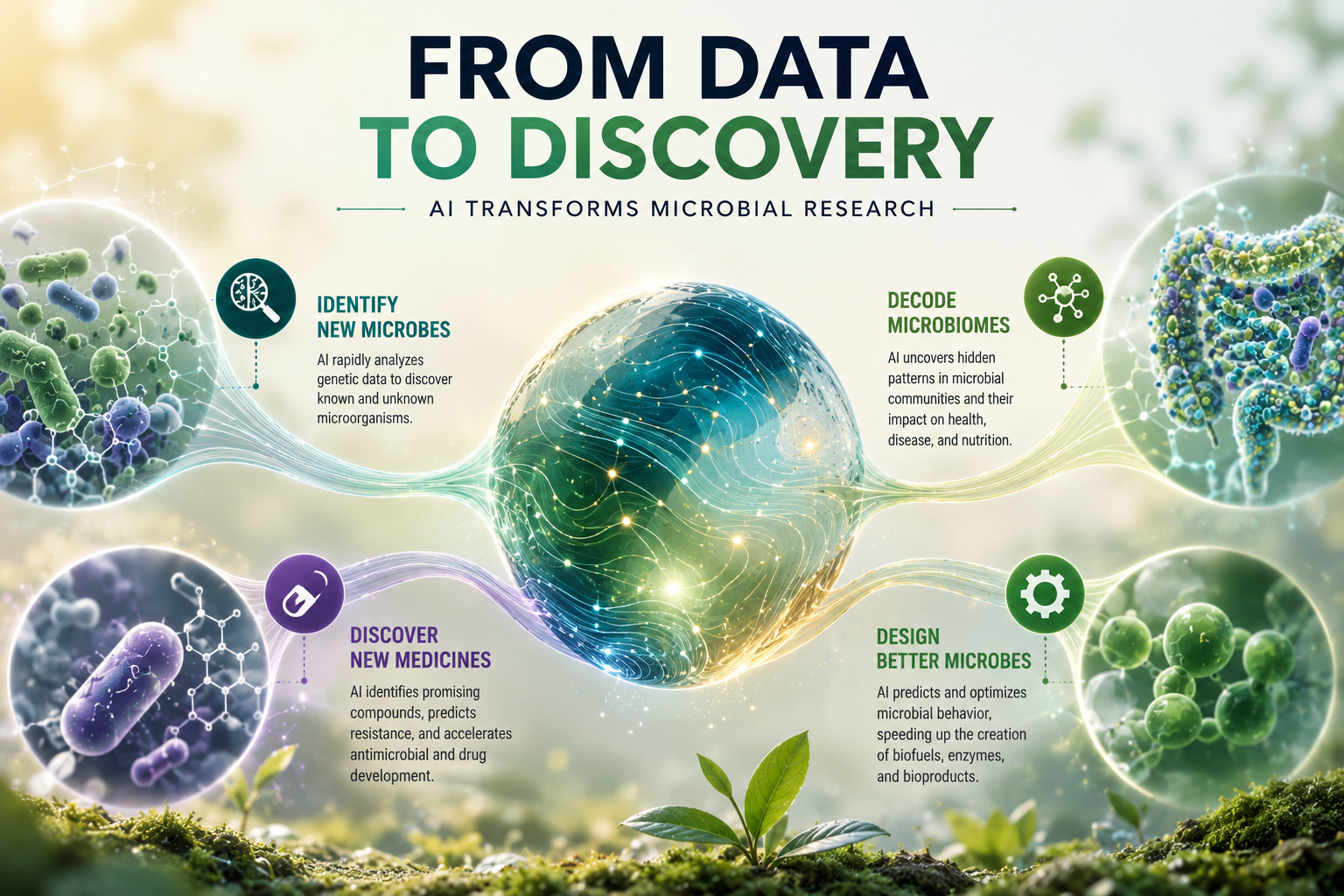
Artificial intelligence is transforming microbiology by helping scientists analyze biological data at a scale that would be impossible manually. As DNA sequencing technologies generate enormous amounts of microbial information, AI is becoming an essential tool for discovering patterns, making predictions, and accelerating research.
One major application is microbial identification. AI can rapidly analyze genetic data and help classify known organisms while identifying previously unknown microbes hidden within complex environmental samples.
AI is also helping researchers understand microbial communities. By analyzing large microbiome datasets, scientists can uncover relationships between microbes such as Bifidobacterium, Lactobacillus, and Faecalibacterium prausnitzii and their potential roles in health, disease, and nutrition.
In biotechnology, AI is being used to design and optimize microbial systems. Researchers can predict how organisms such as Escherichia coli and Saccharomyces cerevisiae will respond to genetic modifications, reducing the time needed to develop new medicines, biofuels, enzymes, and industrial products.
Another growing application is drug discovery. AI can help identify antimicrobial compounds, predict antibiotic resistance, and analyze pathogens such as Mycobacterium tuberculosis and Staphylococcus aureus, enabling faster development of treatments and diagnostic tools.
Rather than replacing microbiologists, AI acts as a powerful partner that can process vast amounts of biological information and reveal patterns that might otherwise remain hidden. As microbial datasets continue to grow, AI is becoming one of the most important tools for turning data into scientific discovery.
The future of microbiology may be shaped as much by algorithms as by microscopes.