Long before anyone knew microbes existed, ancient civilizations were using them every day. Through observation and experience, people learned how certain processes could preserve food, improve flavor, and produce useful products, even though the microorganisms responsible remained invisible.
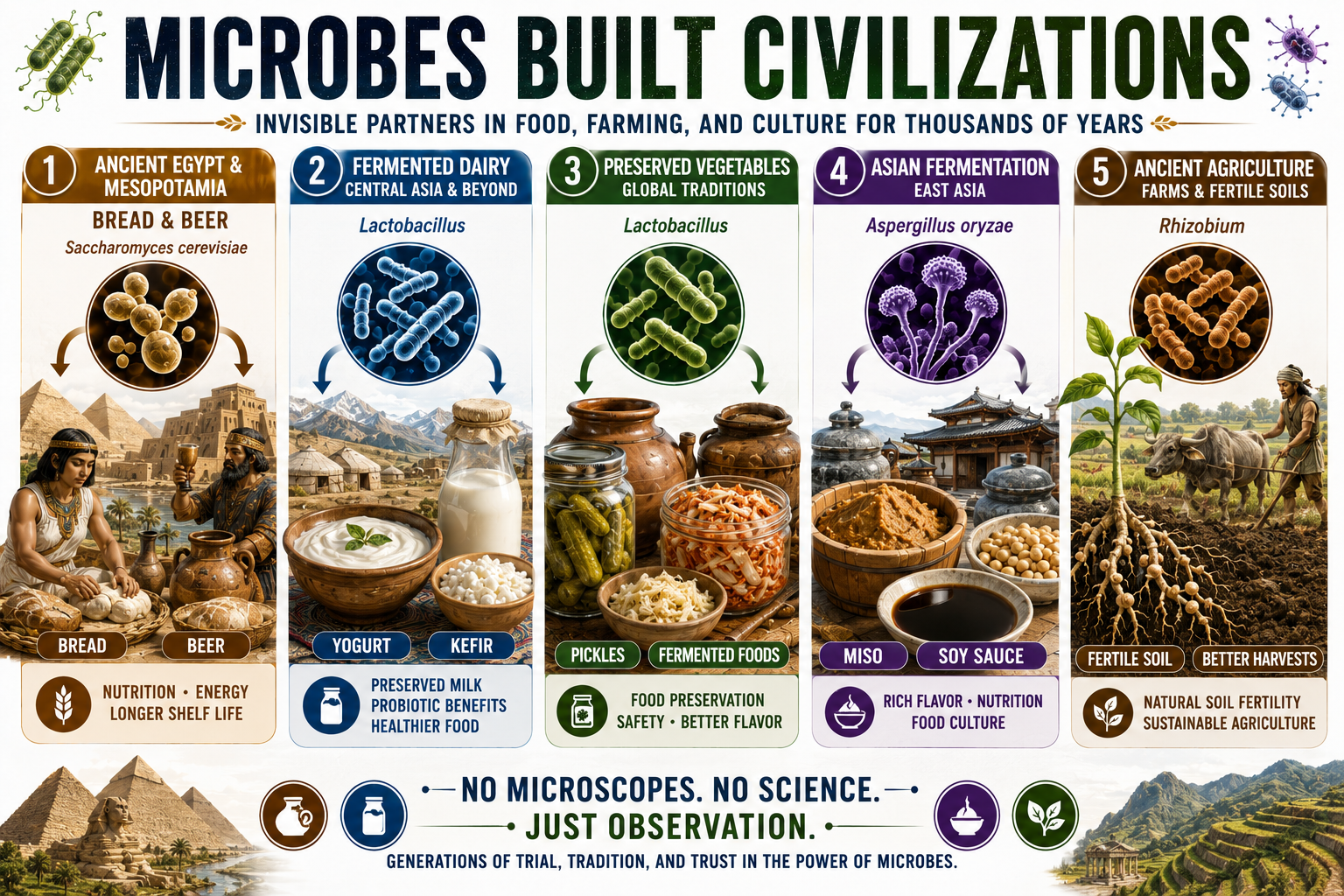
One of the oldest microbial technologies is fermentation. Yeasts such as Saccharomyces cerevisiae were used by ancient Egyptians, Mesopotamians, and other cultures to make bread and fermented beverages. These foods were often safer to consume and could be stored longer than raw ingredients.
Lactic acid bacteria, including Lactobacillus species, played a similar role in preserving milk, vegetables, and other foods. Traditional products such as yogurt, kefir, pickles, and fermented grains emerged in different parts of the world through the activity of these beneficial microbes.
In Asia, molds such as Aspergillus oryzae were used to produce foods including soy sauce, miso, and fermented bean products. These fermentation techniques became deeply integrated into regional cuisines and food traditions.
Microbes were also used indirectly in agriculture. Farmers relied on fertile soils enriched by microbial decomposition, even though they had no knowledge of organisms such as Rhizobium that help supply plants with essential nutrients.
Ancient societies did not understand the science behind fermentation or soil biology, but they learned to harness microbial processes through practice and tradition. Many foods and techniques developed thousands of years ago continue to depend on the same microbes today.
Long before we discovered microbes, microbes were already helping build civilizations.