
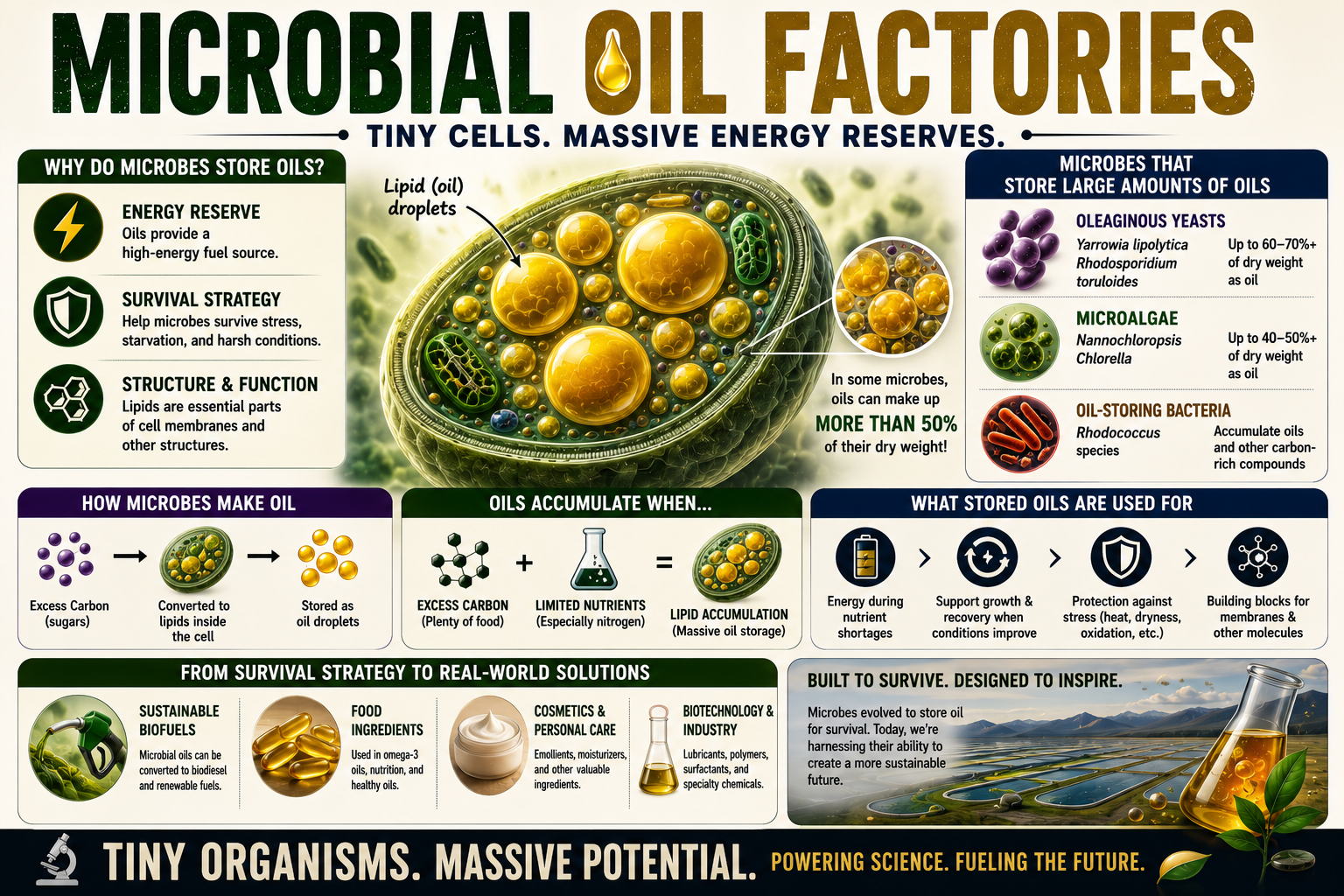
Yes. Some microbes can accumulate surprisingly large amounts of oils and lipids, sometimes storing them as a major portion of their total cell mass. These compounds serve as energy reserves, structural components, and survival tools under changing environmental conditions.
Among the best-known examples are oleaginous yeasts such as Yarrowia lipolytica and Rhodosporidium toruloides. When supplied with excess carbon but limited nutrients such as nitrogen, these microbes convert surplus carbon into oils that can account for more than half of their dry weight.
Many microalgae also produce large quantities of lipids. Species such as Nannochloropsis and Chlorella accumulate oils as energy stores, particularly when exposed to environmental stress. Because of this ability, they are being studied as potential sources of biofuels and other renewable products.
Certain bacteria store lipids as well. Rhodococcus species can accumulate substantial amounts of oils and other carbon-rich compounds, helping them survive periods when nutrients become scarce.
These stored lipids act much like energy reserves in animals. When conditions become unfavorable, microbes can draw upon these reserves to support metabolism, growth, and survival until resources become available again.
The remarkable ability of some microbes to produce and store oils has attracted significant scientific and industrial interest. Organisms that evolved this strategy for survival are now being explored for applications ranging from sustainable fuels to food ingredients and biotechnology.
Long before humans drilled for oil, microbes were already producing and storing it inside their cells.