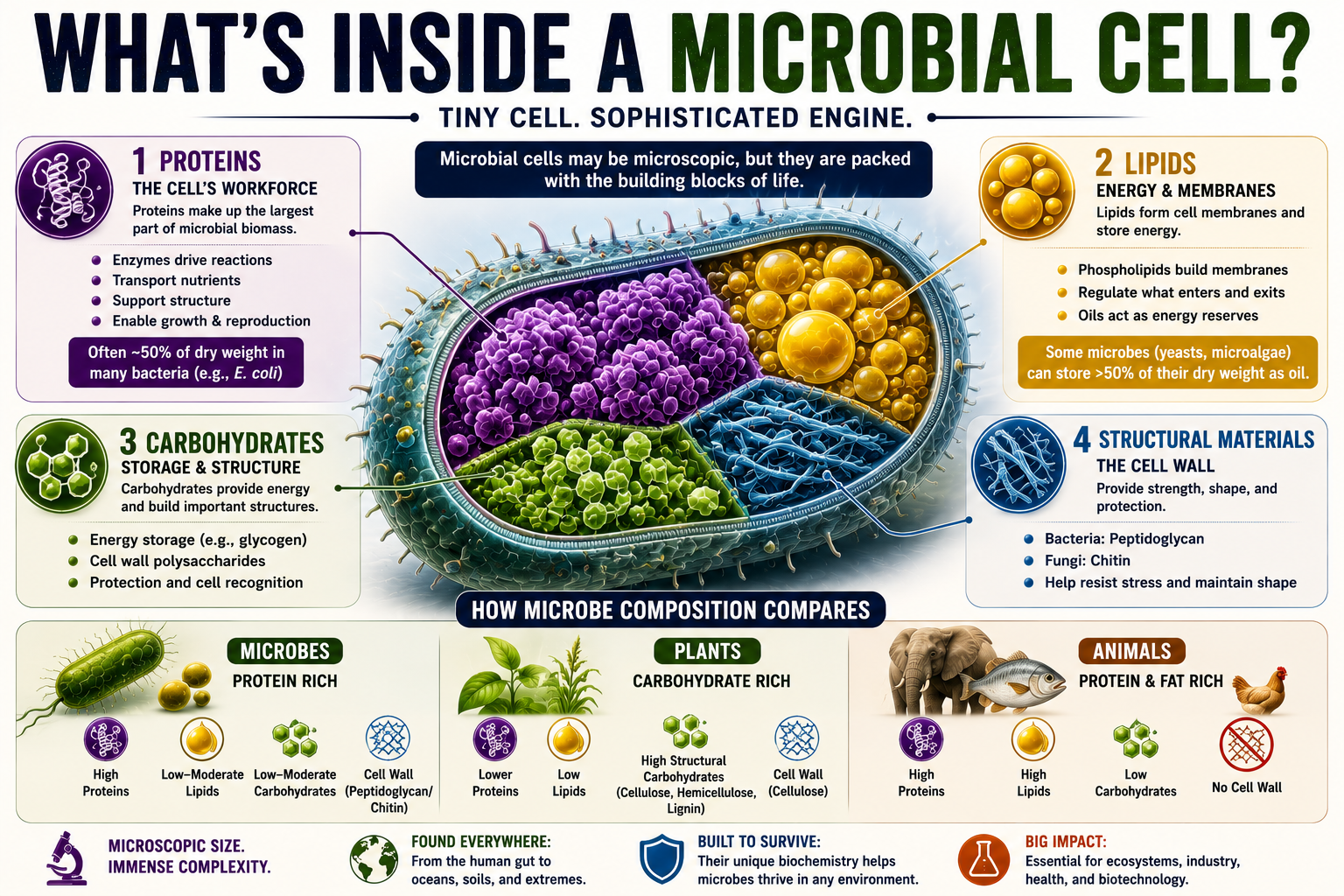
Although the exact composition varies among species, microbes are generally rich in proteins and contain smaller amounts of lipids, carbohydrates, minerals, and other cellular components. Their biochemical makeup differs in important ways from that of plants and animals.
Proteins often make up the largest fraction of microbial biomass and are responsible for most cellular activities, including metabolism, nutrient transport, and growth. In many bacteria such as Escherichia coli, proteins account for roughly half of the cell's dry weight.
Lipids are primarily found in cell membranes, where they help maintain cellular structure and regulate the movement of substances into and out of the cell. Some microbes, including oleaginous yeasts and microalgae such as Chlorella, can accumulate large quantities of oils as energy reserves.
Carbohydrates serve both structural and storage functions. Many bacteria contain carbohydrate-rich cell walls, while fungi such as Saccharomyces cerevisiae possess cell walls composed largely of complex polysaccharides that provide strength and protection.
Microbes do not contain dietary fiber in the same way plants do, but many possess structural materials that perform similar roles. Bacterial cell walls contain peptidoglycan, while fungal cell walls contain chitin, both of which help maintain cell shape and resist environmental stress.
Compared with microbes, plants generally contain much higher levels of structural carbohydrates such as cellulose, hemicellulose, and lignin. Animals typically contain more proteins and fats and lack the rigid cell walls that characterize many microbial and plant cells.
Despite their microscopic size, microbes are highly sophisticated biochemical systems. Their balance of proteins, lipids, carbohydrates, and structural materials enables them to thrive in environments ranging from the human gut to oceans, soils, and extreme habitats.
A single microbial cell is a highly efficient package of proteins, energy reserves, and essential biomolecules.