Microbes already support industries worth hundreds of billions of dollars, yet many scientists believe their greatest commercial impact is still ahead. As biotechnology advances, microorganisms are increasingly being used as biological factories that can produce valuable products more efficiently and sustainably than traditional methods.
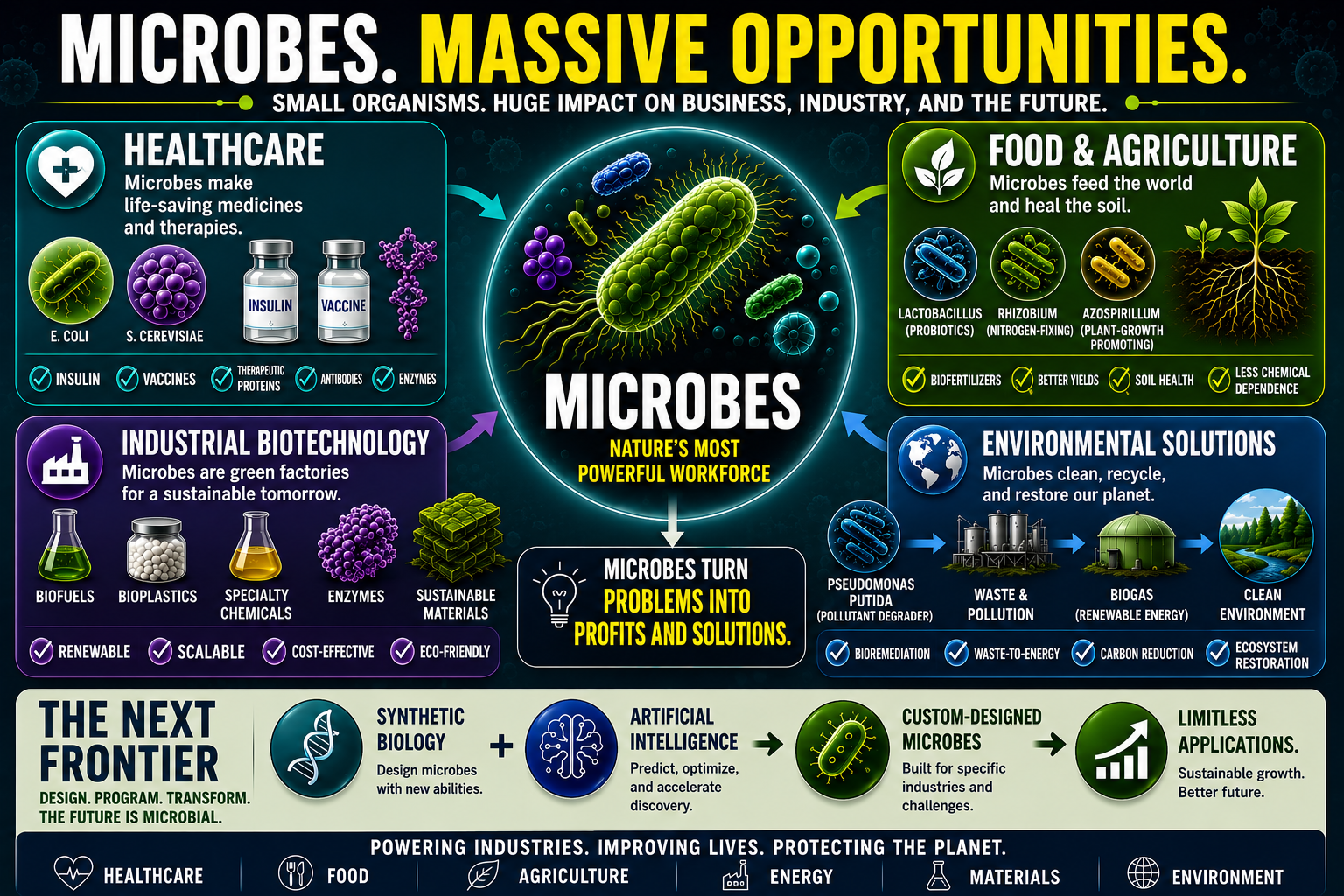
One of the largest opportunities lies in healthcare. Microbes such as Escherichia coli and Saccharomyces cerevisiae are used to manufacture insulin, vaccines, therapeutic proteins, and other medicines that serve millions of patients worldwide.
Food and agriculture represent another major sector. Lactobacillus species are central to fermented foods and probiotics, while microbes such as Rhizobium and Azospirillum are used as biofertilizers that can improve crop productivity while reducing dependence on synthetic fertilizers.
Industrial biotechnology is growing rapidly as well. Engineered bacteria, yeasts, and microalgae are being developed to produce biofuels, bioplastics, specialty chemicals, enzymes, and sustainable materials that can replace petroleum-derived products.
Environmental applications are creating new opportunities. Microbes such as Pseudomonas putida can help remove pollutants from contaminated environments, while methane-producing archaea are used to convert waste into renewable biogas.
The most exciting opportunity may be the ability to design microbes for entirely new purposes. Advances in synthetic biology and artificial intelligence are allowing researchers to create microbial systems tailored for manufacturing, environmental management, agriculture, and medicine.
For much of history, microbes were valued mainly for fermentation and disease research. Today, they are increasingly viewed as a platform technology capable of powering industries across healthcare, food, energy, materials, and sustainability.
Microbes are no longer just part of biology—they are becoming part of industry.