Mining is often viewed as a mechanical and chemical industry, yet microbes have been helping extract metals for decades. This field, known as biomining, uses microorganisms to recover, concentrate, or process valuable metals from ores, mine waste, and other mineral resources.
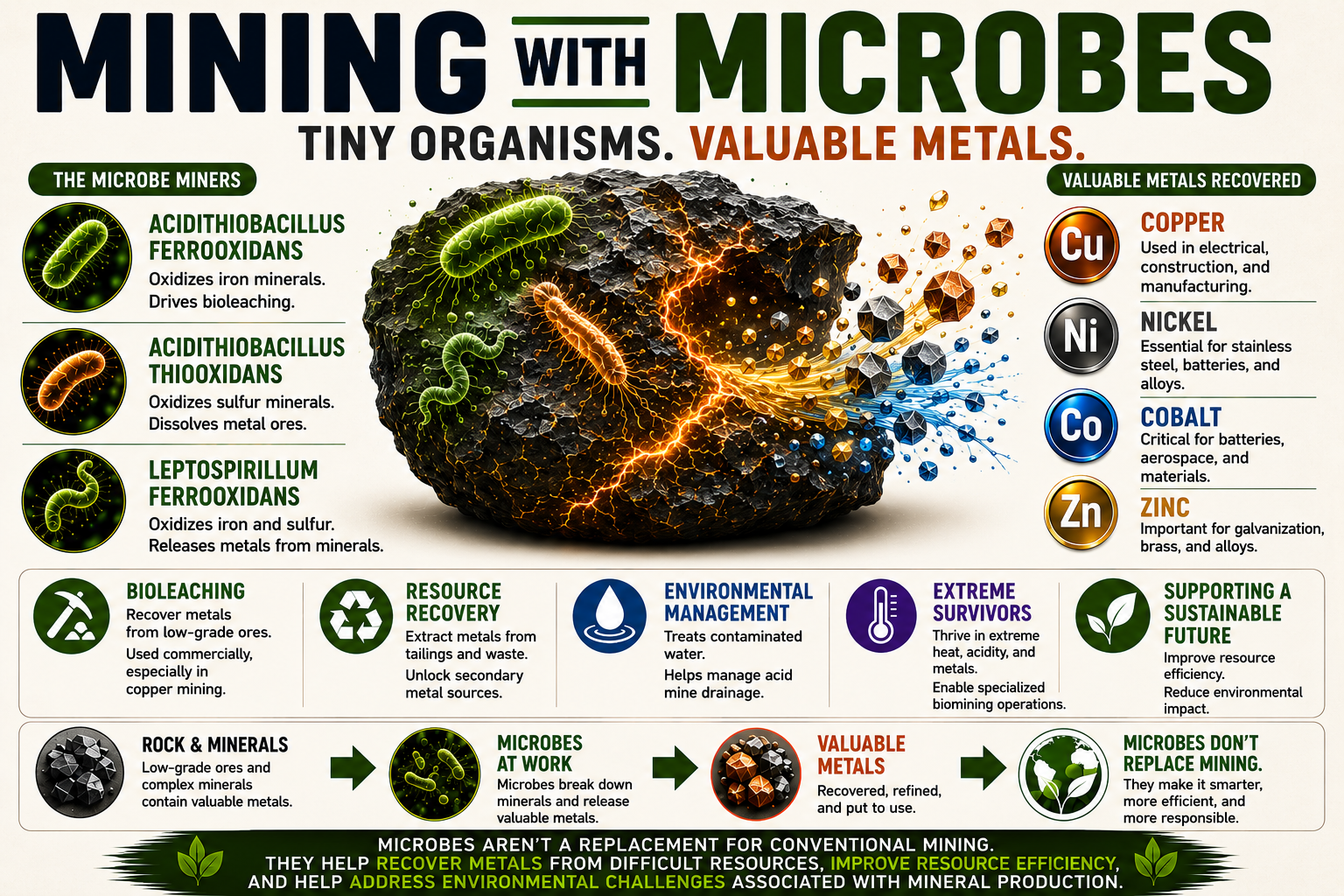
The most important biomining technique is bioleaching. Bacteria such as Acidithiobacillus ferrooxidans and Leptospirillum ferrooxidans obtain energy from iron- and sulfur-containing minerals, generating conditions that release metals from ore. These processes are already used commercially, particularly in copper mining, where they help recover metals from low-grade deposits.
Microbes are also becoming important for resource recovery. As high-quality ore deposits become harder to find, mining companies are increasingly interested in extracting copper, nickel, cobalt, and other metals from tailings and waste streams that were previously considered uneconomical.
Environmental management represents another major opportunity. Microbial systems can help treat contaminated mine water, reduce acid mine drainage, and influence the movement of toxic metals through the environment. In many cases, the goal is not extraction but reducing long-term environmental damage.
Microbes will not replace conventional mining. Their greatest value lies in making certain processes more efficient, enabling recovery from difficult resources, and helping address environmental challenges associated with mineral production.
Some of tomorrow's most valuable minerals may be recovered not by digging deeper, but by working smarter with microbes.