The construction industry is often associated with concrete, steel, and machinery, but microbes are increasingly being explored as tools for creating stronger, more sustainable building materials. Their ability to produce minerals, bind particles, and generate useful compounds is opening new possibilities for the built environment.
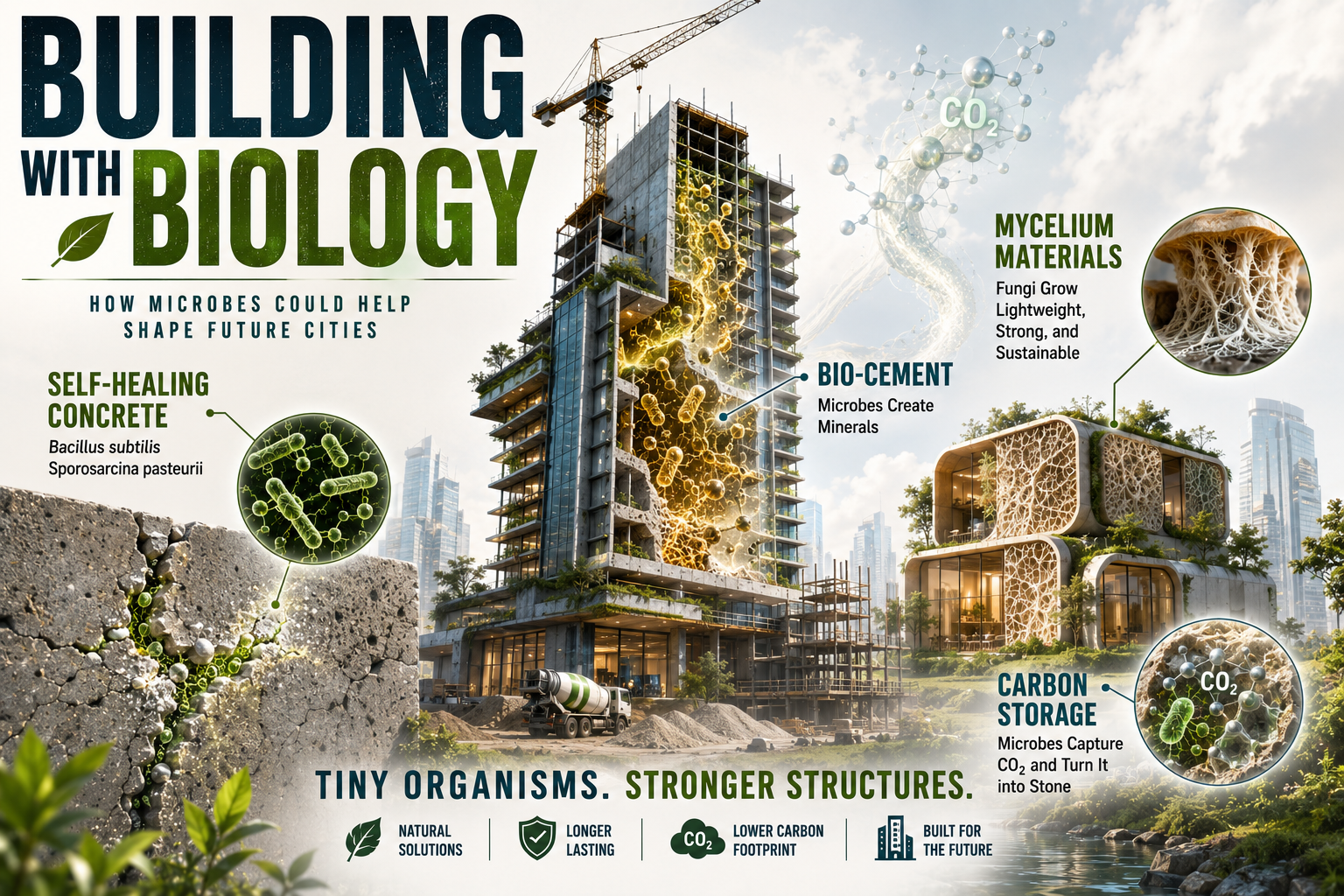
One of the most promising applications involves self-healing concrete. Bacteria such as Bacillus subtilis and Sporosarcina pasteurii can produce calcium carbonate, a mineral that fills small cracks in concrete and helps extend the lifespan of structures.
Microbes can also be used to create bio-cement through a process known as microbial-induced calcite precipitation. In this process, bacteria deposit minerals that bind sand and soil particles together, potentially reducing the need for conventional cement in some applications.
Researchers are exploring microbial production of sustainable construction materials as well. Certain fungi can grow into dense, lightweight structures known as mycelium composites, which can be used for insulation, packaging, and other building applications.
Microbial technologies may also help reduce the environmental footprint of construction. Some microorganisms can capture carbon dioxide and convert it into stable mineral forms, offering potential ways to lower carbon emissions associated with building materials.
Although many of these technologies are still developing, they illustrate how biological processes can complement traditional construction methods. Microbes that evolved to survive in natural environments may eventually help build longer-lasting, lower-carbon, and more resource-efficient structures.
Microbes have been constructing natural structures for billions of years; humanity is only beginning to learn from their designs.