
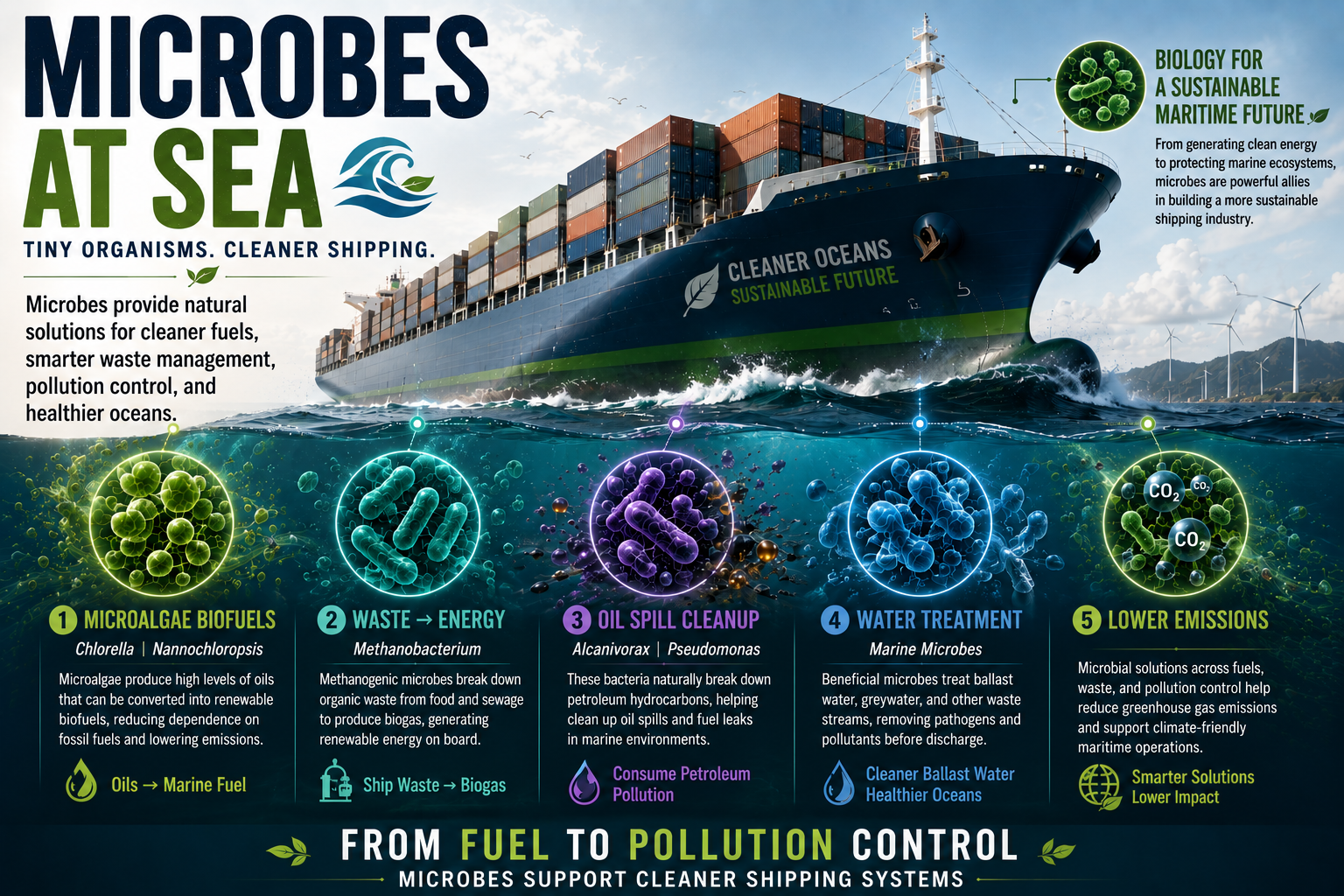
Global shipping moves most of the world's goods, but it also consumes large amounts of fuel and contributes to greenhouse gas emissions. Microbes are being explored as part of several strategies to make marine transport cleaner and more sustainable.
One important application is the production of renewable marine fuels. Microalgae such as Chlorella and Nannochloropsis can accumulate large amounts of oils that may be converted into biofuels for ships, reducing reliance on conventional fossil fuels.
Microbes can also help manage waste generated onboard vessels. Methanogenic archaea such as Methanobacterium can convert organic waste into biogas, creating opportunities to recover energy while reducing waste disposal requirements.
Another growing area is pollution control. Bacteria such as Alcanivorax and Pseudomonas can break down petroleum hydrocarbons and are widely studied for their role in cleaning up oil spills and fuel contamination in marine environments.
Researchers are also investigating microbial technologies that reduce the environmental impact of shipping infrastructure. Certain microbes may help treat ballast water, wastewater, and other waste streams before they are released into the environment.
While ships will continue to rely on engineering advances, cleaner fuels, and improved logistics, microbes provide additional biological tools for reducing emissions, managing waste, and protecting marine ecosystems. Their ability to transform waste and pollutants into less harmful forms makes them increasingly valuable for the future of sustainable shipping.
The future cargo ship may carry two kinds of workers: a human crew above deck and trillions of microbes below it.