The textile industry is under increasing pressure to reduce its environmental footprint, and microbes are emerging as valuable tools for producing cleaner materials and manufacturing processes. From fabric production to dye treatment, microorganisms are being integrated into multiple stages of the textile value chain.
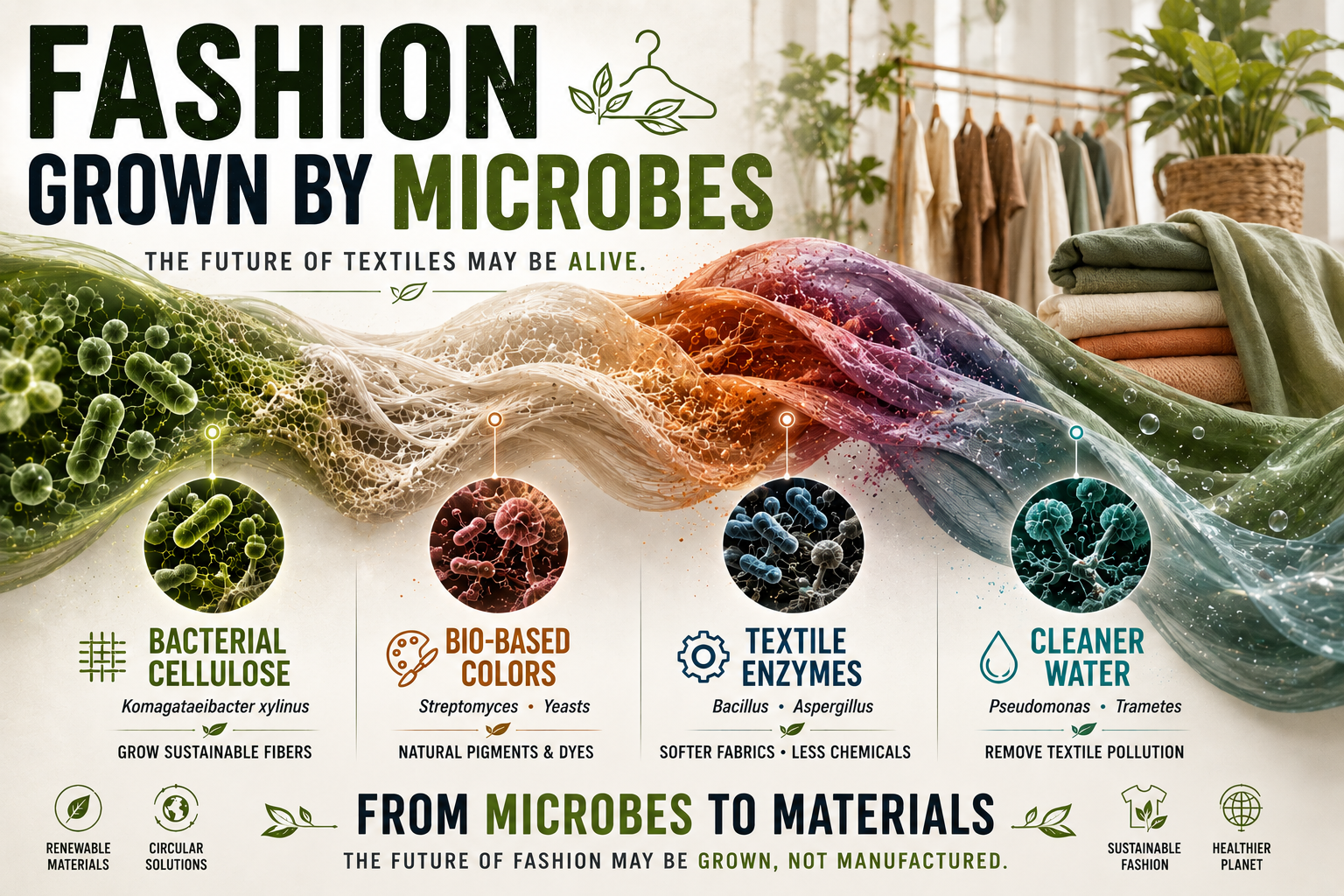
One important application is the production of sustainable fibers and materials. Bacteria such as Komagataeibacter xylinus produce bacterial cellulose, a strong and flexible material that is being explored as an alternative to certain synthetic and animal-derived products.
Microbes also help manufacture enzymes used in textile processing. Species of Bacillus and Aspergillus produce enzymes that can remove impurities, soften fabrics, and improve dye absorption while reducing the need for harsh chemicals.
Wastewater treatment is another major area of application. Bacteria such as Pseudomonas and fungi including Trametes can break down dyes and other pollutants released during textile manufacturing, helping reduce environmental contamination.
Researchers are also developing microbial production systems for natural pigments, specialty chemicals, and bio-based dyes. Organisms such as Streptomyces and certain yeasts can produce a variety of colors and compounds that may provide more sustainable alternatives to conventional synthetic dyes.
As the industry moves toward circular and environmentally responsible production, microbes are becoming valuable partners in creating cleaner materials, reducing pollution, and improving resource efficiency. Many future innovations in sustainable fashion may come not from new machines, but from harnessing the capabilities of microscopic organisms.
Some of tomorrow's fabrics may begin life not in a cotton field or oil refinery, but in a tank full of microbes.