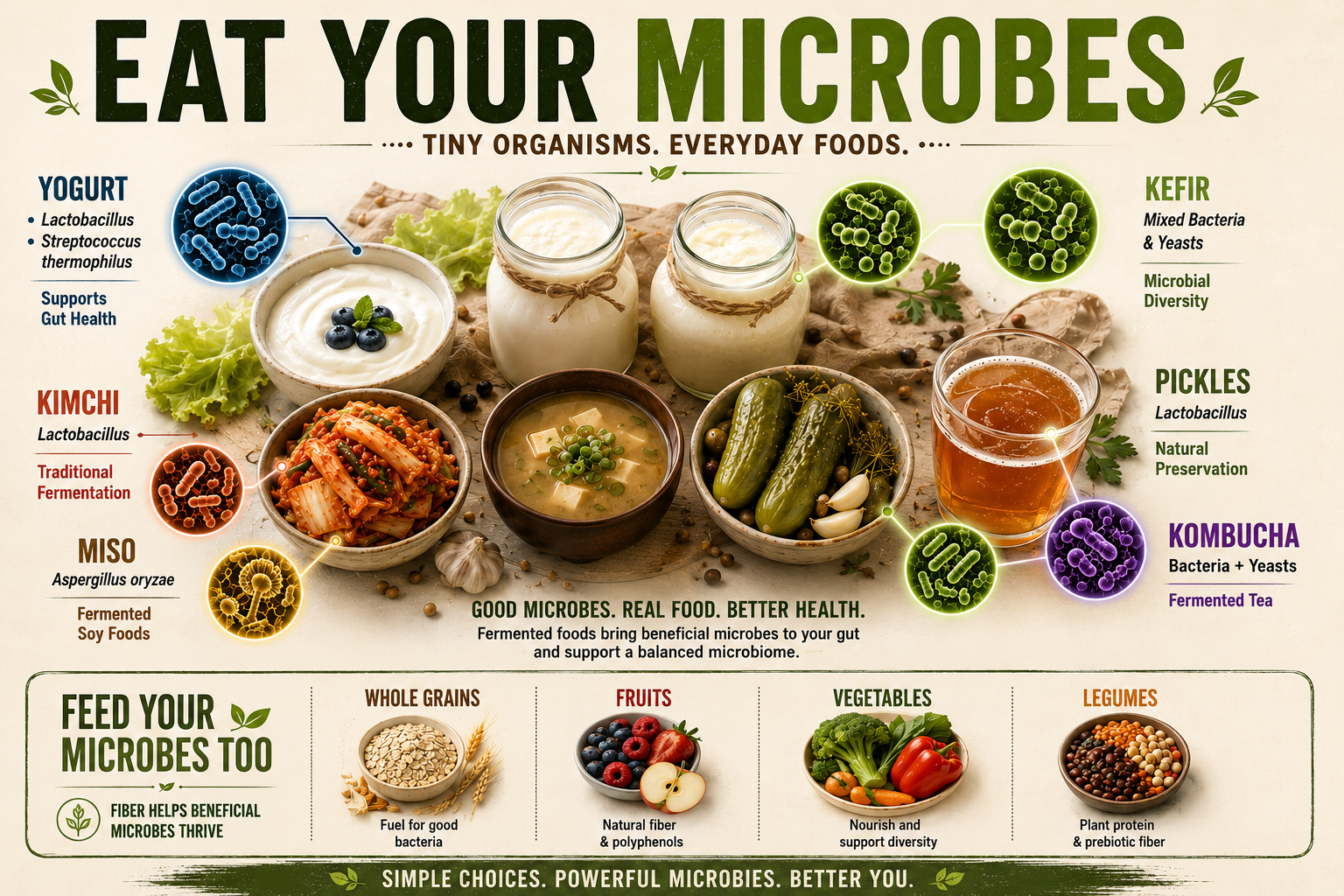
For most people, the easiest way to consume beneficial microbes is through fermented foods. These foods naturally contain living microorganisms that have been part of human diets for thousands of years.
Yogurt is one of the best-known examples. It contains bacteria such as Lactobacillus and Streptococcus thermophilus, which help ferment milk and may support a healthy gut microbiome. Other fermented dairy products, including kefir, contain a wider variety of beneficial bacteria and yeasts.
Fermented vegetables are another important source. Foods such as kimchi, sauerkraut, and traditionally fermented pickles often contain Lactobacillus species that thrive during the fermentation process and help preserve the food.
Certain fermented beverages and foods also provide beneficial microbes. Kombucha contains communities of bacteria and yeasts, while traditional fermented products such as miso and some fermented soy foods rely on microorganisms including Aspergillus oryzae.
Probiotic supplements offer a more concentrated approach. Many contain strains of Lactobacillus, Bifidobacterium, or other well-studied microbes that are intended to support gut health. However, their effectiveness can vary depending on the strain and the individual consuming them.
Consuming beneficial microbes is only part of the picture. These organisms also need suitable food sources to thrive. Fiber-rich foods such as fruits, vegetables, legumes, and whole grains help nourish beneficial gut microbes and support a diverse microbial community.
For most healthy individuals, a diet that regularly includes fermented foods and fiber-rich plant foods is one of the simplest ways to encourage beneficial microbes as part of everyday life.
The most practical way to benefit from helpful microbes is not simply to consume them, but to create an environment where they can flourish alongside us.