Microbes are often associated with disease, but many are essential for human health, food production, and the functioning of natural ecosystems. Some support life in remarkable ways, while others can cause serious illness.
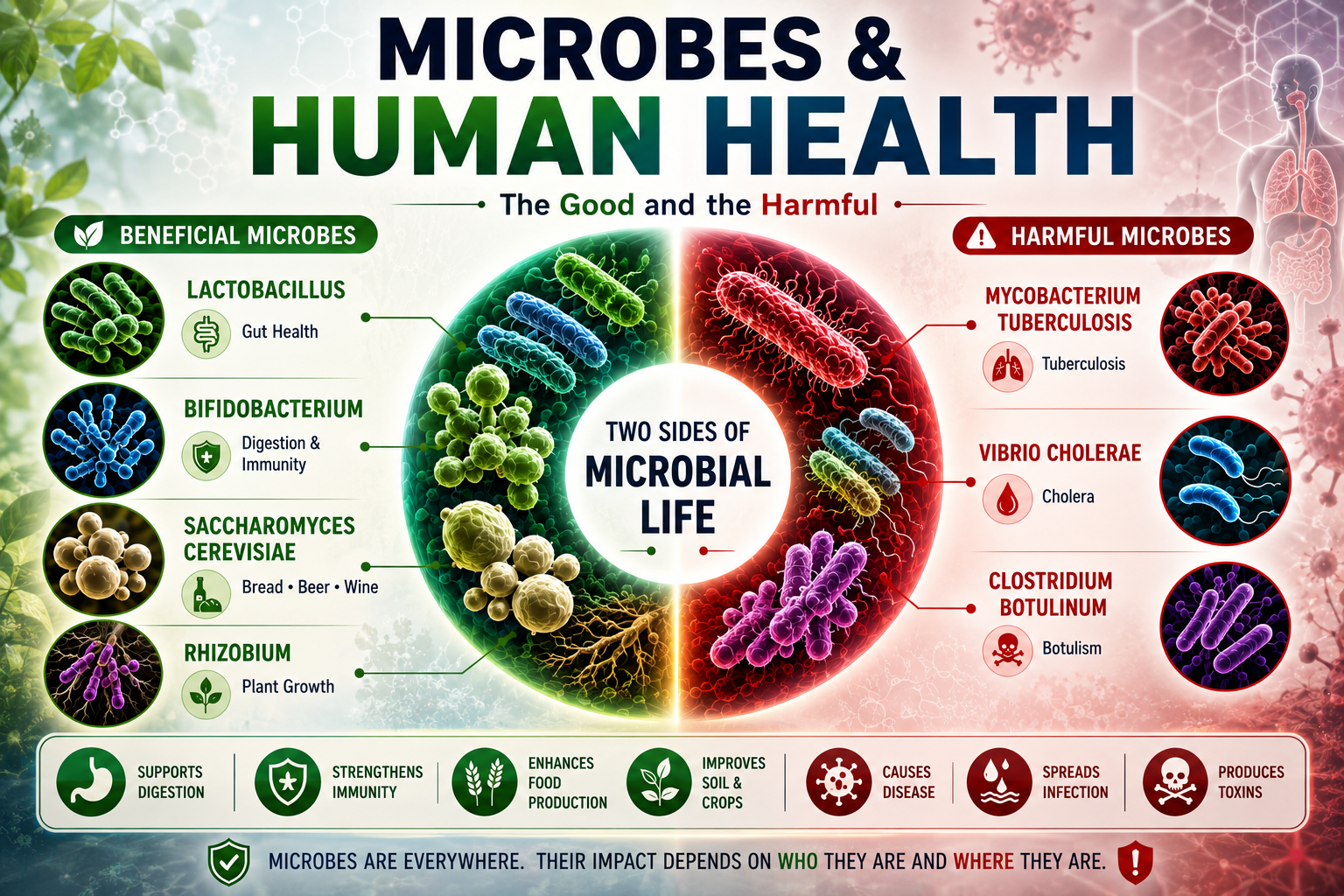
Among the beneficial microbes, Lactobacillus species are well known for supporting digestive health. They help break down food, maintain a healthy gut environment, and are commonly found in yogurt and other fermented foods.
Another valuable microbe is Bifidobacterium. These bacteria are abundant in healthy intestines and help digest complex nutrients while supporting the body's natural defenses.
Saccharomyces cerevisiae, commonly known as baker's yeast, has been used for thousands of years to make bread, beer, and wine. It is also widely used in biotechnology and scientific research.
In agriculture, Rhizobium bacteria form partnerships with plant roots and convert atmospheric nitrogen into forms that plants can use. This natural process helps improve soil fertility and crop growth.
Some microbes, however, are associated with disease. Mycobacterium tuberculosis causes tuberculosis, a lung infection that remains one of the world's most significant infectious diseases.
Vibrio cholerae causes cholera, a disease spread through contaminated water that can lead to severe dehydration and death if untreated.
Another harmful microbe is Clostridium botulinum. It produces one of the most powerful toxins known and can cause botulism, a rare but potentially life-threatening illness.
Together, these examples show that microbes are neither inherently good nor bad. They are a diverse group of organisms whose effects depend on their biology, environment, and interactions with other living things.
Among Earth's smallest organisms are some of our greatest partners and our most formidable biological adversaries.