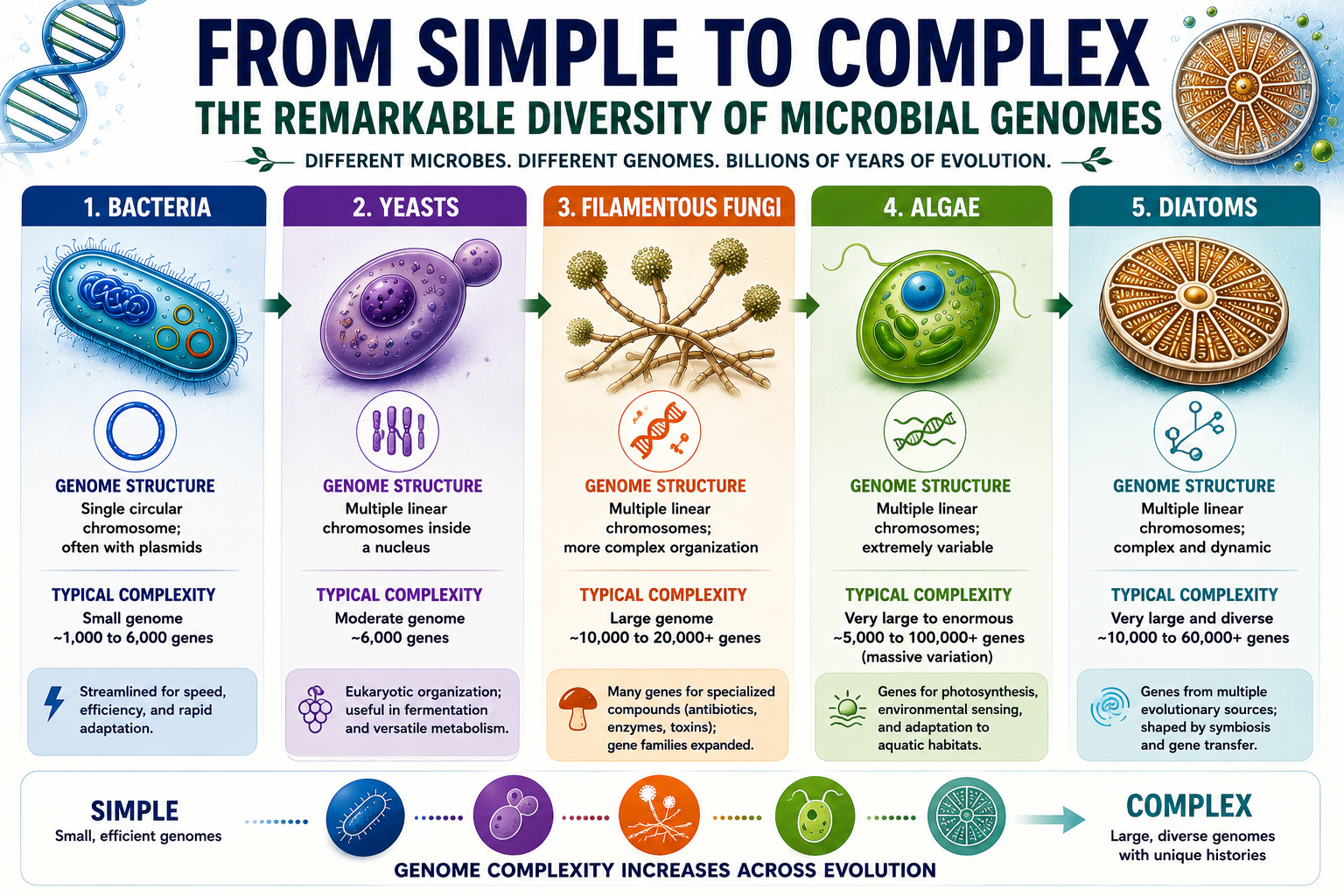
Microbes may all be microscopic, but their genomes can be remarkably different. The amount of DNA, the number of genes, and the complexity of genome organization vary enormously across microbial groups.
Bacteria generally possess the simplest genomes. Species such as Escherichia coli contain a single circular chromosome with a few thousand genes, allowing rapid growth and adaptation. Many bacteria also carry plasmids, small DNA molecules that can be exchanged between cells.
Yeasts, such as Saccharomyces cerevisiae, are fungi but have more complex genomes than most bacteria. Their DNA is organized into multiple linear chromosomes housed within a nucleus, resembling the genome organization of plants and animals.
Filamentous fungi such as Aspergillus and Penicillium often possess larger genomes than yeasts. These genomes contain genes involved in producing antibiotics, enzymes, toxins, and other specialized compounds that help fungi survive in diverse environments.
Algae display extraordinary genomic diversity. Some microscopic algae have relatively compact genomes, while others possess genomes far larger than those of humans. Their DNA contains genes related to photosynthesis, environmental sensing, and adaptation to aquatic habitats.
Diatoms, a major group of algae, have particularly unusual genomes. Species such as Phaeodactylum tricornutum and Thalassiosira pseudonana contain genes acquired from multiple evolutionary sources, reflecting a complex history of symbiosis and gene transfer.
The differences extend beyond genome size. Bacterial genomes are often streamlined for efficiency, whereas fungal, algal, and diatom genomes contain more regulatory DNA, duplicated genes, and complex chromosome structures.
These genomic differences reflect billions of years of evolution. From the compact chromosomes of bacteria to the highly complex genomes of algae and diatoms, microbial DNA reveals an astonishing range of biological solutions to survival and adaptation.
The microbial world is not a single kingdom of tiny organisms—it is a universe of radically different genetic architectures.