
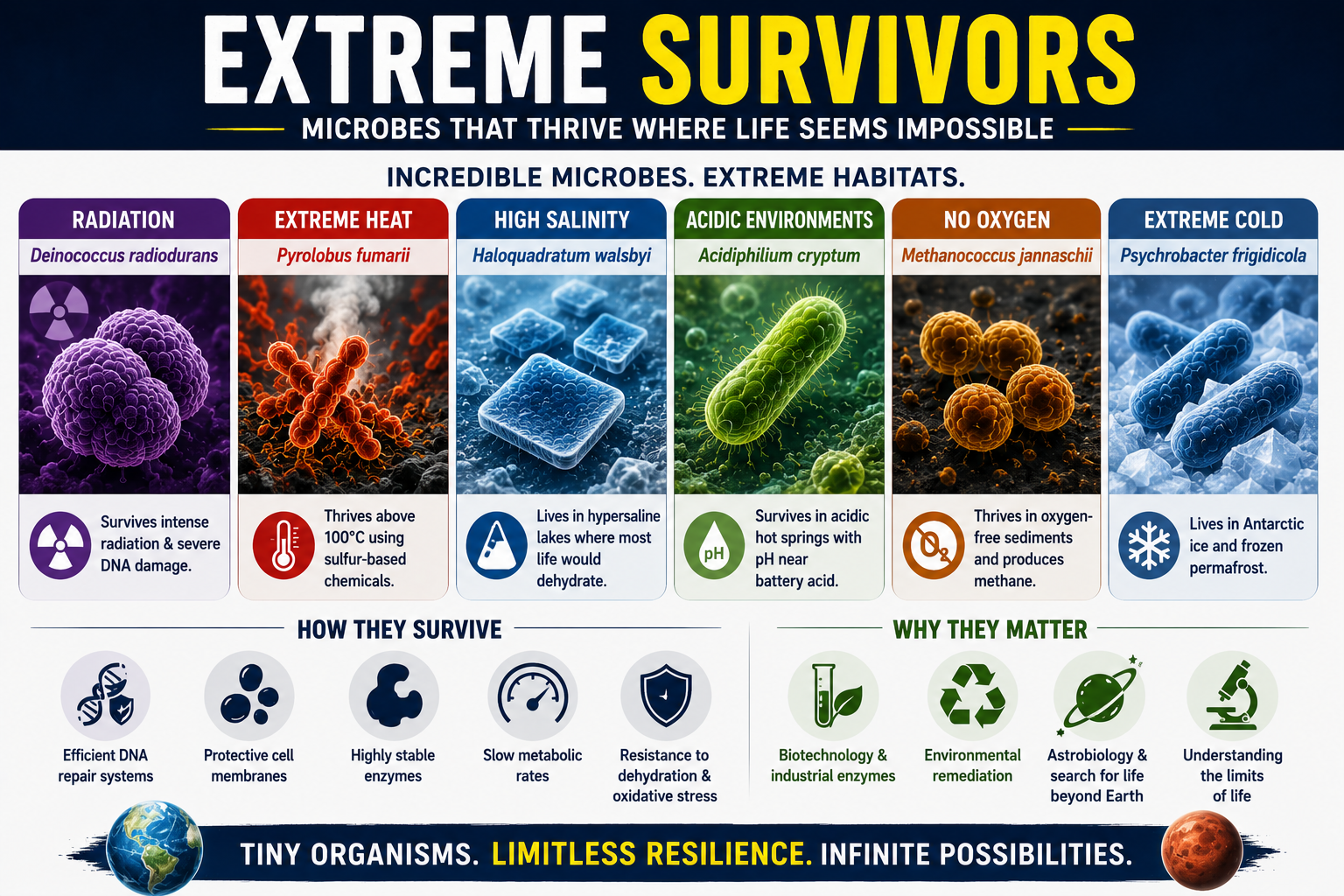
Some microbes, known as extremophiles, can survive conditions that would destroy most forms of life. These organisms thrive in environments involving extreme heat, radiation, pressure, acidity, salinity, or lack of oxygen.
One of the most famous examples is Deinococcus radiodurans, a bacterium capable of surviving intense radiation and severe DNA damage. Its extraordinary DNA repair systems allow it to recover even after conditions that would be lethal to most organisms.
In deep-sea hydrothermal vents, thermophilic archaea such as Pyrolobus fumarii can survive temperatures above 100°C by using sulfur-based chemical reactions instead of sunlight for energy.
Some microbes thrive in extremely salty environments. The archaeon Haloquadratum walsbyi, found in hypersaline lakes, survives conditions where most organisms would rapidly dehydrate.
Other extremophiles inhabit:
-
acidic hot springs with pH levels close to battery acid
-
deep underground rocks with minimal nutrients
-
Antarctic ice and permanently frozen permafrost
-
oxygen-free sediments
-
highly radioactive environments
Certain microbes have even survived temporary exposure to the vacuum-like conditions of outer space during astrobiology experiments.
Many of these organisms survive through specialized adaptations such as:
-
highly stable enzymes
-
protective cell membranes
-
efficient DNA repair systems
-
slow metabolic rates
-
resistance to dehydration and oxidative stress
Extremophiles are now studied not only for understanding the limits of life on Earth, but also for biotechnology, industrial enzymes, environmental remediation, and the search for possible life beyond our planet.
The survival abilities of extremophilic microbes reveal how adaptable biological systems can become through evolution.