
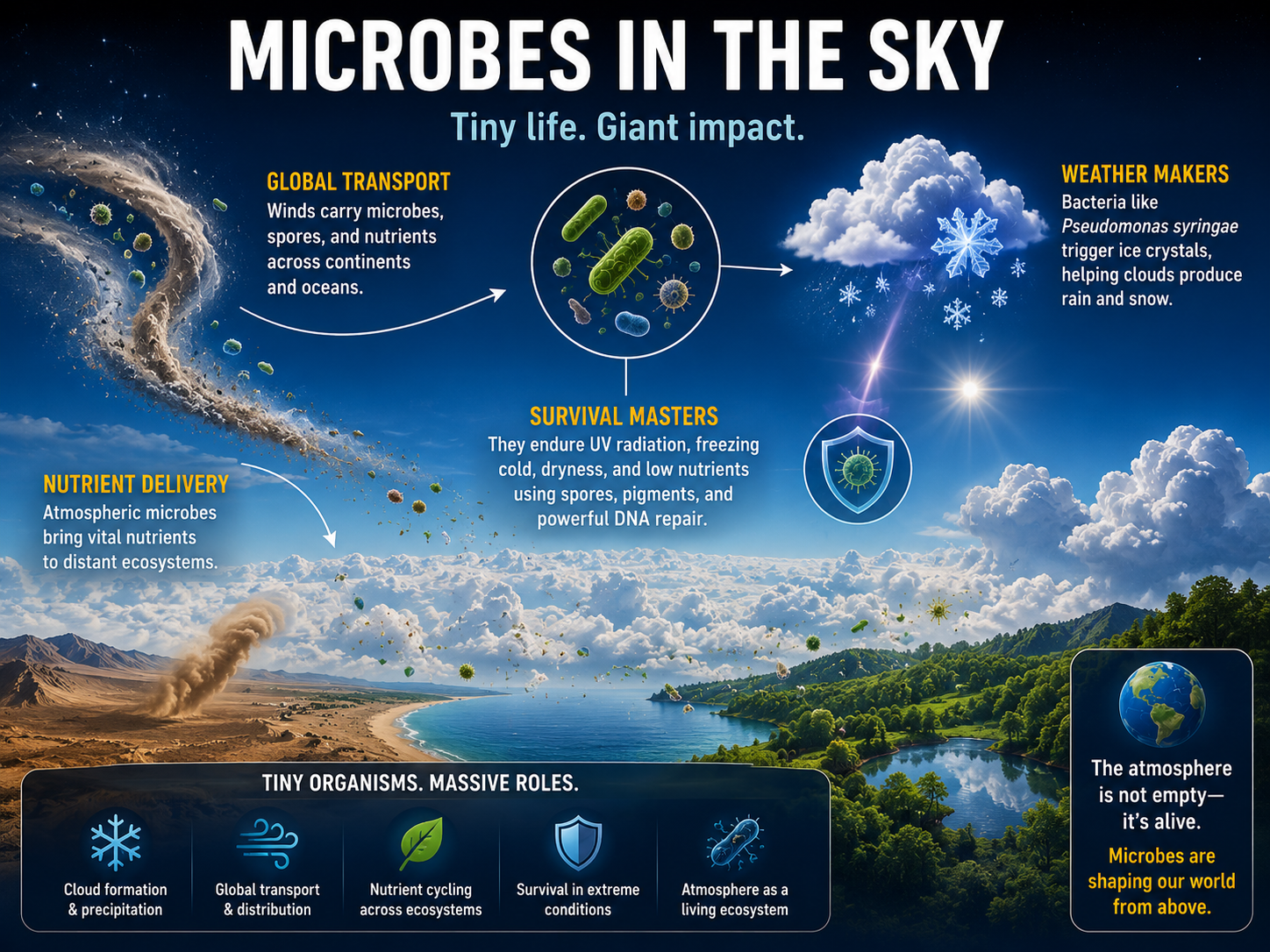
For a long time, scientists assumed the atmosphere was largely a biological dead zone. It is now clear that enormous numbers of microbes exist high above Earth’s surface, continuously circulating through clouds, dust systems, storms, and air currents.
Some of these microbes actively influence weather itself.
Certain airborne bacteria can trigger the formation of ice crystals inside clouds, helping initiate rainfall and snowfall. Species such as Pseudomonas syringae are particularly effective at this because proteins on their surfaces encourage water molecules to freeze more easily than they normally would. In some regions, microbial ice nucleation may influence precipitation patterns on a surprisingly large scale.
The atmosphere also acts as a global transport network for microbial life. Winds can carry bacteria, fungal spores, algae, and viruses across oceans and continents, redistributing nutrients and biological material between ecosystems that are thousands of kilometers apart. Dust originating in deserts, for example, can transport microbial communities into forests, lakes, and marine environments far away.
What makes these organisms especially remarkable is that some remain metabolically active despite conditions that seem profoundly hostile to life. High-altitude microbes endure intense ultraviolet radiation, freezing temperatures, dehydration, oxidative stress, and extremely limited nutrients. Many survive using resistant spores, protective pigments, and highly efficient DNA repair systems.
Scientists are now beginning to view the atmosphere not simply as empty space through which microbes travel, but as a dynamic biological habitat with its own ecological processes. That realization has important implications for climate science, weather systems, disease transport, and even the search for life beyond Earth.
The atmosphere continuously transports microbes, nutrients, and biological material across the planet through global air currents.