
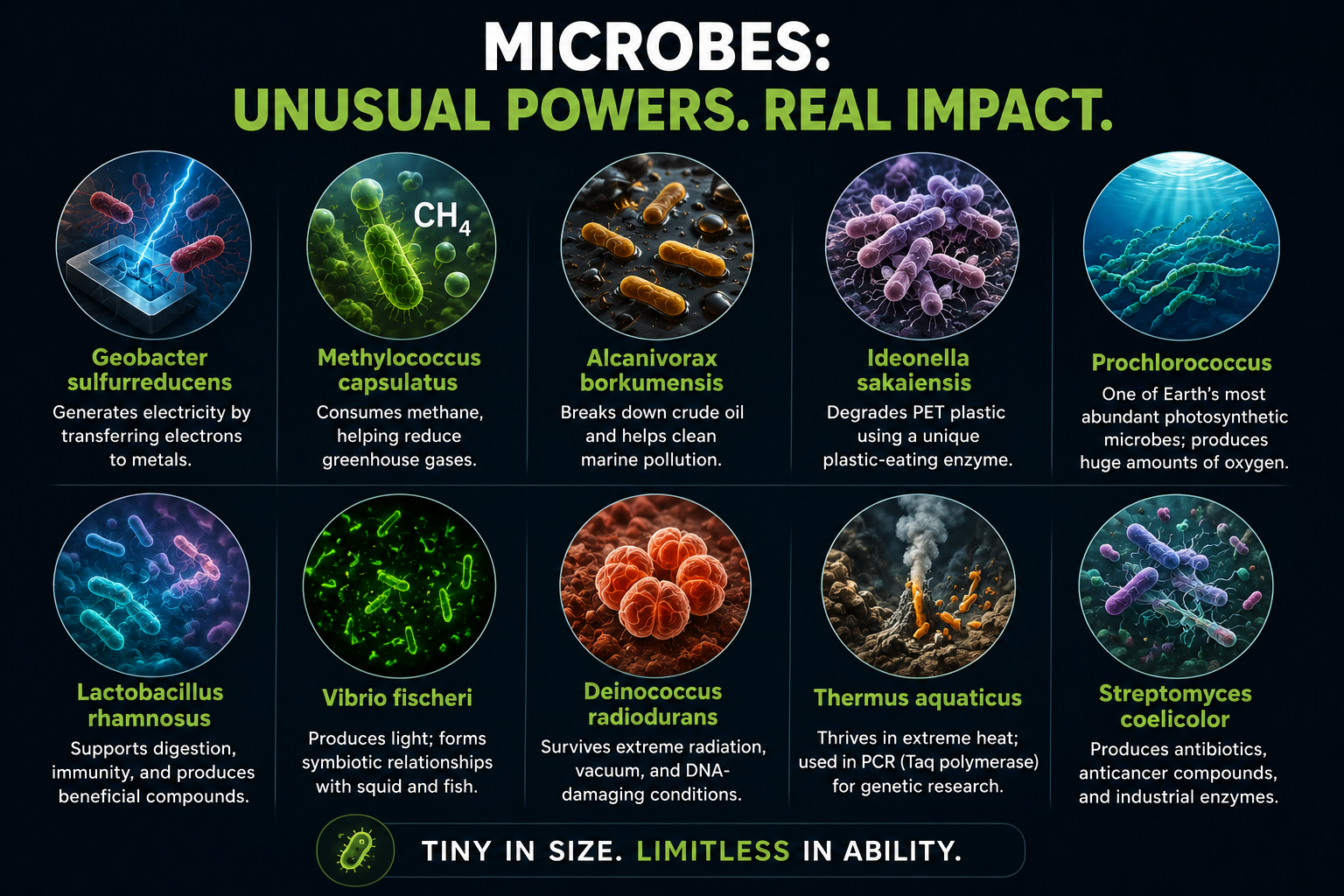
Microbes perform many functions that extend far beyond disease and decomposition. Some microbial abilities are so unusual that they have changed scientific understanding of biology, ecology, and even technology.
Certain bacteria such as Geobacter and Shewanella can generate electricity by transferring electrons directly to metals and external surfaces. Scientists are studying them for microbial fuel cells and bioelectrical systems.
Some microbes consume methane before it escapes into the atmosphere, helping regulate greenhouse gases and climate. Others can break down crude oil, pesticides, toxic chemicals, and even certain plastics, making them important in environmental cleanup and waste remediation.
Photosynthetic microbes in oceans produce a major share of Earth’s oxygen despite being microscopic. Marine microbes also play central roles in carbon fixation and nutrient cycling across global ecosystems.
Inside the human body, microbes perform functions linked to digestion, immunity, vitamin production, metabolism, and even brain signaling. Certain gut microbes influence neurotransmitter production and may affect mood, stress responses, and sleep.
Bioluminescent microbes such as Vibrio fischeri can naturally produce light through biochemical reactions and form symbiotic relationships with marine animals including squid and fish.
Some extremophiles survive conditions once considered incompatible with life, including intense radiation, deep-sea pressure, extreme heat, and severe acidity. Others remain viable after temporary exposure to the vacuum-like conditions of outer space.
Microbes are also used to produce:
-
antibiotics
-
anticancer compounds
-
industrial enzymes
-
biodegradable plastics
-
biofuels
-
fermented foods
Far from being simple organisms, microbes carry out some of the most chemically diverse and environmentally important processes known in biology.
Some microbes can generate electricity, produce light, regulate greenhouse gases, influence the human brain, and survive extreme environments - all while remaining invisible to the naked eye.