
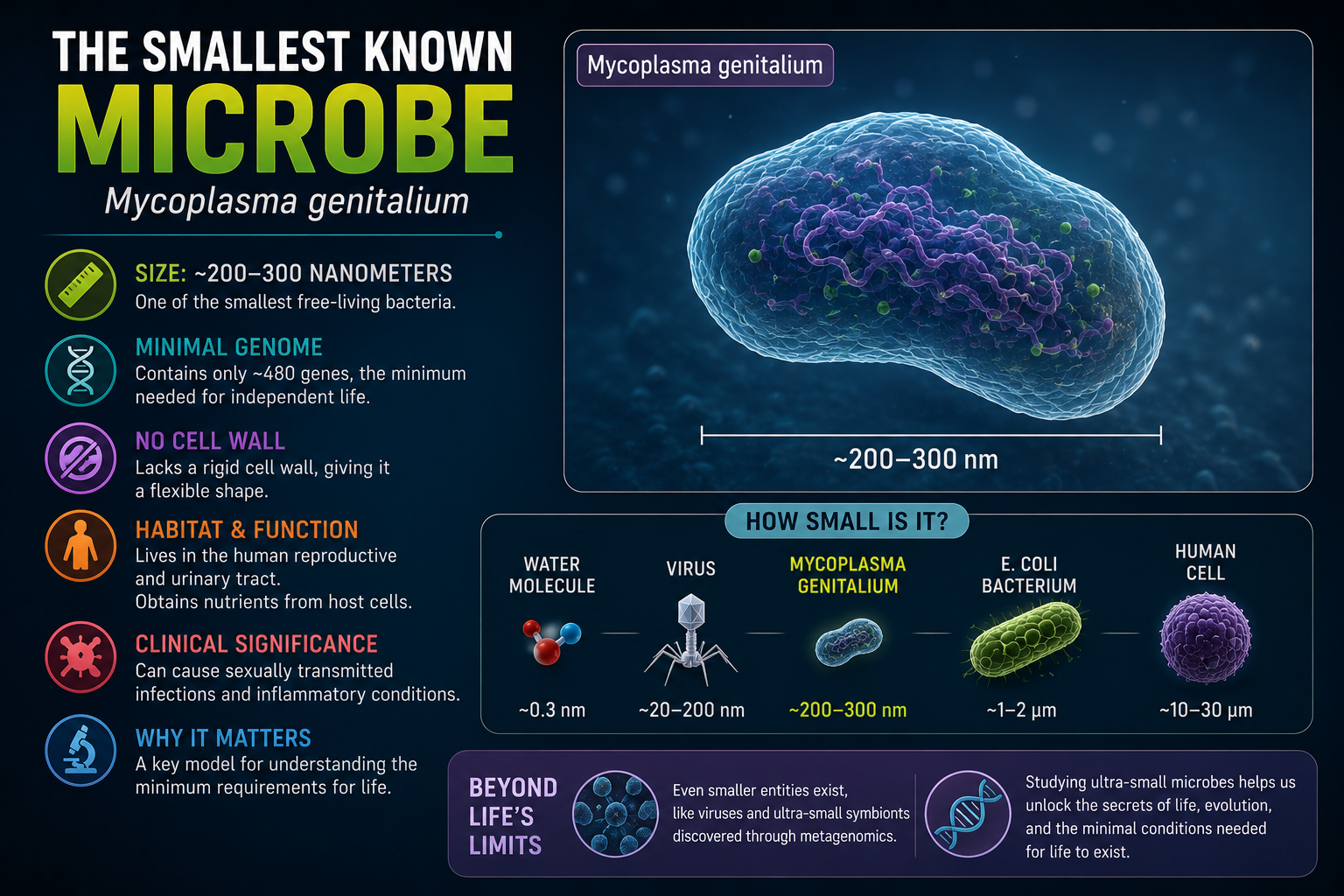
One of the smallest known microbes is Mycoplasma genitalium, a bacterium with a diameter of roughly 200-300 nanometers and one of the smallest genomes capable of independent life. It lacks a rigid cell wall, giving it a flexible shape and allowing it to survive as a parasite within animal and human hosts.
Mycoplasma genitalium primarily lives in the human reproductive and urinary tract, where it obtains nutrients directly from host cells. It is known for causing certain sexually transmitted infections and inflammatory conditions.
Scientists have studied this microbe extensively because of its extremely minimal genome. It contains only a small number of genes necessary for survival, making it an important model organism for understanding the minimum genetic requirements for cellular life.
Even smaller biological entities exist, including viruses and ultra-small symbiotic bacteria discovered through modern metagenomics. However, many of these organisms cannot survive or reproduce independently and therefore occupy a gray area between life and non-living biological systems.
The study of ultra-small microbes has become increasingly important in synthetic biology, evolutionary research, and the search for the minimal conditions required for life itself.
Tiny microbes such as Mycoplasma genitalium reveal how evolution can reduce cellular complexity to extraordinary limits.