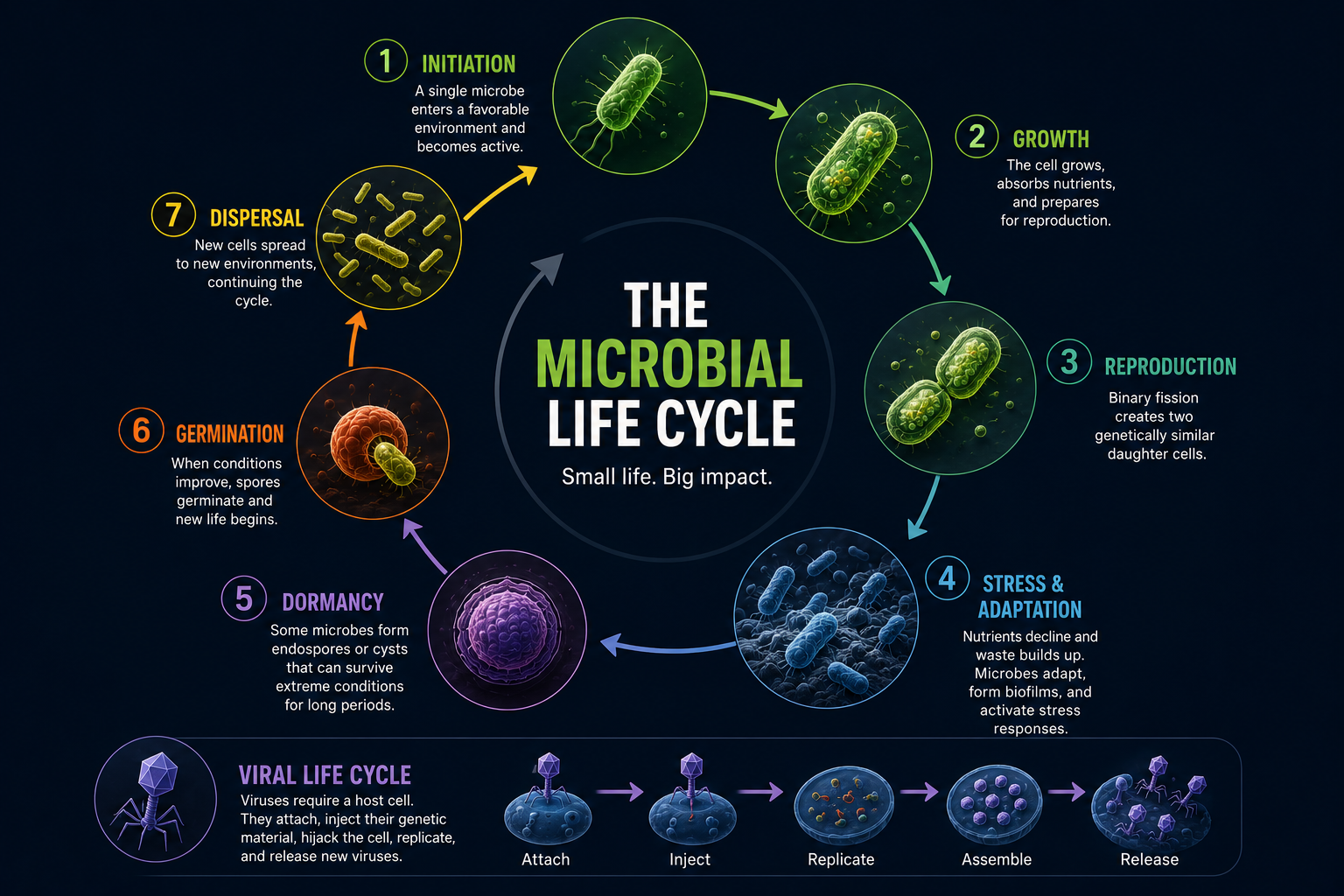
Microbial life cycles differ across bacteria, fungi, protozoa, algae, and viruses, but most microbes pass through recurring stages of growth, reproduction, adaptation, dormancy, and dispersal.
In bacteria, the life cycle usually begins when a single microbial cell encounters favorable conditions such as moisture, nutrients, and suitable temperature. The cell first enters a period of intense metabolic activity, absorbing nutrients and synthesizing proteins, enzymes, and genetic material in preparation for reproduction.
Once sufficient growth occurs, the bacterium reproduces through binary fission. During this process, the DNA is copied and the cell divides into two genetically similar daughter cells. Under ideal conditions, some bacteria can repeat this cycle extremely rapidly, sometimes doubling in population within minutes.
As microbial populations increase, nutrients gradually become limited and waste products accumulate. Growth slows, competition intensifies, and microbes begin activating stress-response systems. Some species form biofilms or cooperative microbial communities that improve survival under difficult conditions.
When environmental stress becomes severe, certain microbes enter dormant survival stages. Many bacteria produce highly resistant endospores, dormant structures capable of surviving:
- extreme heat
- dehydration
- radiation
- chemical stress
- nutrient scarcity
These spores can remain inactive for years or even centuries before becoming active again when conditions improve.
Fungi and protozoa often have more complex life cycles involving multiple developmental forms, spore production, and both sexual and asexual reproduction. Some protozoa alternate between active feeding stages and highly resistant cyst stages.
Viruses follow an entirely different cycle. They cannot reproduce independently and must first infect a host cell. Once inside, viral genetic material hijacks the host’s cellular machinery to produce new viral particles, which are later released to infect additional cells.
In natural ecosystems, microbial life cycles are continuous and highly responsive to environmental change. Their rapid reproduction and adaptability allow microbial populations to evolve, spread, and transform ecosystems at extraordinary speed.
Microbes can shift rapidly between growth, reproduction, dormancy, and survival states, allowing them to adapt to environmental change with extraordinary speed.