
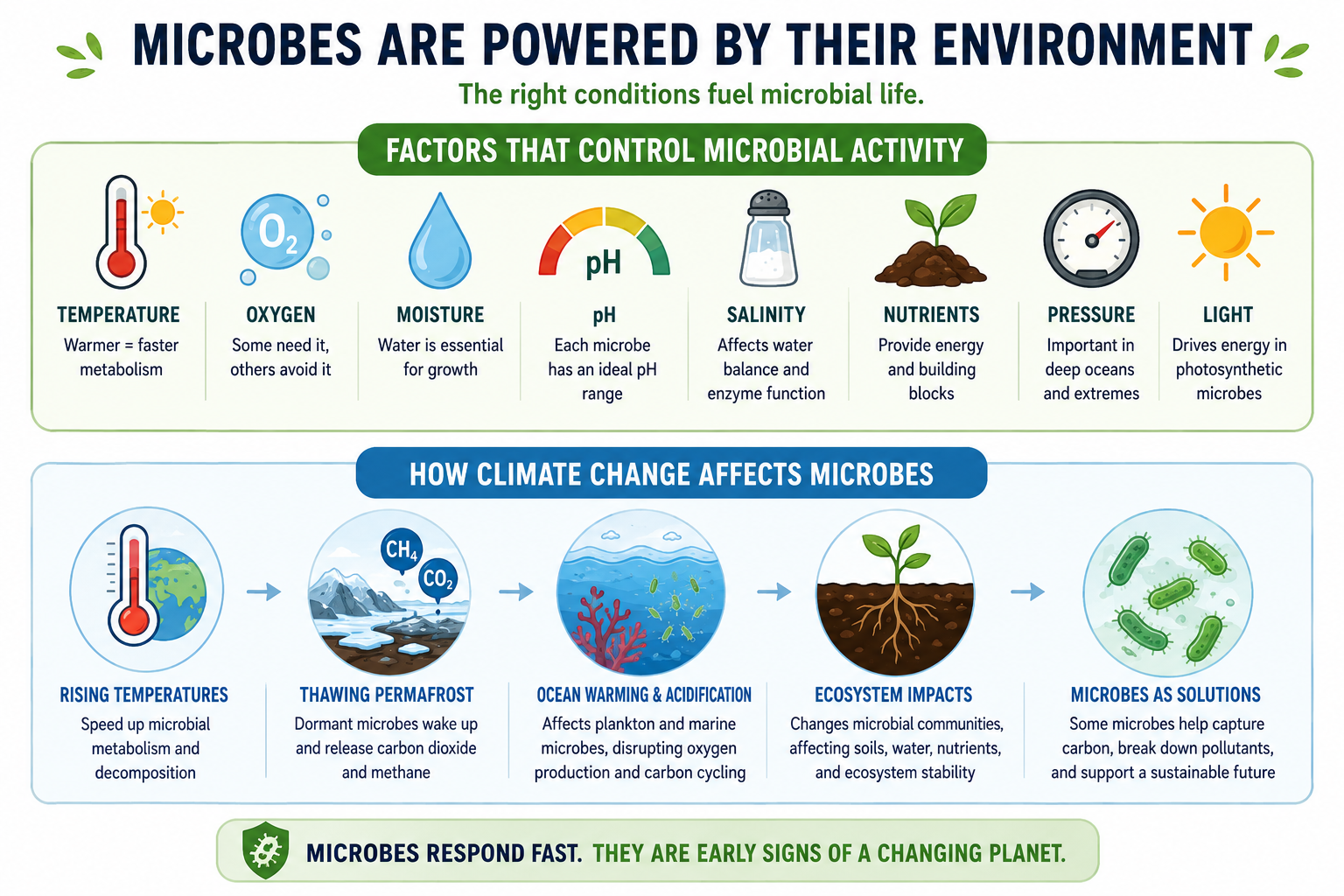
Microbial metabolism is strongly influenced by surrounding environmental conditions. Factors such as temperature, oxygen availability, moisture, pH, salinity, pressure, nutrient concentration, and light all determine how efficiently microbes grow, reproduce, and process energy.
Even small environmental changes can significantly alter microbial behavior. Some microbes become highly active in warm, nutrient-rich conditions, while others slow their metabolism or enter dormant states when resources become limited. Oxygen availability is especially important because some microbes require oxygen for respiration, whereas others survive only in oxygen-free environments.
Temperature has one of the strongest effects on microbial activity. In general, warmer conditions increase metabolic rates, accelerating processes such as decomposition, methane production, and nutrient cycling. However, extreme heat can also damage enzymes and disrupt cellular systems in many species.
Climate change is already altering microbial ecosystems across oceans, soils, glaciers, wetlands, and the atmosphere. Rising temperatures are changing the composition and activity of microbial communities, especially in sensitive environments such as Arctic permafrost, coral reefs, and deep oceans.
One major concern involves thawing permafrost. As frozen soils warm, dormant microbes become active and begin decomposing ancient organic matter, releasing carbon dioxide and methane into the atmosphere. This creates a potential feedback loop where microbial activity further accelerates climate warming.
Ocean warming and acidification are also affecting marine microbes, including photosynthetic plankton that play major roles in oxygen production and carbon cycling. Changes in microbial populations can influence fisheries, nutrient availability, and broader ecosystem stability.
At the same time, some microbes may help mitigate climate change through carbon sequestration, methane consumption, pollutant degradation, and sustainable biotechnology applications.
Because microbes respond rapidly to environmental change, they are often among the earliest biological indicators of shifting planetary conditions.
Microbial activity plays an important role in both driving and potentially mitigating climate-related environmental change.