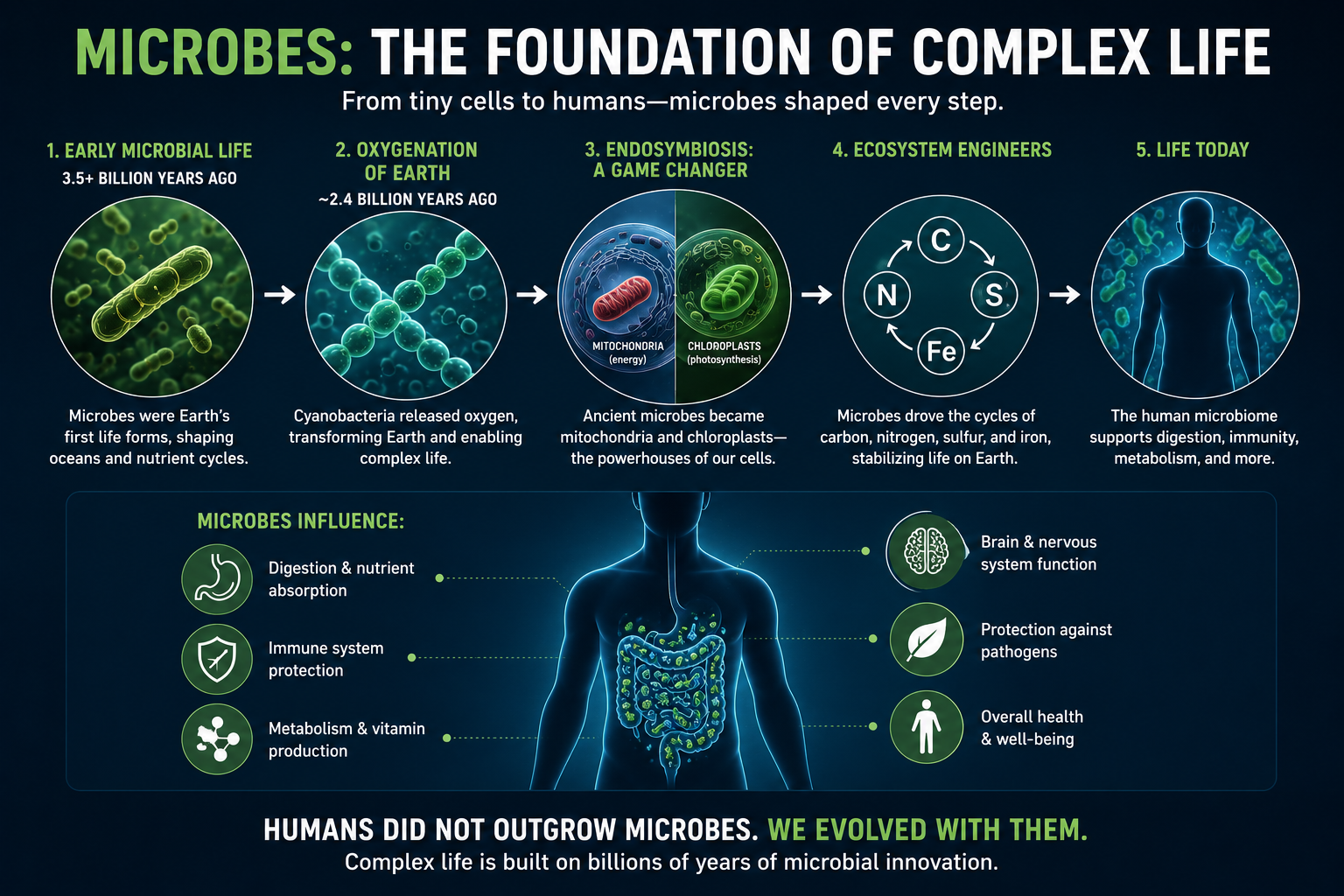
Microbial life laid the biological foundation for all complex organisms on Earth. For nearly 3 billion years, microbes were the planet’s only life forms, shaping the atmosphere, oceans, and nutrient cycles long before plants or animals evolved.
One of the most important developments came from cyanobacteria, photosynthetic microbes that began releasing oxygen into the atmosphere around 2.4 billion years ago. This event, known as the Great Oxygenation Event, transformed Earth from an oxygen-poor world into one capable of supporting complex multicellular life.
Microbes also directly contributed to the evolution of complex cells through endosymbiosis. Ancient microbial cells began living inside larger host cells in mutually beneficial relationships. Over time, these internal microbes evolved into:
-
mitochondria, which generate energy in animal cells
-
chloroplasts, which perform photosynthesis in plants and algae
Both structures still contain their own DNA, strongly supporting their microbial origins.
Microbes additionally drove the early cycling of carbon, nitrogen, sulfur, and iron, helping stabilize ecosystems and create conditions necessary for increasingly advanced organisms to evolve.
Even today, humans remain deeply dependent on microbes. The human microbiome influences digestion, immunity, metabolism, vitamin production, and aspects of brain and nervous system function.
In evolutionary terms, humans did not emerge separately from microbes. Complex life evolved from microbial systems and continues to depend on them at nearly every biological level.
Without microbial photosynthesis and endosymbiosis, complex organisms such as plants, animals, and humans may never have evolved.