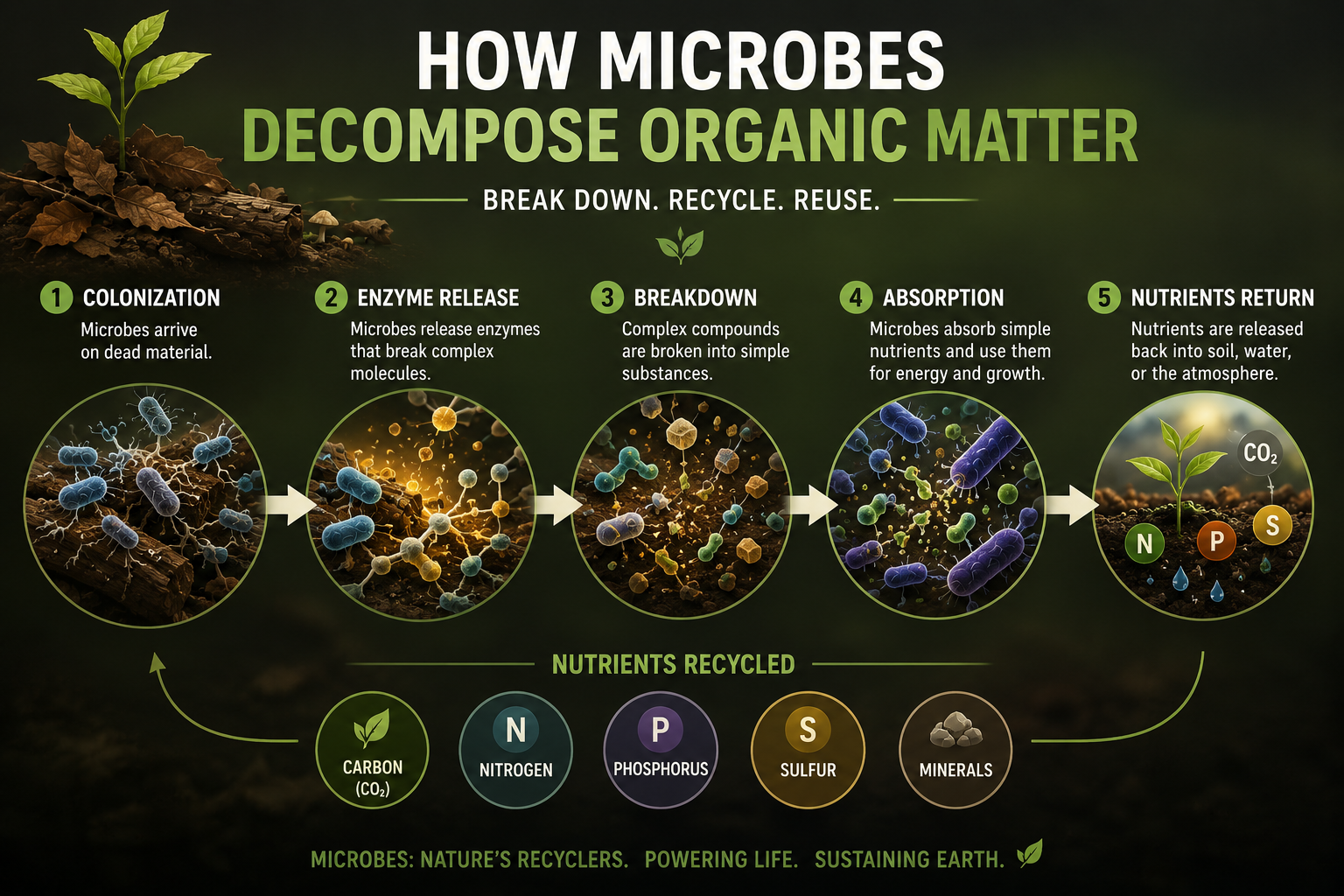
Microbial decomposition is essentially a biological recycling process. When plants, animals, algae, or other organisms die, microbes break their complex organic material into smaller reusable compounds that re-enter ecosystems.
The process usually begins when bacteria and fungi colonize dead material. Since microbes cannot directly absorb large substances like wood, proteins, or fats, they first release specialized enzymes into their surroundings. These enzymes chemically break complex molecules into smaller compounds that microbes can absorb and metabolize.
For example, in forests, fungi growing on fallen trees release enzymes that degrade cellulose and lignin, the tough structural materials in wood. As the wood breaks down, carbon, nitrogen, phosphorus, and minerals are released back into the soil, where plants and other organisms can use them again.
In oceans, marine bacteria decompose dead plankton, fish waste, and sinking organic particles. During this process, nutrients dissolved into seawater become available again for phytoplankton growth, helping sustain marine food chains.
Different microbes specialize in different stages of decomposition. Some bacteria rapidly consume simple sugars and proteins, while others break down harder compounds such as oils, hydrocarbons, or chitin. In oxygen-rich environments, decomposition mainly produces carbon dioxide and mineral nutrients. In oxygen-poor environments such as wetlands, sediments, and landfills, anaerobic microbes generate methane, hydrogen sulfide, and organic acids.
Composting is another clear example of microbial decomposition in action. Bacteria and fungi digest food scraps, leaves, and organic waste, generating heat while transforming waste into nutrient-rich compost that improves soil fertility.
Through this continuous breakdown and recycling process, microbes return essential elements back into Earth’s carbon, nitrogen, sulfur, and phosphorus cycles, allowing ecosystems to function generation after generation.
Every forest, ocean, and ecosystem depends on microbes chemically dismantling dead matter and redistributing its nutrients.