Composting and biogas production are both powered by microbial decomposition, where different groups of microbes break down organic waste step by step and convert it into reusable products.
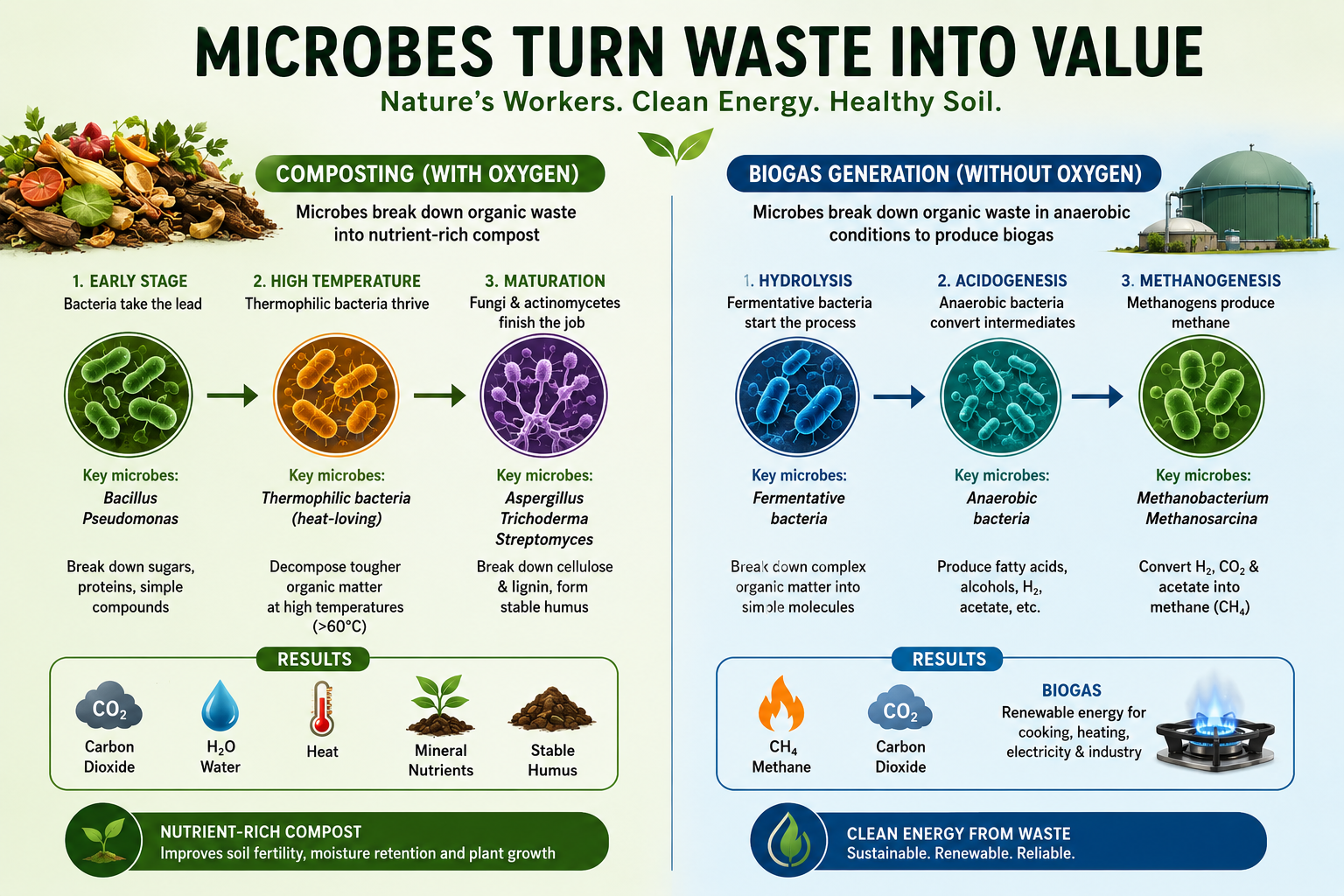
In composting, the process occurs in the presence of oxygen. When organic waste such as food scraps, leaves, crop residues, or manure begins accumulating, bacteria are usually the first microbes to become active. Species such as Bacillus and Pseudomonas rapidly consume simple organic compounds like sugars and proteins.
As microbial activity increases, heat builds up inside the compost pile. Temperatures can rise above 60°C, creating conditions where thermophilic microbes thrive. These heat-loving bacteria continue breaking down tougher organic material that ordinary microbes cannot easily digest.
Fungi and actinomycetes become especially important during later composting stages. Organisms such as Aspergillus, Trichoderma, and Streptomyces release powerful enzymes capable of degrading cellulose and lignin, the rigid structural materials found in wood, stems, and dry leaves.
Through this continuous microbial breakdown process, organic waste is gradually converted into:
-
carbon dioxide
-
water
-
heat
-
mineral nutrients
-
stable organic humus
The final compost becomes nutrient-rich material that improves soil fertility, moisture retention, and plant growth.
Biogas generation begins when similar organic waste enters oxygen-free environments such as anaerobic digesters, sewage systems, wetlands, or landfills. Here, a completely different microbial chain takes over.
The process starts with fermentative bacteria, which break complex organic matter into smaller molecules including fatty acids, alcohols, hydrogen, and acetate. Other anaerobic bacteria then further process these compounds into simpler intermediates.
In the final stage, specialized archaea called methanogens produce methane gas. Species such as Methanobacterium and Methanosarcina convert hydrogen, carbon dioxide, and acetate into methane through anaerobic metabolism.
The resulting biogas mainly contains methane and carbon dioxide and can be used as a renewable fuel for cooking, heating, electricity generation, and industrial energy systems.
Both composting and biogas production are essentially controlled microbial ecosystems that transform waste into valuable resources through coordinated microbial metabolism.
Microbes can transform dead organic waste into fertile soil and renewable fuel, effectively turning decomposition into a source of new life and energy.