
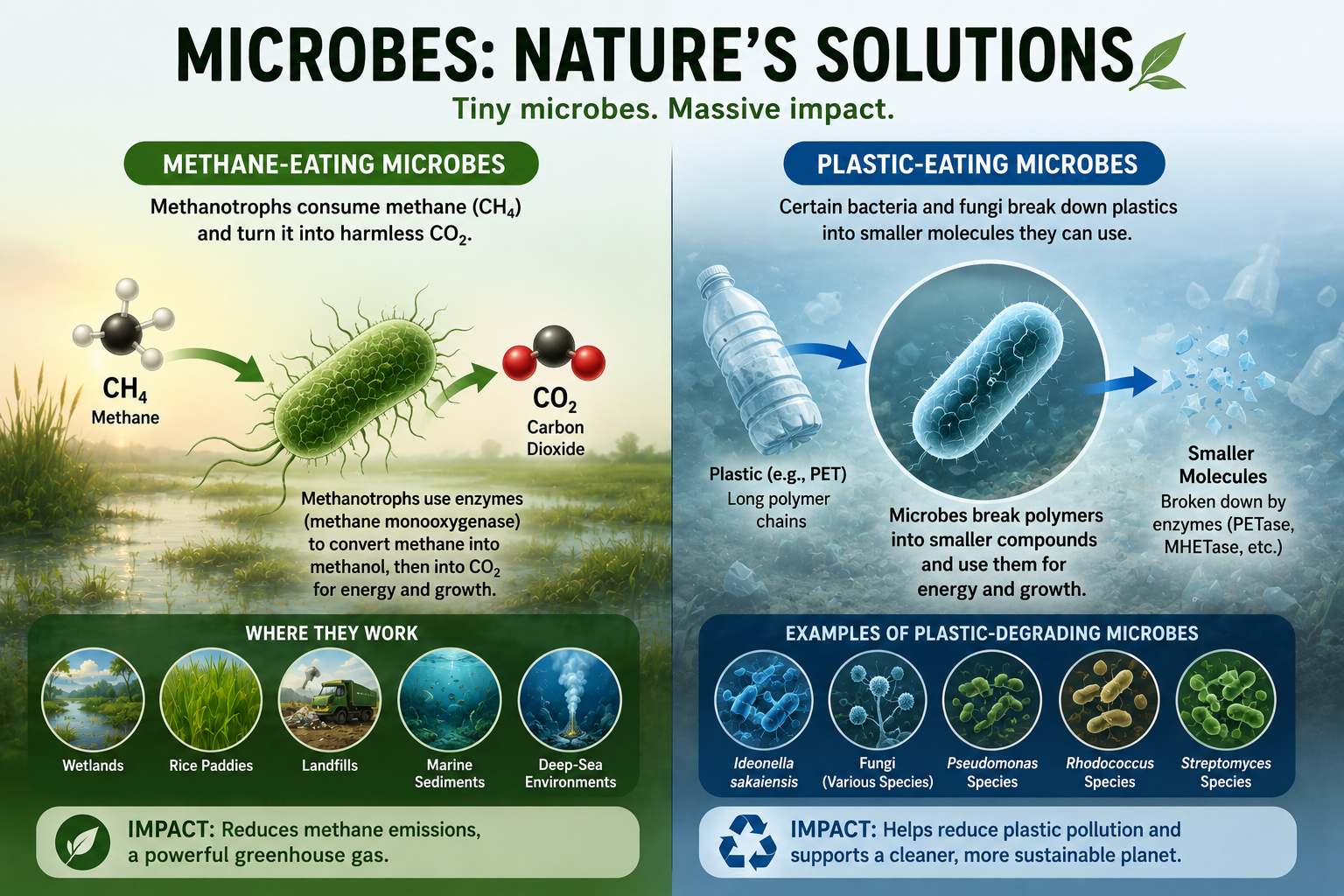
Yes. Certain microbes can consume methane, while others are capable of degrading plastics, making them extremely important in climate science and environmental remediation.
Methane-eating microbes, known as methanotrophs, use methane as their primary energy and carbon source. These bacteria are commonly found in wetlands, marine sediments, rice paddies, landfills, and deep-sea environments where methane is naturally produced.
Methanotrophs absorb methane and oxidize it using specialized enzymes such as methane monooxygenase, converting methane first into methanol and eventually into carbon dioxide and cellular biomass. By consuming methane before it escapes into the atmosphere, these microbes help reduce one of Earth’s most powerful greenhouse gases.
Plastic-degrading microbes function differently. Certain bacteria and fungi produce enzymes capable of breaking long plastic polymers into smaller molecules that can be metabolized for energy or growth.
One of the best-known examples is Ideonella sakaiensis, a bacterium discovered in Japan that can degrade PET plastic using enzymes called PETase and MHETase. These enzymes gradually break PET into smaller chemical compounds that the bacterium can absorb and utilize.
Other microbes have shown the ability to partially degrade:
-
polyethylene
-
polyurethane
-
polystyrene
-
hydrocarbons in petroleum-based plastics
However, plastic degradation is usually much slower and more difficult than natural organic decomposition because most plastics were never designed to be biologically recyclable.
Scientists are now studying and genetically engineering these microbes and enzymes to improve:
-
plastic recycling
-
waste management
-
carbon recovery
-
sustainable materials processing
These discoveries demonstrate how microbial metabolism can evolve to exploit even entirely human-made substances, sometimes within surprisingly short evolutionary timescales.
Some microbes can consume greenhouse gases and digest synthetic plastics, turning major environmental pollutants into usable biological resources.