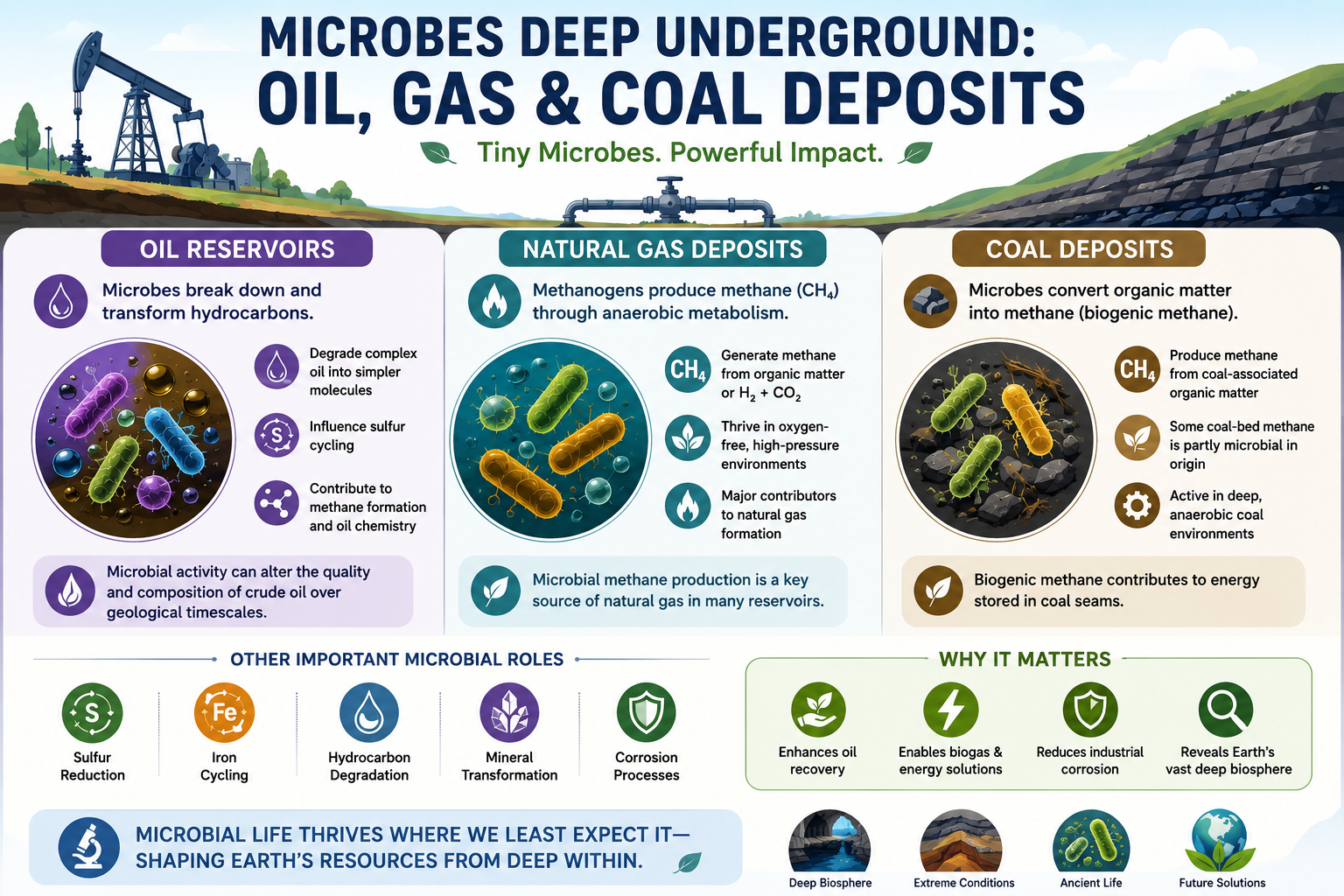
Yes. Deep underground oil reservoirs, natural gas deposits, and coal beds contain highly specialized microbial communities that survive under extreme pressure, limited nutrients, high salinity, and oxygen-free conditions. Many of these microbes remain metabolically active kilometers beneath Earth’s surface.
In oil reservoirs, microbes participate in the breakdown and transformation of hydrocarbons. Certain bacteria degrade complex petroleum compounds into simpler molecules, while others influence sulfur cycling, methane formation, and oil chemistry. Some microbial activity can actually alter the quality and composition of crude oil over geological timescales.
Natural gas deposits often contain large populations of methanogens, ancient archaea that produce methane through anaerobic metabolism. These microbes generate methane by breaking down organic compounds or using hydrogen and carbon dioxide under oxygen-free conditions. In some environments, microbial methane production contributes significantly to natural gas formation.
Coal deposits also host active microbial ecosystems. Certain bacteria and archaea slowly degrade coal-associated organic matter and convert portions of it into methane, a process known as biogenic methane production. Some coal-bed methane reserves are believed to originate partly from microbial activity rather than purely geological heat and pressure.
Other underground microbes perform functions involving:
- Sulfur reduction: Certain microbes convert sulfur compounds into hydrogen sulfide as part of anaerobic energy metabolism.
- Iron cycling: Some bacteria oxidize or reduce iron compounds, helping regulate mineral availability and geochemical reactions.
- Hydrocarbon degradation: Specialized microbes break down petroleum and hydrocarbon compounds into simpler substances for energy and growth.
- Mineral transformation: Microbes chemically alter minerals, influencing rock formation, nutrient release, and soil chemistry.
- Corrosion processes: Certain microbes accelerate the corrosion of metals and pipelines through biochemical reactions involving sulfur, acids, and electron transfer.
The discovery of thriving microbial ecosystems deep within Earth’s subsurface also changed scientific understanding of where life can exist. Some researchers now consider the deep biosphere one of the planet’s largest and least explored microbial habitats.
The discovery of deep subsurface microbes revealed that life extends far deeper into Earth than scientists once imagined.