Microbial activity is happening continuously around us, even though most of it remains completely invisible to the human senses. Every surface, breath, soil particle, water droplet, and living organism hosts ongoing microbial processes.
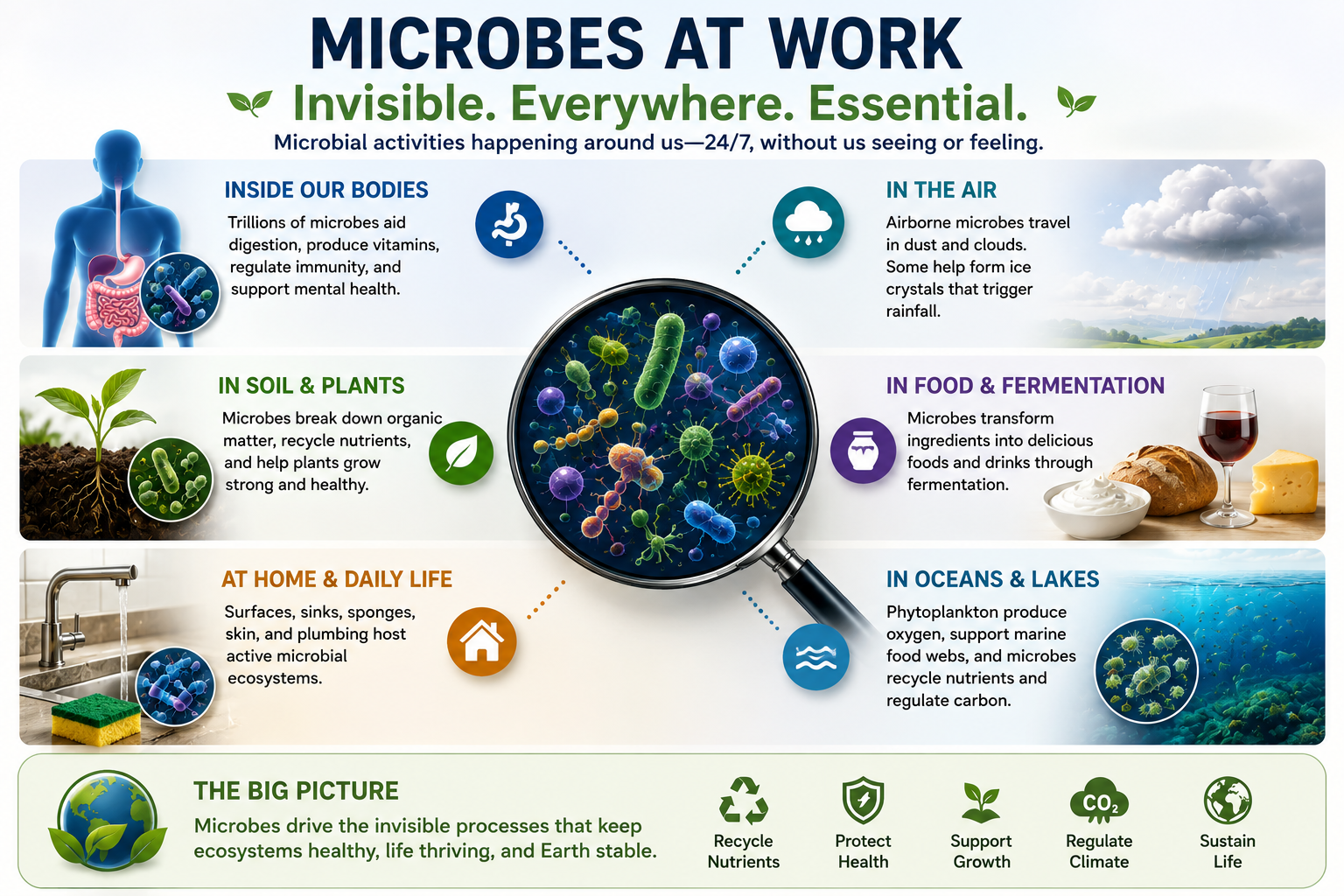
Inside the human body, trillions of microbes are constantly digesting food, producing vitamins, regulating immunity, and interacting with the nervous system. Gut microbes help ferment dietary fibers into short-chain fatty acids that influence metabolism and intestinal health, all without us noticing.
In the air around us, airborne microbes travel through dust, clouds, and moisture particles. Some bacteria even help trigger rainfall by promoting ice crystal formation inside clouds.
In soils and gardens, bacteria and fungi are continuously decomposing dead organic matter and recycling nutrients back into the ecosystem. Plant roots are surrounded by dense microbial communities that exchange nutrients, stimulate growth, and influence soil chemistry.
Fermentation is another everyday microbial activity. Microbes convert milk into yogurt, dough into bread, and sugars into alcohol or vinegar through metabolic reactions that release gases, acids, and flavor compounds.
Even household environments contain active microbial ecosystems. Kitchen sponges, sinks, skin surfaces, indoor air, and plumbing systems all host constantly shifting microbial populations.
In oceans and lakes, microscopic phytoplankton are continuously performing photosynthesis, generating oxygen and forming the base of aquatic food chains. Marine microbes also recycle dissolved nutrients and regulate carbon movement through the water.
Many of the planet’s most important biological processes happen silently at microbial scales. Although we rarely see them directly, microbes are continuously shaping the chemistry, health, stability, and functioning of the world around us.
Trillions of microbes continuously shape human health, ecosystems, air chemistry, and nutrient cycles without us ever noticing directly.