Yes. Although many animals share broad microbial groups, gut microbiomes can differ dramatically depending on diet, digestive anatomy, habitat, and evolutionary history.
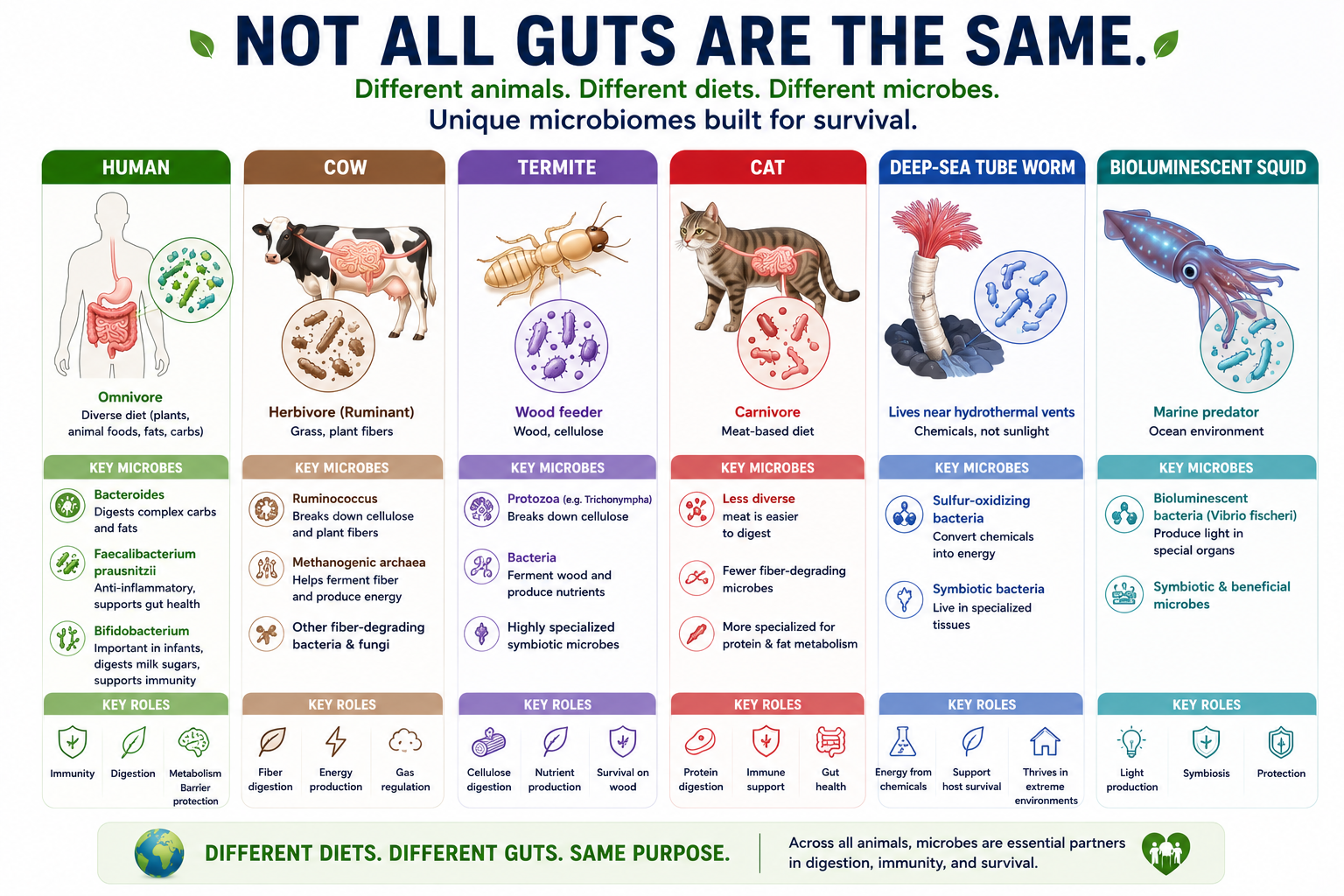
In humans, microbes such as Bacteroides help digest complex carbohydrates and fats, while Faecalibacterium prausnitzii produces anti-inflammatory compounds that support intestinal health. Bifidobacterium species are especially important in infants because they help digest milk-related sugars and support immune development.
Herbivorous animals host very different microbial communities. Cows, for example, rely on cellulose-degrading microbes such as Ruminococcus and methanogenic archaea that help break down grass and plant fibers inside the rumen. Without these microbes, cattle would be unable to efficiently extract energy from vegetation.
Termites contain highly specialized gut protozoa and bacteria capable of digesting wood cellulose, allowing termites to survive on materials most animals cannot utilize.
Carnivores such as cats and lions generally possess less diverse gut microbiomes because meat is easier to digest and requires less microbial fermentation.
Marine animals also contain unique microbial ecosystems. Deep-sea tube worms host sulfur-oxidizing bacteria that generate energy from chemicals near hydrothermal vents, while some fish and squid maintain bioluminescent microbes that produce light.
Even among closely related species, microbial composition can vary significantly due to differences in diet, antibiotics, geography, stress, and environmental exposure.
Across nearly all animals, however, microbes remain essential partners in digestion, nutrient production, immunity, metabolism, and overall survival.
Across the animal kingdom, microbes function as essential biochemical partners that expand digestive and metabolic capabilities.