
Microbes are best known for causing disease, but some bacteria and viruses are now being used as tools to help detect, target, and destroy cancer cells.
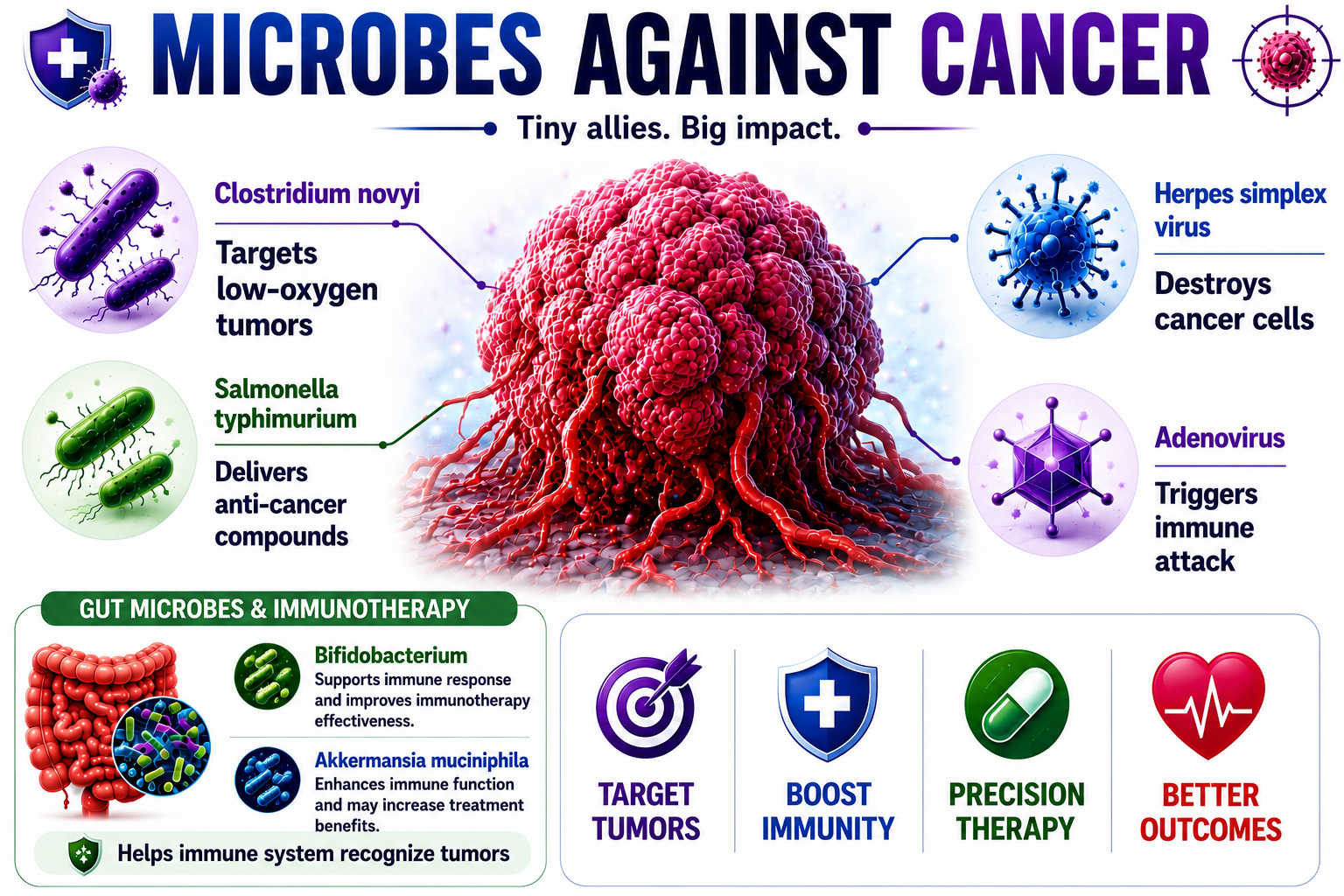
One promising approach involves bacteria that can naturally grow inside tumors. Species such as Clostridium novyi and engineered strains of Salmonella typhimurium can selectively colonize the low-oxygen regions of tumors, allowing them to deliver anti-cancer compounds directly to cancerous tissue.
Scientists are also developing oncolytic viruses, viruses designed to infect and kill cancer cells while largely sparing healthy cells. Examples include modified Herpes simplex virus and Adenovirus, which can destroy tumor cells and stimulate immune responses against cancer.
Another exciting area of research focuses on the gut microbiome. Studies have found that bacteria such as Bifidobacterium and Akkermansia muciniphila may improve the effectiveness of cancer immunotherapy by helping the immune system recognize and attack tumors more efficiently.
Although many of these approaches are still being refined, they are opening new possibilities for more precise and personalized cancer treatments. Microbes once viewed solely as threats are increasingly becoming valuable partners in the fight against cancer.
The future of cancer treatment may involve not only drugs and immune cells, but also carefully designed microbes.